
Amazon's Premium Tablet Push Highlights the Enduring Big-Screen Android Problem

Bridging the Gap Between Budget Hardware and Premium Ambition
For more than a decade, Amazon has occupied a very specific niche in the personal computing and mobile hardware landscape. Its Fire tablet lineup established dominance not through cutting-edge display panels or elite multi-core processors, but through aggressive pricing, aggressive platform lock-in, and reliable distribution aimed at media consumption and casual reading. However, consumer expectations and market demands have steadily drifted upward. Today, users look at large-screen slates as hybrid productivity engines, capable of handling split-screen multitasking, remote video collaboration, document editing, and peripheral-driven workflows alongside casual entertainment.
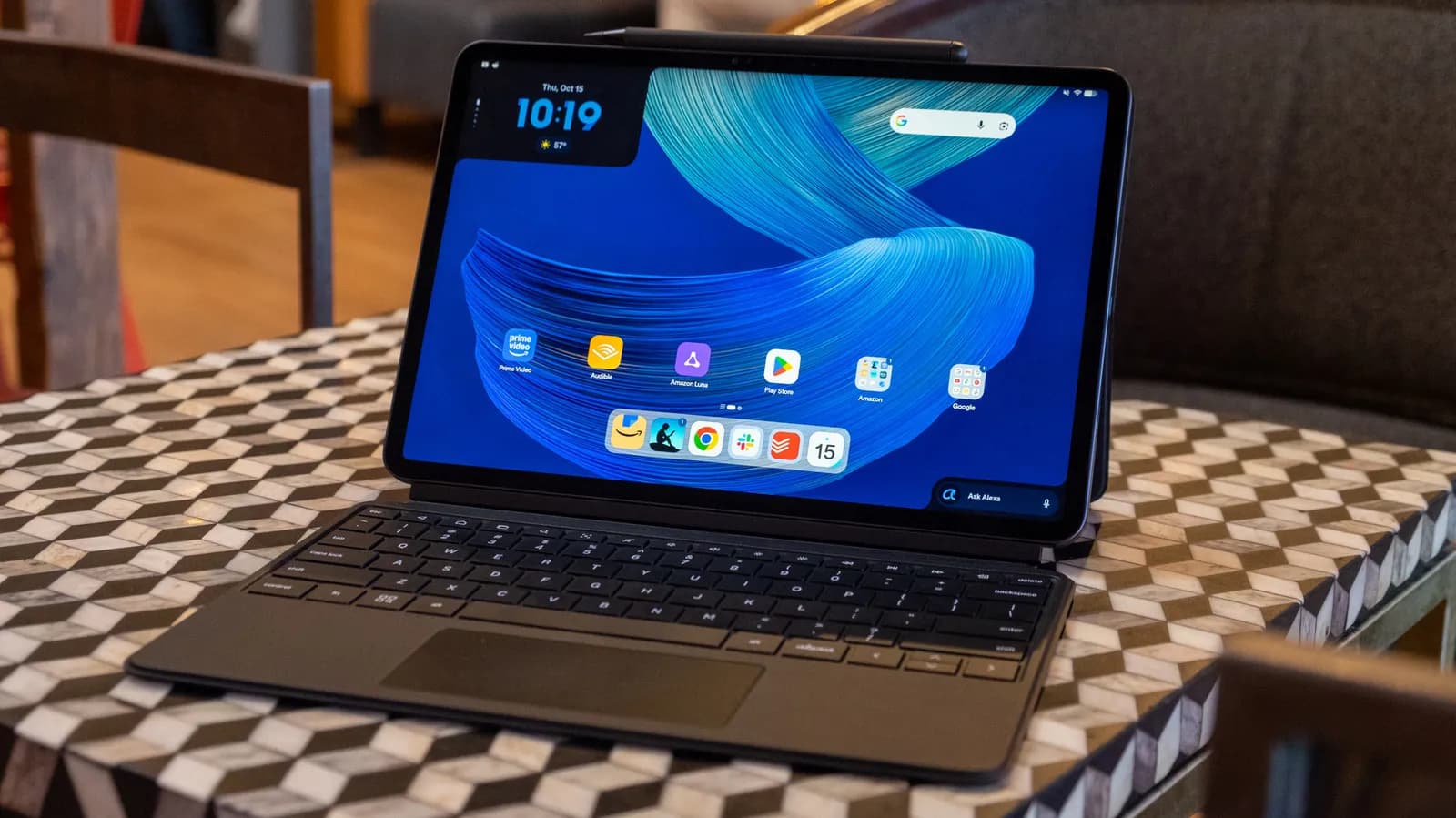
The arrival of a larger, premium-tier tablet under Amazon's umbrella represents a bold departure from that entry-level comfort zone. By investing in expansive displays, premium materials, and responsive input accessories, the tech giant is making an explicit push into territory traditionally held by Apple's iPad lineup and premium Android flagships. Yet as hardware quality ascends to meet modern standards, the user experience invariably collides with a familiar barrier: the persistent, structural friction of the large-screen Android software ecosystem.
The Hardware Evolution: Stepping Into Productive Glass
Engineering a modern 12-inch class tablet is fundamentally different from churning out seven-inch budget media slates. At this scale, thermal dissipation, chassis rigidity, battery balance, and display uniformity require careful industrial design. A larger canvas demands higher resolution to maintain crisp typography, as well as lower touch latency to support digital styluses without noticeable input lag. Premium hardware buyers expect robust aluminum enclosures, uniform bezels, and seamless integration with detachable magnetic keyboards.
From an engineering perspective, Amazon's willingness to build a flagship-grade device demonstrates how mature mobile hardware manufacturing pipelines have become. Component costs for high-density IPS panels, multi-speaker arrays, and mid-to-high-tier system-on-chip (SoC) architectures have dropped enough that even historically margin-sensitive vendors can deliver physically compelling hardware at accessible price points. When evaluated purely as a piece of consumer electronics, the device holds its own against competing hardware in the same price tier.
The Forked Operating System Conundrum
While the hardware achieves high marks, the software platform tells a much more nuanced story. Amazon's devices do not ship with stock Android or the standard suite of Google Mobile Services (GMS). Instead, they run Fire OS, a proprietary fork built on the open-source Android foundation (AOSP). For years, this architecture served Amazon perfectly: it directed every click, swipe, and search directly into the company's vast digital storefront, cloud locker, and Prime media catalog.
In a premium productivity context, however, that walled garden reveals significant cracks. Developers who target mainstream Android often rely heavily on Google Play services for push notifications, location APIs, background syncing, and user authentication. Without those standard libraries, developers must either maintain a bespoke build for the Amazon Appstore or risk their applications breaking when sideloaded. The result is a persistent application deficit, where productivity staples, developer utilities, and high-performance creative suites are either absent entirely or languishing several versions behind their primary mobile releases.
The Enduring Struggle of Big-Screen Android
Even setting aside Amazon's proprietary app marketplace limitations, the underlying Android foundation still struggles when stretched across twelve inches of glass. Historically, the vast majority of third-party Android software has been engineered with portrait-mode smartphones in mind. When rendered on an expansive landscape display, many legacy apps simply behave like blown-up mobile phone interfaces, leaving vast swaths of empty whitespace, stretched UI elements, and awkward touch target distributions.
Google has spent recent development cycles attempting to rectify this through modern platform updates, publishing large-screen guidelines, canonical design patterns, and adaptive UI APIs in Jetpack Compose. Modern toolkits make it simpler than ever to build responsive interfaces that reorganize into navigation rails, split panes, and multi-column layouts based on window size classes. Nevertheless, developer adoption remains uneven across the wider ecosystem. Without an overwhelming commercial imperative, many software teams prioritize standard mobile viewports over tablet optimization, leaving users with disjointed experiences when jumping between apps.
What This Means for Mobile Engineers and Designers
For software developers building for the mobile and tablet spaces, the expanding availability of capable, large-screen hardware underscores the urgency of building adaptive software from day one. Relying on fixed-width layouts or hardcoded screen orientations is no longer viable in a world where users expect desktop-like windowing capabilities. Implementing modern window size APIs allows applications to fluidly adapt whether running on a compact handset, a foldable device, or a docked twelve-inch tablet.
Key engineering focus areas for targeting this growing device class include:
- Adaptive Navigation: Replacing bottom navigation bars with persistent vertical navigation rails or expandable drawers when horizontal width passes standard breakpoint thresholds.
- Multi-Window and Drag-and-Drop: Supporting concurrent app execution, dynamic window resizing, and inter-application drag-and-drop mechanics for text, images, and documents.
- Input Diversity: Designing interactions that cater not just to touch targets, but to fine-grained pointer events from trackpads, physical mice, and active pressure-sensitive styluses.
- Ecosystem Independence: Decoupling critical core application logic from vendor-specific framework services, making it simpler to distribute across alternative storefronts without maintaining multiple codebases.
Strategic Outlook: Hardware Maturity Meets Software Reality
Amazon's venture into upscale tablet territory highlights an interesting inflection point in consumer hardware. The limiting factor in mobile productivity is no longer hardware performance or industrial build quality. Modern silicon is more than capable of handling multitasking workloads, and display technologies deliver vibrant visual clarity across all price bands. The real battleground remains firmly rooted in software ergonomics, platform developer relations, and cohesive ecosystem design.
As hardware manufacturers continue pushing the boundaries of what affordable tablets can deliver, the pressure shifts back to the development community and operating system maintainers. Unless platform holders actively incentivize developers to refine their large-screen implementations, even the most exquisitely engineered tablet will remain an overpowered video player rather than an indispensable productivity tool. For engineering teams watching the tablet market, the mandate is clear: responsive, input-agnostic design is no longer an optional luxury, but the baseline requirement for the next generation of connected personal computing.
Source: engadget.com