
Apple's M6 iMac Arrives: Pushing the Boundaries of Local AI and Silicon Efficiency

Introduction to the Next Generation of Mac Silicon
The pace of hardware evolution in consumer desktop computing has rarely moved faster than it has over the past few years. As artificial intelligence workloads transition from cloud-only datacenters to local silicon chips, the demand for powerful client-side hardware has never been higher. Apple's latest hardware refresh continues this trajectory, bringing the brand-new M6 chip architecture directly into its iconic all-in-one desktop form factor. Promising unprecedented leaps in both raw compute power and localized machine learning efficiency, this new machine signals a significant step forward for developers, creatives, and power users alike.
For years, the iMac has served as the gold standard for clean, clutter-free desktop environments. By integrating high-performance computing components directly behind a stunning high-resolution display, Apple carved out a unique niche that appealed equally to design studios, software engineers, and general consumers. With the integration of the M6 chip, this desktop is no longer just a sleek aesthetic statement; it is positioned as a serious powerhouse capable of tackling demanding modern computational tasks natively on the device.
The Architecture of the M6 Chip
At the heart of the new iMac lies the M6 processor, a marvel of modern semiconductor engineering. Building upon the foundational successes of previous M-series generations, the M6 introduces refinements to both performance and efficiency cores. The chip features an expanded core count alongside architectural optimizations that allow each individual core to deliver higher instructions-per-clock performance than its predecessor. This translates to snappier application launches, smoother multitasking, and improved thermal management under heavy, sustained workloads.
What sets the M6 apart in this latest iteration, however, is the redesign of its underlying execution pipelines. Apple's silicon engineering team has focused heavily on reducing memory latency and optimizing cache hierarchies. For developers compiling large codebases or rendering complex graphical assets, these low-level hardware improvements mean less time waiting on the metal and more time actively building and shipping software.
A Quantum Leap in On-Device AI Performance
Perhaps the most compelling narrative surrounding the M6 iMac is its dramatic enhancement in artificial intelligence processing capabilities. While earlier iterations of Apple silicon introduced dedicated Neural Engines that made running small machine learning models feasible, the M6 takes this capability to an entirely new tier. The updated Neural Engine boasts significantly more compute units and higher memory bandwidth, allowing it to execute large language models and computer vision tasks locally with remarkable speed.
This shift toward localized AI is more than just a marketing talking point; it has profound implications for software architecture and data privacy. By processing complex AI inferences directly on the local machine, developers can build applications that offer real-time intelligence without relying on costly or latency-prone cloud APIs. Whether running local coding assistants, generating high-resolution synthetic imagery, or processing audio streams in real time, the M6 iMac provides the raw computational muscle required for next-generation intelligent applications.
Developer Workflow and Software Optimization
For software engineers and technical creators, hardware upgrades are only as good as the software ecosystem that supports them. Fortunately, Apple's unified memory architecture and mature development toolchains, including Xcode and the Metal framework, are uniquely positioned to leverage the capabilities of the M6 chip. Compiling native code, running heavy containerized environments, and testing resource-intensive cross-platform applications all benefit immensely from the increased memory bandwidth and multi-core efficiency of the new iMac.
Furthermore, frameworks designed to accelerate machine learning—such as Core ML—allow developers to seamlessly integrate M6-specific hardware optimizations into their software stacks. Applications built to utilize the upgraded Neural Engine can offload heavy matrix multiplications and tensor operations away from the main CPU and GPU cores, resulting in cooler operation, lower power consumption, and noticeably faster execution times for AI-driven features.
Design Evolution Meets Thermal Efficiency
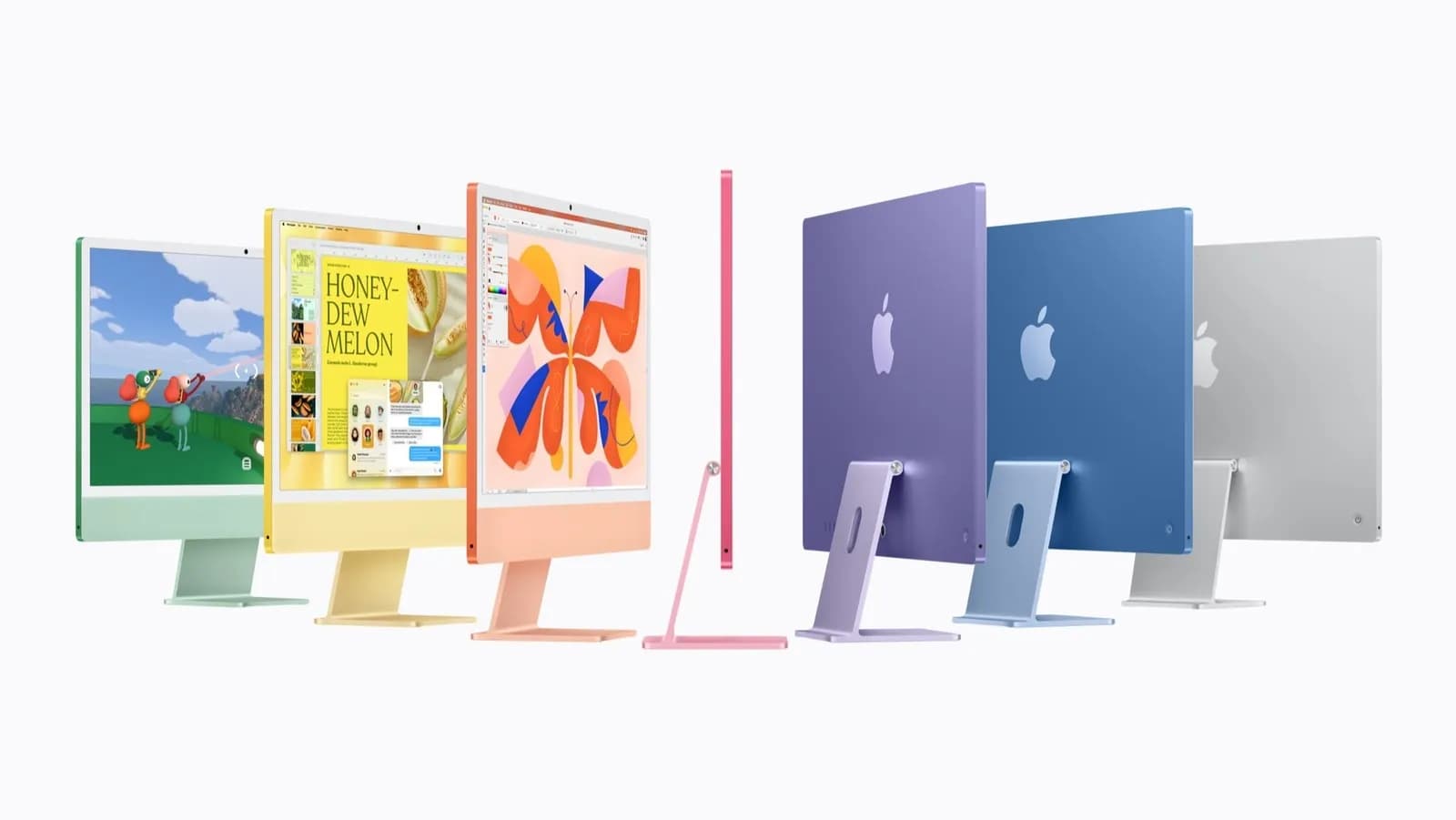
Despite the massive performance gains housed within the M6 iMac, the physical chassis maintains the ultra-thin, vibrant aesthetic that has defined the lineup since its major redesign. Achieving this level of performance without drastically increasing the physical footprint of the machine is a testament to the sheer efficiency of Apple silicon. The thermal architecture has been subtly refined to dissipate heat quietly and effectively, ensuring that the system can maintain peak performance during sustained rendering or compilation tasks without kicking up distracting fan noise.
Additionally, the integration of high-speed unified memory directly onto the package enables instantaneous data sharing between the CPU, GPU, and Neural Engine. This eliminates traditional bottlenecks associated with discrete memory architectures, allowing the system to handle massive datasets and high-resolution assets smoothly, whether editing 8K video timelines or managing expansive relational databases locally during development cycles.
The Broader Industry Impact
The introduction of the M6 iMac arrives at a fascinating inflection point for the personal computer industry. As major tech companies fiercely compete to dominate the consumer AI space, the debate between cloud-based intelligence and edge computing continues to evolve. By equipping an all-in-one desktop with hardware capable of running sophisticated AI models natively, Apple is reinforcing its commitment to local privacy, low latency, and offline capability.
Competitors in the Windows and Linux ecosystems are similarly rolling out dedicated neural processing units (NPUs), but Apple's tight vertical integration between custom silicon and operating system software gives it a unique advantage in developer adoption. As more software tools embrace local AI acceleration, hardware platforms like the M6 iMac will likely set the baseline expectation for what professional and prosumer desktop computers must deliver.
Closing Takeaway
The M6 iMac represents a mature, highly refined evolution of Apple's desktop strategy, blending elegant industrial design with cutting-edge silicon performance. By delivering substantial gains in core efficiency and a massive leap in local AI processing power, it bridges the gap between sleek consumer hardware and heavy-duty professional workstation. For developers and tech enthusiasts looking to future-proof their local development environments and embrace the wave of on-device machine learning, the M6 iMac proves to be a compelling and forward-looking piece of machinery.Source: engadget.com