
Ayaneo Condenses Retro Gaming into the Tiny Pocket Block

The Evolution of Pocket-Sized Emulation
The retro handheld ecosystem has experienced a massive boom over the last few years, transitioning from niche community hobbyist projects to a fiercely competitive consumer electronics market. Companies like Ayaneo have continually pushed boundaries by releasing everything from high-end, Windows-powered gaming rigs to ultra-portable emulation devices. The introduction of the Konkr Pocket Block marks a distinct philosophical shift toward extreme portability, bringing a much smaller physical footprint to a market that has often prioritized larger screens and ergonomic controller grips.
By intentionally targeting a lower price point, this device opens up retro gaming to a broader demographic of enthusiasts who want a secondary device they can toss into a bag or pocket without hesitation. The engineering challenge in building sub-$100 handhelds often lies in balancing build quality, battery life, and thermal dissipation while keeping component costs minimal. Ayaneo's entry into this ultra-compact space signals a growing belief that consumers are eager for form factors that harken back to the original handheld gaming boom of the late 1980s and 1990s.
Anatomy of the Pocket Block Design
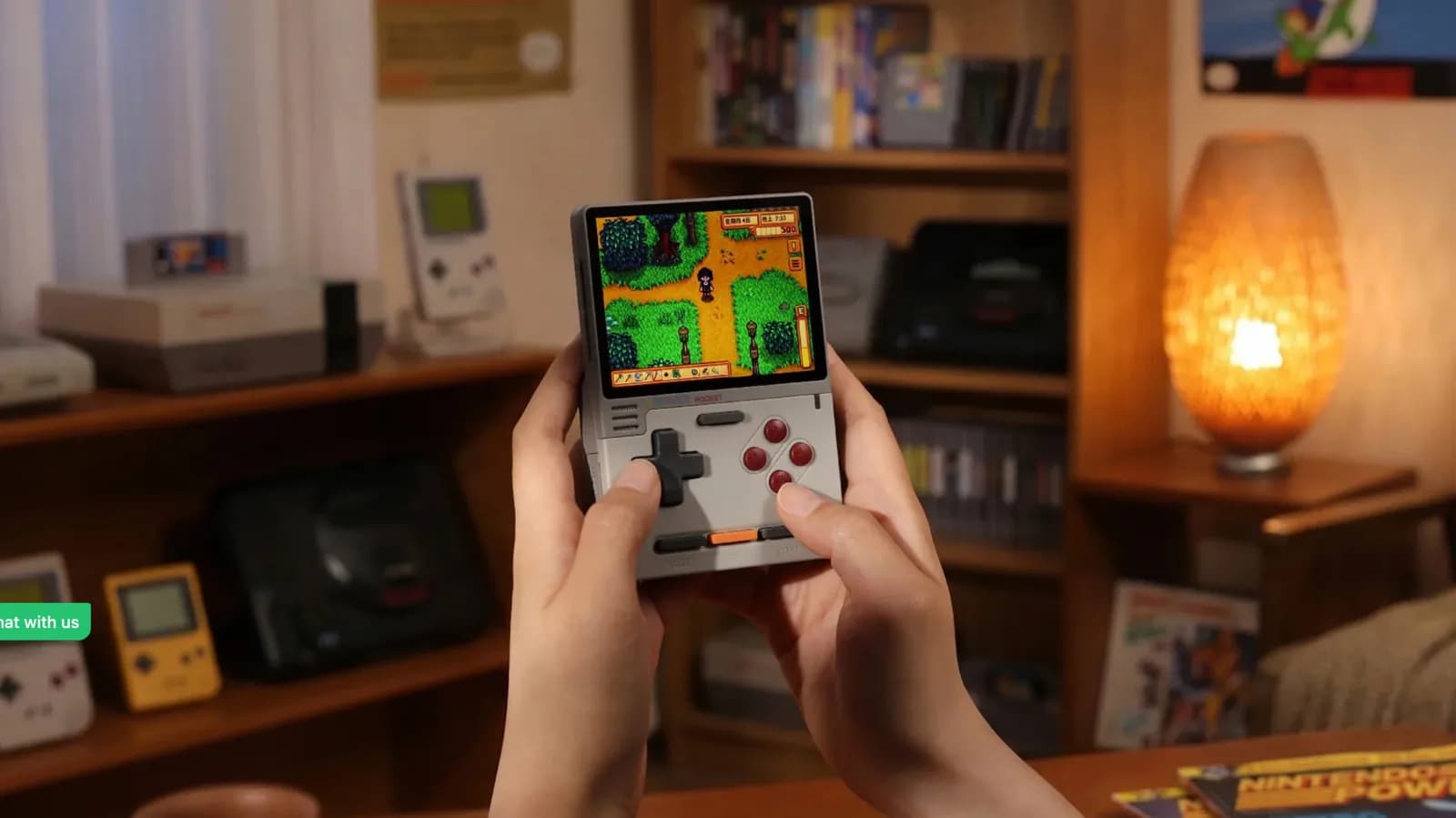
At first glance, the Konkr Pocket Block immediately evokes nostalgia, channeling the timeless vertical orientation popularized by Nintendo's iconic Game Boy. This layout places the display near the top of the chassis with the directional pad, action buttons, and auxiliary inputs positioned below. While vertical handhelds can sometimes feel cramped during extended play sessions, their compact nature makes them exceptionally appealing for quick, casual gaming bursts on the commute or during travel.
Despite its small stature and aggressive pricing, the hardware design maintains a clean, modern aesthetic typical of Ayaneo products. The physical controls are tightly arranged to preserve the device's slender profile, requiring careful mechanical tuning to ensure satisfactory tactile feedback without suffering from accidental inputs. Designers must carefully optimize internal space to route ribbon cables, secure the battery, and house the system-on-a-chip while ensuring the exterior shell remains comfortable to hold.
Performance Expectations and Software Ecosystem
When dealing with a budget-friendly retro handheld priced under ninety dollars, managing expectations regarding emulation performance is essential. While the device will comfortably handle classic 8-bit and 16-bit systems—such as the NES, SNES, Game Boy Advance, and Sega Genesis—its capabilities with more demanding 3D libraries like the PlayStation Portable, Dreamcast, or early sixth-generation consoles will depend heavily on its chosen internal silicon. Modern budget chips have grown remarkably capable, but thermal limits in a device this small mean sustained high-performance workloads can trigger throttling.
On the software front, these devices typically rely on customized Linux distributions or lightweight Android builds designed specifically for handheld navigation. A streamlined user interface that organizes ROM libraries, scrapes box art, and manages emulator cores is critical for a smooth user experience. For developers and tinkerers who enjoy modifying firmware, these budget systems often become playgrounds for custom community builds, alternative frontends, and performance tweaks that extract every ounce of power from the modest hardware.
Why Ultra-Compact Handhelds Still Matter
In an era dominated by sprawling smartphones and massive, controller-laden gaming PCs, the enduring appeal of dedicated pocket-sized retro hardware might seem counterintuitive. However, dedicated gaming devices provide a friction-free environment devoid of notifications, phone calls, and multitasking distractions. A tiny handheld like the Pocket Block offers a pure, singular focus on the game, functioning as an intentional antidote to modern digital fatigue.
Furthermore, form factor diversity keeps the retro gaming community vibrant. While powerful, ergonomically contoured devices are great for multi-hour RPG sessions at home, ultra-portable units fill a completely different lifestyle niche. They prioritize EDC (everyday carry) practicality, ensuring that nostalgia is always within arm's reach. The ongoing competition in this space drives rapid iteration, meaning consumers benefit from better screens, improved button materials, and more efficient operating systems year after year.
The Developer and Enthusiast Perspective
For software developers and hardware modders, the proliferation of cheap, accessible handhelds represents an exciting playground. Open-source emulator development thrives when new hardware form factors enter the market, as programmers rush to optimize code for varying screen resolutions, aspect ratios, and input mappings. Ensuring that low-power chips can run complex emulation software efficiently requires deep systems-level optimization, from graphics pipeline tweaks to memory management.
Additionally, the vibrant ecosystem surrounding alternative firmware—such as GarlicOS, Batocera, or custom Android launchers—highlights the collaborative nature of the retro gaming community. Enthusiasts frequently rewrite or improve upon stock manufacturer software, fixing input latency bugs, enhancing audio drivers, and adding new features that the original hardware creators never envisioned. This continuous loop of community-driven software enhancement breathes long-term life into devices that might otherwise be treated as disposable consumer goods.
Looking Ahead at the Handheld Market
As the Konkr Pocket Block moves from pre-order status to shipping units, its market reception will provide valuable data on consumer appetite for ultra-compact, budget-tier emulation hardware. If successful, it may inspire competitors to rethink their product roadmaps, focusing less on raw horsepower inflation and more on creative form factors, affordability, and portability. The trend toward shrinking powerful tech into retro-inspired shells shows no signs of slowing down.
Ultimately, devices like this remind the tech industry that bigger is not always better. By stripping away excess weight and focusing strictly on the essentials of portable play, manufacturers can deliver delightful consumer gadgets that spark joy for both veteran gamers and younger enthusiasts discovering classic game design for the very first time.
Source: engadget.com