
BepiColombo’s Final Approach: Decoding Mercury’s Planetary Mysteries

An Interplanetary Odyssey Nears Its Destination
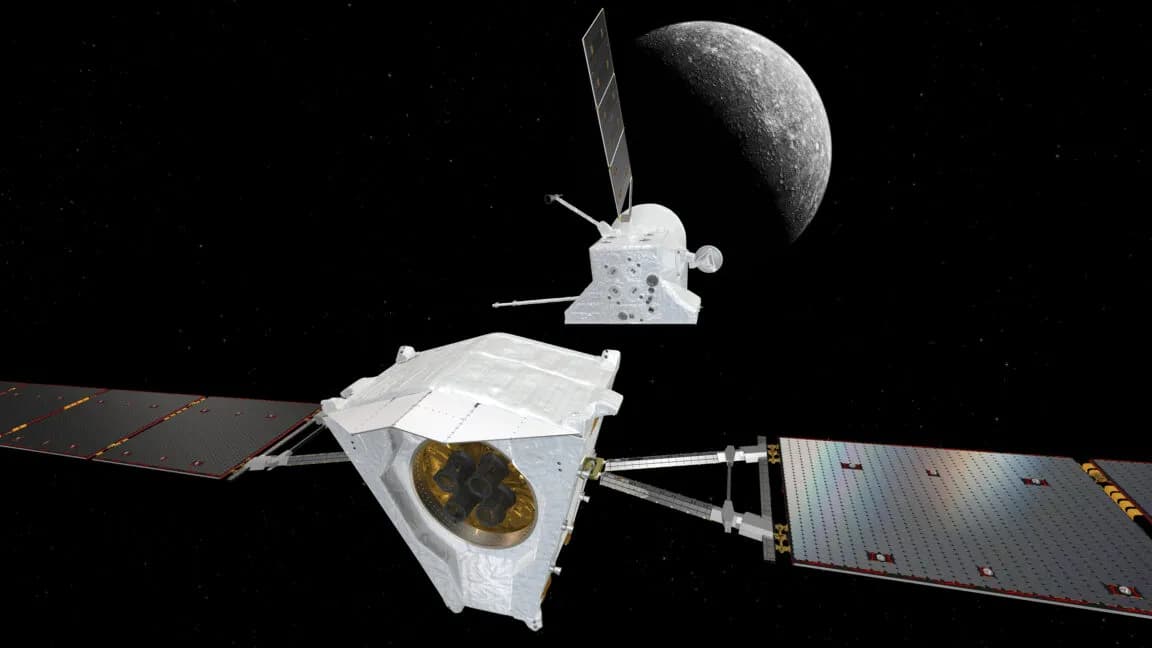
After nearly a decade of traversing the treacherous vacuum of deep space, navigating complex gravitational assists, and enduring extreme thermal environments, the joint European and Japanese BepiColombo mission is finally entering its endgame. Launched over eight years ago, the dual-spacecraft assembly is closing in on its ultimate destination: Mercury, the smallest, densest, and least explored rocky planet in our solar system. This milestone represents a monumental achievement in modern aerospace engineering, pushing the boundaries of what automated probes can endure.
Getting to Mercury is a feat of orbital mechanics that requires far more energy than traveling to outer planets like Jupiter or Saturn. Because Mercury sits deep inside the Sun’s formidable gravitational well, any spacecraft attempting to enter its orbit must constantly brake against the Sun's immense pull. To shed the necessary velocity without running out of propellant, BepiColombo has relied on a meticulously choreographed dance of planetary flybys, skimming past Earth, Venus, and Mercury itself multiple times to bleed off speed.
Understanding the Enigmatic Inner World
Despite its proximity to Earth, Mercury remains one of the most enigmatic bodies in our cosmic neighborhood. Previous missions like NASA’s Mariner 10 and MESSENGER provided tantalizing glimpses, mapping much of its heavily cratered surface and discovering unexpected elements like water ice hiding in permanently shadowed polar craters. However, fundamental questions about its origin, internal structure, and evolution have remained stubbornly unanswered, leaving planetary scientists eager for fresh, high-resolution data.
The primary motivation behind BepiColombo is to unravel how a planet so close to a star could form and evolve. Mercury boasts an unusually massive metallic core that takes up roughly 85 percent of the planet's radius, a stark contrast to Earth's relatively thin core. Researchers hope to determine whether this unique composition is the result of a catastrophic ancient collision that stripped away the outer mantle, or if it is simply a natural consequence of primordial solar nebula dynamics.
A Dual-Spacecraft Architecture
To maximize scientific return, BepiColombo is cleverly split into two distinct orbiters that will separate once they achieve their final orbits around the planet: the European Mercury Planetary Orbiter (MPO) and the Japanese Mercury Magnetospheric Orbiter (MMO), also known as Mio. Each spacecraft is tailored to address specific scientific domains, ensuring that everything from surface mineralogy to particle physics in the planet's magnetic field is studied simultaneously.
The MPO will focus on surface mapping, internal gravity fields, and exosphere dynamics, utilizing an array of high-resolution cameras, spectrometers, and radiometers. Meanwhile, Mio will orbit at a higher altitude to study Mercury’s surprisingly active intrinsic magnetic field and its complex interactions with the solar wind. Because Mercury has no substantial atmosphere to protect it, the solar wind slams directly into its surface, creating a dynamic space weather laboratory right on our cosmic doorstep.
Engineering for Extreme Thermal Environments
Operating a spacecraft in the vicinity of Mercury is an unprecedented thermal nightmare. Direct sunlight at Mercury's distance is up to ten times more intense than what we experience on Earth, baking sun-facing surfaces to temperatures exceeding 400 degrees Celsius, while nearby shaded regions plummet well below freezing. Protecting delicate onboard electronics and optical sensors requires radical thermal architecture, highly reflective multi-layer insulation blankets, and specialized ceramic coatings.
Even the propulsion systems and solar arrays have had to undergo rigorous testing to survive these brutal temperature gradients. The solar panels, for instance, are designed to tilt away from the direct glare at extreme angles to prevent overheating while still harvesting enough photons to power the instruments. For systems architects and aerospace engineers, the lessons learned from BepiColombo’s thermal survival guide will directly influence the design of future inner-solar-system probes.
Broader Implications for Planetary Science
Beyond simply cataloging Mercury’s geology, missions like BepiColombo serve as a crucial touchstone for understanding rocky exoplanets orbiting distant stars. A vast majority of the rocky exoplanets discovered by telescopes like Kepler and TESS orbit very close to their host stars, experiencing extreme stellar radiation and tidal forces similar to Mercury. By studying how Mercury handles these harsh conditions, scientists can build better predictive models for exoplanetary habitability and atmospheric retention across the galaxy.
Furthermore, comparative planetology relies on having complete data sets for all terrestrial bodies in our own solar system. Earth, Venus, Mars, and Mercury share a common birth era, yet their evolutionary paths diverged wildly. Pinpointing the exact chemical signatures and geological history of Mercury helps fill a massive missing puzzle piece in our overarching narrative of how rocky worlds transform over billions of years.
Looking Ahead to Science Operations
As BepiColombo prepares for final orbit insertion, the international science team is shifting from years of transit-phase checkouts to high-stakes operational planning. Every instrument must be calibrated precisely, and data pipelines must be thoroughly stress-tested to handle the massive influx of telemetry once mapping begins in earnest. The coming months will require absolute precision from flight controllers on the ground as they guide the spacecraft through its final braking phases.
The success of this mission will mark a monumental triumph for both the European Space Agency and the Japan Aerospace Exploration Agency, demonstrating the power of deep-space international collaboration. As the probes finally settle into their designated paths around the scorched planet, humanity is poised to finally decode the deepest secrets of our solar system's most elusive wanderer.
Source: arstechnica.com