Bluesky Brings Native iPad Optimization and Enhanced Profile Linking to Its Ecosystem

Expanding Horizons on Tablet Form Factors
The modern multi-device landscape demands flexibility, requiring platforms to meet users seamlessly across a variety of form factors. For a long time, users relying on Apple's tablet ecosystem for reading, writing, and curation were constrained by stretched smartphone interfaces when interacting with decentralized microblogging platforms. The recent update from Bluesky directly addresses this architectural limitation by introducing native tablet support tailored specifically for the iPad.
Adapting an application designed for vertical smartphone screens to leverage the expansive horizontal canvas of a tablet requires thoughtful layout restructuring. Multi-column viewing modes, sidebar navigation menus, and improved utilization of screen real estate transform the consumption experience. For power users, journalists, and developers who rely on tablets for real-time monitoring and communication, this update bridges a critical gap in daily workflows, turning the application from a mere scaled-up mobile app into a first-class citizen of the iPadOS ecosystem.
The Architecture of Decentralized Social Clients
Behind the user-facing interface adjustments lies the underlying reality of how modern social media clients are constructed. Built upon the AT Protocol, Bluesky operates with a decoupled architecture where clients can be independently developed and deployed. While alternative third-party clients have experimented with tablet layouts, having an officially maintained, polished native application ensures a baseline of high-performance rendering, reliable state management, and smooth touch-target optimization.
Developing robust tablet applications involves careful handling of dynamic view hierarchies, responsive layout constraints, and orientation changes. The engineering team's focus on refining the tablet experience signifies a maturing product lifecycle. As the platform transitions from an experimental alternative to a mainstream hub for digital communities, ensuring parity across mobile, tablet, and web interfaces is a necessary milestone for user retention and overall platform adoption.
Interoperability Through Third-Party Profile Links
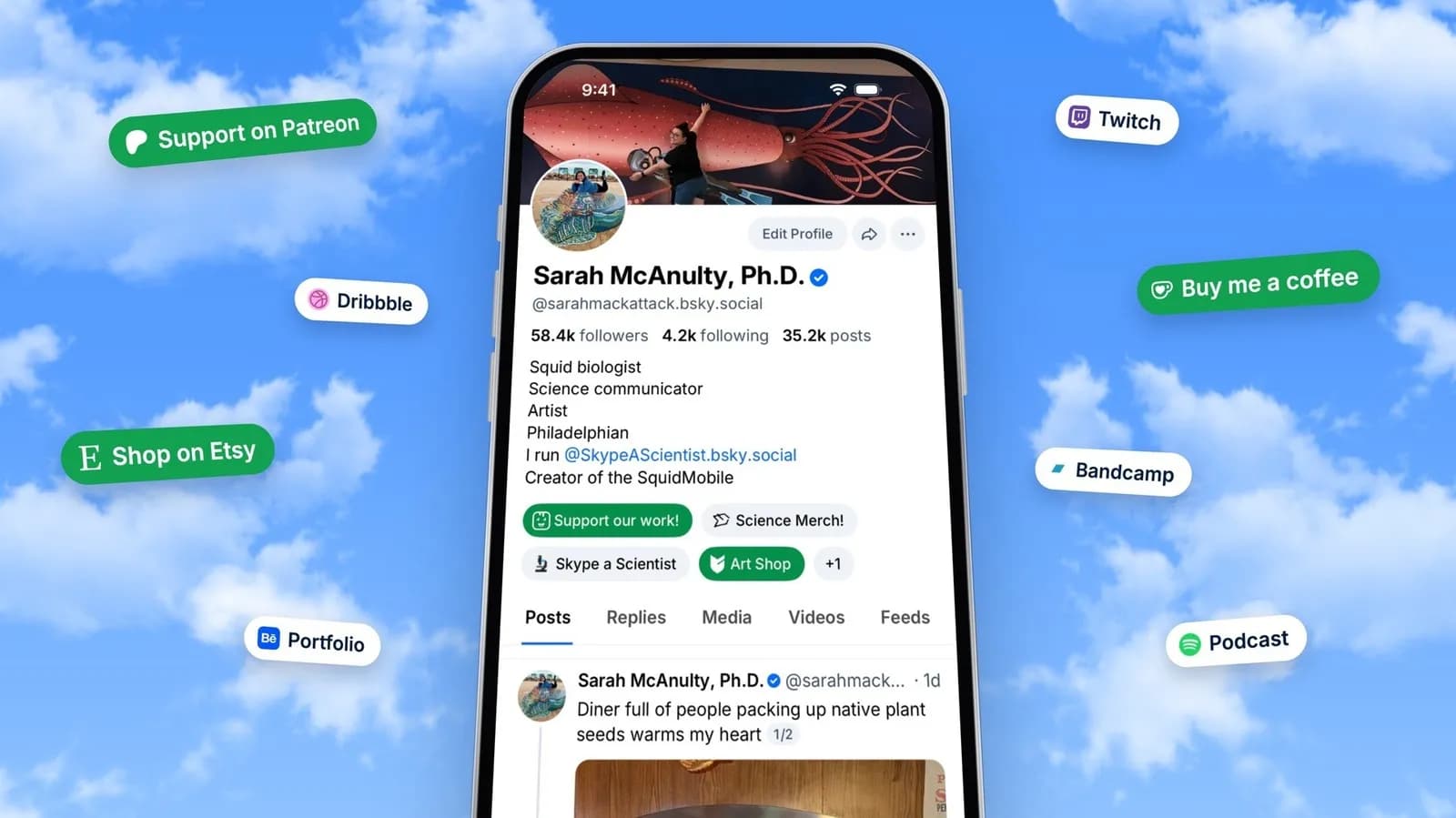
Alongside hardware-focused improvements, the platform has rolled out a subtle yet powerful identity feature: the ability to link external third-party profiles directly from a user's main profile page. In an era where digital identity is fragmented across multiple platforms, code repositories, design portfolios, and alternative networks, having a unified space to anchor these connections is vital for authenticating creators, engineers, and public figures.
This integration aligns well with the foundational ethos of decentralized protocols, which emphasize user sovereignty over identity and data. By allowing individuals to associate their accounts with verifiable external endpoints, the network fosters trust without forcing users into a walled garden. Developers and open-source contributors can now easily point to their code hosting profiles, personal blogs, or niche community hubs, creating a more cohesive digital footprint across the decentralized web.
Why This Update Matters for the Developer Community
For developers, technology writers, and open-source advocates who have migrated toward decentralized networks, platform ergonomics heavily influence daily engagement. Tools that fit neatly into professional workflows—such as monitoring a development stream on an iPad while writing code on a primary workstation—reduce friction and encourage sustained participation. The introduction of robust tablet support makes it easier to keep a pulse on industry discussions, architectural debates, and emerging projects in real time.
Furthermore, the profile linking mechanism provides an interesting case study in identity federation and cross-platform referencing. As developers continue to build tools, bots, and integrations on top of the protocol, maintaining clean, interoperable metadata standards for user profiles ensures that external applications can reliably parse and display these connections without centralized bottlenecks.
Technical Challenges in Multi-Platform Client Scaling
Scaling a social media platform across multiple operating systems and screen sizes introduces unique technical overhead. Engineers must balance feature parity across iOS, Android, and web clients while accommodating platform-specific design guidelines and performance constraints. State synchronization, push notification handling, and local database caching on tablets often require distinct strategies compared to smaller mobile devices.
As the platform continues to scale its user base, optimizing network requests and rendering performance on larger screens will remain an ongoing engineering focus. Ensuring that infinite-scrolling feeds remain buttery-smooth, even when populated with rich media and complex thread trees on a tablet, demonstrates a commitment to technical excellence that resonates strongly with software engineers who scrutinize performance metrics.
Looking Ahead: The Evolution of the Ecosystem
The steady cadence of feature releases indicates a healthy, active development cycle for the platform. By addressing immediate usability concerns like tablet optimization while simultaneously enhancing identity features like cross-platform links, the project strengthens its competitive positioning in the modern social media landscape. Developers and power users alike will be watching closely to see how the client architecture evolves to support even more advanced customization and productivity features in future updates.
Source: engadget.com