
Building a Cray-1 Supercomputer Replica out of 30 Obsolete Mac Minis

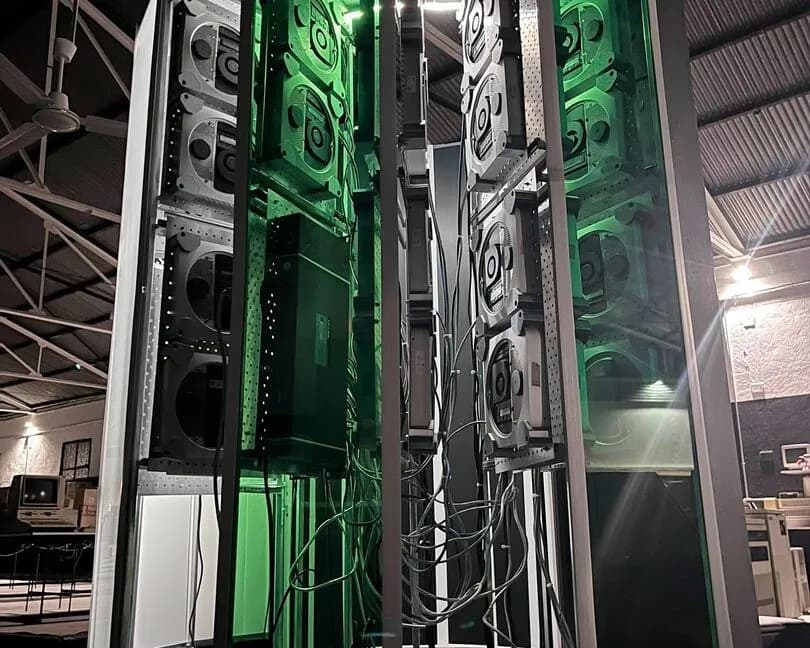
Bridging Eras in Computing History
The intersection of vintage computing and modern hardware upcycling often yields fascinating tributes, but few projects capture the imagination quite like a full-scale replica built from discarded electronics. At the Museo de Historia de la Computación in Spain, enthusiasts and curators have turned thirty aging Apple Mac Mini desktop computers into an homage to one of the most iconic pieces of engineering in human history: the Cray-1 supercomputer. This striking visual crossover juxtaposes the monumental architecture of 1970s high-performance computing with the sleek, compact form factor of early Intel-based Apple hardware.
While the original Cray-1 demanded massive physical infrastructure, specialized liquid cooling, and a dedicated power grid, modern microarchitecture packs immense processing potential into shockingly small footprints. By arranging thirty of these retired Mac Minis in the characteristic horseshoe configuration reminiscent of Seymour Cray's masterpiece, the museum has created a powerful artistic statement about the relentless pace of technological obsolescence. It highlights how yesterday's luxury workstations or consumer desktop hubs inevitably become tomorrow's raw materials for creative preservation.
The Engineering and Anatomy of the Original Cray-1
To understand why this replica resonates so deeply with engineers and computer historians, one must look at the monumental achievement of the original Cray-1. Introduced in the mid-1970s, it introduced vector processing to the mainstream of scientific computing, shattering performance benchmarks of its era. Its distinctive C-shaped chassis was not merely an aesthetic choice; it was an ingenious engineering solution designed to minimize wire lengths between logic modules, thereby reducing signal propagation delays to the absolute minimum necessary for high-speed computation.
Inside that famous fiberglass-trimmed bench seat lived a maze of densely packed circuit boards and an intricate Freon-based cooling system. It was designed to crunch numbers for weather forecasting, nuclear physics, and aerospace engineering, commanding multi-million-dollar price tags and requiring a dedicated team of system administrators. Replicating the physical silhouette of such a titan using consumer desktop enclosures serves as a testament to how far industrial design and silicon integration have traveled over the past several decades.
The Art and Philosophy of Hardware Upcycling
In an industry plagued by constant electronic waste and premature hardware depreciation, creative reuse projects offer a refreshing counter-narrative. Millions of computers functional enough for basic tasks are discarded annually simply because they no longer receive operating system updates or fail to meet the resource demands of modern software bloating. Transforming these obsolete machines into museum exhibits or functional cluster nodes demonstrates a sustainable mindset that the tech sector desperately needs to embrace more widely.
Using thirty Mac Minis to build a stylistic monument does more than just clear out electronic clutter; it recontextualizes defunct technology. Those compact aluminum squares, once sitting on corporate desks or home offices, find a second life as architectural building blocks. It challenges developers, hobbyists, and institutions to look at older hardware not as garbage to be shredded, but as a modular medium for sculpture, educational displays, or even low-power distributed computing clusters.
Parallel Processing Meets Retro Architecture
Beyond the undeniable aesthetic appeal, projects like this naturally spark curiosity among developers and systems architects regarding what such a cluster could actually achieve if wired together. While the Museo de Historia de la Computación build primarily serves as a visual and historical exhibit, thirty Mac Minis grouped in a physical cluster represent a formidable amount of aggregate compute power compared to the original Cray-1. Even an older generation of Intel-based Mac Minis possesses multi-core CPU architectures that drastically eclipse the raw floating-point operations of 1970s supercomputing royalty.
Of course, orchestrating thirty discrete desktop machines into a unified distributed system presents its own set of logistical challenges. Issues of network topology, power distribution, thermal management within a constrained enclosure, and software orchestration via tools like Kubernetes or MPI would turn such a setup into a fascinating systems administration puzzle. Even if the current museum piece functions purely as a static artistic replica, the conceptual bridge between vintage architecture and parallel cluster computing remains an irresistible thought experiment for modern programmers.
Ultimately, this creative amalgamation of old Apple hardware and legendary supercomputer design reminds the tech community of its own rich heritage. As software engineering becomes increasingly abstracted through cloud layers and managed services, tangible tributes to foundational hardware ground us in the physical reality of computation. Whether inspiring the next generation of computer science students or simply bringing a smile to a seasoned developer's face, the Mac Mini Cray-1 stands as a brilliant reminder of ingenuity, irony, and enduring design.
Source: arstechnica.com