
China's Ultra-Fast EV Batteries Signal a New Paradigm for Energy Storage and Tech

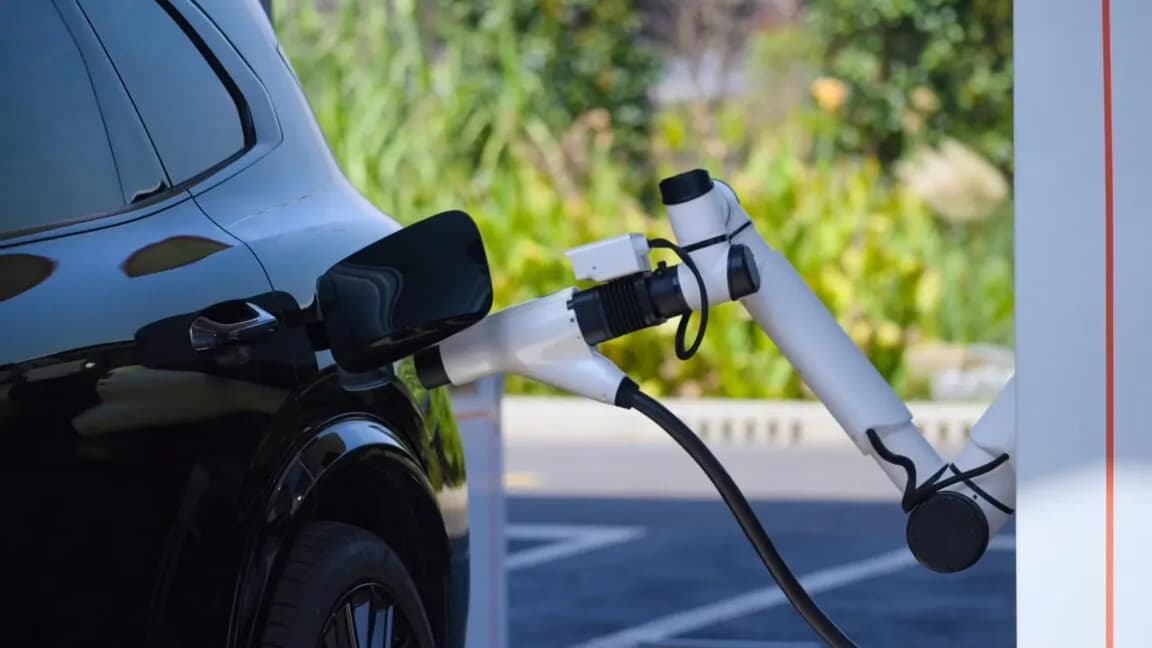
The Engineering Leap Behind Sub-Five-Minute Charging
For years, the primary bottleneck holding back electric vehicle adoption has not been raw performance or even raw driving range, but rather the time spent tethered to a charger. While internal combustion vehicles take mere minutes to refuel, even high-end DC fast chargers have traditionally required a significant coffee break to replenish an EV battery pack. However, recent breakthroughs in battery chemistry emerging from international markets are fundamentally rewriting these expectations, demonstrating that an LFP (lithium iron phosphate) battery can surge from a ten percent state of charge to seventy percent in just four and a half minutes.
Achieving this level of rapid energy transfer without immediately degrading the cell or causing catastrophic thermal runaway requires mastering intricate material science challenges. LFP chemistries are historically celebrated for their safety, thermal stability, and low production costs relative to nickel-manganese-cobalt alternatives, but they have traditionally lagged behind in energy density and charging rates. The latest generation overcomes these limitations by operating at elevated temperatures—specifically around 65 degrees Celsius—alongside advanced internal architectural redesigns that drastically minimize internal resistance and facilitate rapid ion diffusion across the electrodes.
The Growing Gap Between Global EV Infrastructures
This technical milestone serves as a stark reminder of the widening technological chasm separating different global markets in the electric vehicle sector. While Western markets grapple with rolling out reliable 350-kilowatt chargers that can take upwards of twenty to thirty minutes under optimal conditions, manufacturers abroad are designing systems that operate on entirely different power curves. The hardware required to support sub-five-minute charging demands grid-level engineering, ultra-high-voltage architectures, and specialized cooling loops that are difficult to deploy at scale without massive capital investment.
As these ultra-fast LFP cells move closer to mass production and commercial deployment, they threaten to render current charging infrastructure investments obsolete or fundamentally inadequate. Western automotive developers and energy providers now face an uncomfortable reality: consumer expectations will inevitably shift toward these hyper-fast refueling times. Meeting this demand will require a radical reimagining of local power grids, substation capacities, and battery management systems to safely handle the monumental power draws required for multi-megawatt charging hubs.
Thermal Management and the Physics of Rapid Ion Flow
At the heart of this charging revolution is a sophisticated approach to thermal management. Pushing massive currents through a battery pack generates enormous amounts of Joule heating, which can quickly destroy the cathode and anode structures through lithium plating and accelerated dendrite formation. To safely achieve a sub-five-minute 10-to-70 percent charge, engineers had to rethink how cells handle heat. By intentionally operating the pack at an elevated temperature threshold of 65°C, the internal viscosity of the electrolyte drops significantly, accelerating the kinetic movement of lithium ions between the layers.
Of course, sustaining these high operating temperatures without compromising long-term cycle life requires precise, software-driven thermal regulation. Modern battery management systems (BMS) must act as real-time control loops, constantly monitoring voltage drops, cell resistance, and thermal gradients across every individual module in the pack. This intersection of hardware engineering and advanced algorithmic control represents a masterclass in embedded systems design, proving that next-generation battery performance relies just as heavily on software intelligence as it does on chemical formulation.
Implications for Software Developers and Embedded Systems
For software engineers and embedded systems developers working in the automotive and energy sectors, these ultra-fast charging technologies introduce a wave of fresh architectural challenges. Managing rapid energy intake requires predictive algorithms capable of forecasting thermal loads microseconds before they materialize. Furthermore, vehicle-to-grid (V2G) applications and smart charging protocols must evolve to handle the immense throughput of power safely, protecting both the vehicle's powertrain and the local microgrid from sudden power spikes.
As vehicles become increasingly software-defined, the BMS is no longer just a passive safety monitor; it is the central nervous system of the car's energy ecosystem. Developers must build resilient, fault-tolerant firmware that can dynamically adjust charging profiles based on ambient weather, grid stability, and battery health telemetry. The shift toward five-minute charging means that any latency or inefficiency in the software stack can lead to immediate thermal stress, elevating the importance of rigorous testing, hardware-in-the-loop simulation, and secure over-the-air update pipelines.
Supply Chain and Economic Realities of Advanced LFP
Beyond the raw physics and software demands, the widespread adoption of advanced LFP cells carries profound economic implications for the global supply chain. Because LFP chemistry avoids costly and geopolitically sensitive materials like cobalt and nickel, it lowers the barrier to entry for mass-market electric vehicles. However, the specialized manufacturing processes required to produce these ultra-fast charging cells mean that production lines cannot be thrown together overnight. Facilities must be re-tooled with precision coating equipment, advanced separators, and robust automated quality control systems.
This dynamic creates a competitive bottleneck where the intellectual property and manufacturing know-how remain concentrated among a handful of dominant players. For international competitors attempting to catch up, the challenge is twofold: they must not only replicate the chemical and thermal breakthroughs in a lab setting but also scale those innovations to millions of units while maintaining strict safety standards. The race is no longer just about who can build the cheapest battery, but who can engineer the most resilient energy ecosystem from the cell up to the cloud.
What Lies Ahead for Fast-Charging Technology
The successful demonstration of sub-five-minute LFP charging marks a critical inflection point, signaling that the theoretical limits of chemical energy storage are far more flexible than previously assumed. As these technologies transition from controlled laboratory environments to real-world consumer vehicles, they will inevitably pressure regulatory bodies, infrastructure planners, and automotive manufacturers to accelerate their modernization roadmaps. The psychological barrier of range anxiety and long charging queues is finally beginning to crumble under the weight of relentless engineering.
Ultimately, this development underscores the relentless pace of innovation in the broader hardware and energy sectors. For developers and technologists, it serves as a powerful reminder that software and hardware are deeply intertwined, and that breakthroughs in foundational materials can instantly redefine the scope of what is digitally and physically possible. The future of transportation will not be won by incremental updates, but by paradigm shifts that fundamentally alter how we capture, store, and distribute power.
Source: arstechnica.com