
Cross-Platform Feat: Running PS5 Titles on Xbox Series X Highlights Modern Architecture Convergence

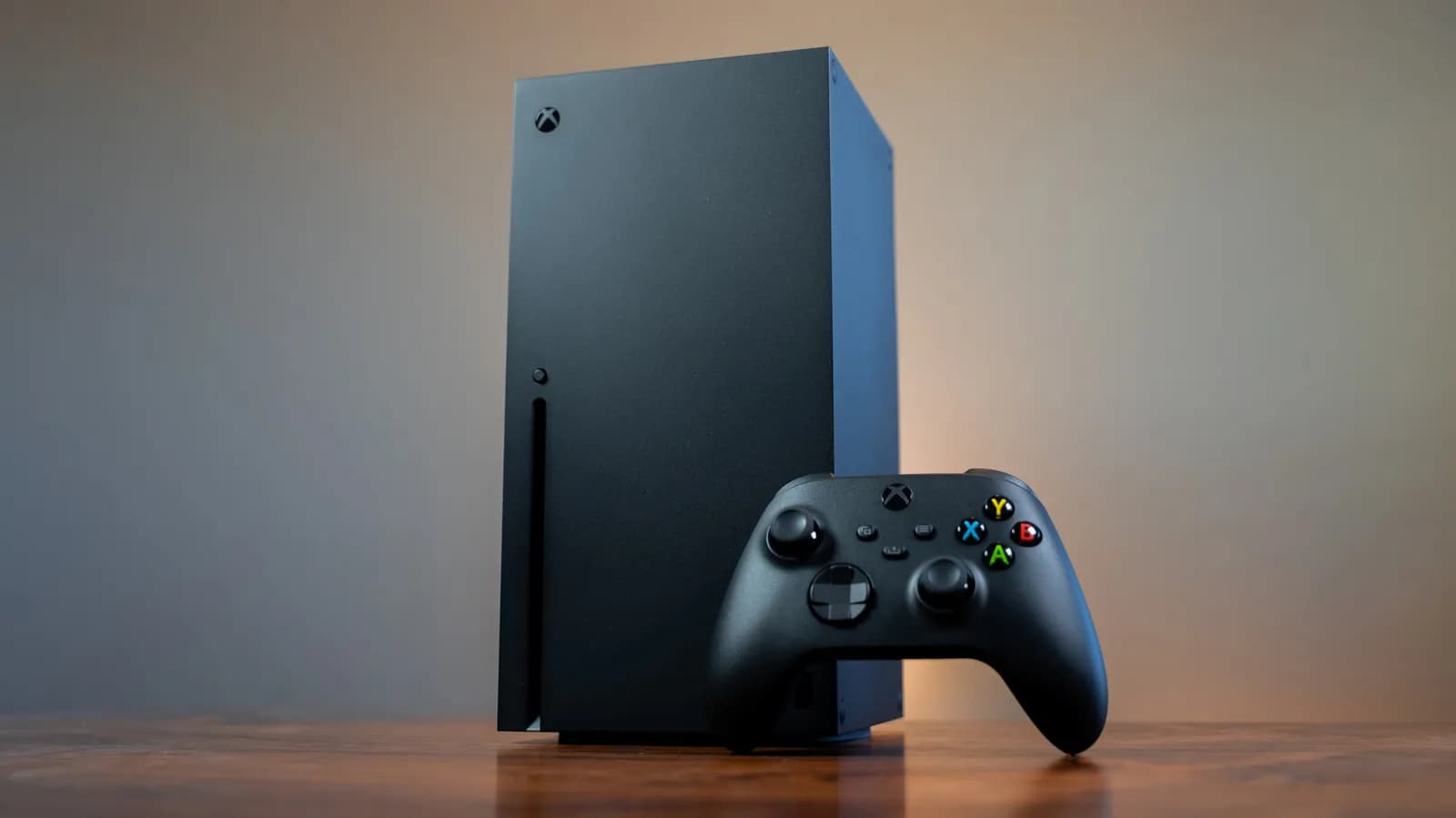
Bridging the Console Divide Through Shared Silicon
For decades, the console wars were defined by deep architectural divergence. The battlegrounds of the 1990s and early 2000s pitted custom RISC processors against proprietary microarchitectures, culminating in complex beasts like the PlayStation 3's Cell Broadband Engine and the Xbox 360's Xenon chip. Porting code between systems was an arduous process of rewriting assembly routines and redesigning memory management pipelines. Today, that silicon gulf has virtually vanished. Both the PlayStation 5 and the Xbox Series X are fundamentally custom x86-64 personal computers engineered around tailored AMD Zen 2 CPU cores and RDNA 2 graphics architectures.
Because both flagship systems share an underlying hardware lineage, researchers, modders, and systems engineers have long speculated about the practical limits of cross-platform interoperability. Recent breakthroughs demonstrating PlayStation 5 software running on an Xbox Series X have turned those theoretical musings into a functioning proof of concept. While the technical achievement is a masterclass in modern systems engineering, the reality of running one vendor's bespoke titles on a rival machine comes with substantial caveats that highlight the lingering divide between raw silicon and software abstraction.
Architectural Parity: How Modern Systems Converged
To understand how an Xbox Series X can execute software designed for a PlayStation 5, one must first look at the silicon under the hood. In previous hardware generations, emulating or translating code from one console to another required immense computational overhead to account for mismatched instruction sets, divergent bus architectures, and radically different memory layouts. Simulating the PlayStation 3's complex Cell processor on x86 hardware, for instance, took the open-source RPCS3 community the better part of a decade to achieve playable framerates on high-end desktop hardware.
The ninth console generation presents no such instruction-set mismatch. Both Sony and Microsoft turned to AMD's semi-custom division to craft systems-on-a-chip (SoCs) built on standard x86-64 execution environments paired with modern SIMD graphics pipelines. Both machines utilize unified GDDR6 memory subsystems, high-speed NVMe storage controllers, and integrated audio processing blocks. At the bare-metal level, an instruction executed by an Xbox CPU core is physically recognizable to a PlayStation CPU core, eliminating the need for heavy instruction-level emulation and opening the door to translation layers and containerization.
The Implementation: Translation, Virtualization, and Streaming Layers
Executing Sony's binaries on Microsoft's hardware requires overcoming deep operating system barriers. The Xbox runs an adapted variation of the Windows Core OS, orchestrating workloads across an isolated HostOS and game-partitioned guest environments managed by Microsoft's Hyper-V hypervisor. The PlayStation 5, by contrast, operates on Prospero, a custom Unix-like platform derived from FreeBSD. A compiled PS5 executable is formatted in ELF (Executable and Linkable Format) and expects to make system calls directly to a FreeBSD-derived kernel, whereas an Xbox title compiles into a PE (Portable Executable) binary designed for the Microsoft Game Development Kit (GDK).
Bridging this canyon involves complex translation software or specialized execution environments. Developers and enthusiasts attempting cross-platform execution typically rely on one of two paradigms: running homebrew translation layers via the Xbox Developer Mode environment or leveraging remote containerized pipelines. By running custom Linux or Unix-like guest environments under developer-sanctioned sandbox configurations, engineers can hook into lower-level system calls, intercept graphics API requests, and redirect display buffers. However, because developer mode restricts direct access to the console's full bare-metal GPU features, workarounds often rely on high-efficiency rendering translation pipelines or remote execution wrappers that pipe frames locally.
The Catch: Why Commercial Cross-Play Remains a Dream
Despite the viral allure of seeing a PlayStation-exclusive title booting on an Xbox dashboard, the reality is far from a seamless plug-and-play experience. The "catch" lies in the insurmountable layers of digital rights management (DRM), hardware encryption, and proprietary API implementations. Commercial PlayStation 5 games are signed with cryptographic keys burned into the silicon of Sony's custom processors; an Xbox simply cannot authenticate, decrypt, or natively launch a commercial PlayStation 5 optical disc or digital purchase.
Furthermore, performance overhead remains a severe bottleneck. Even when translation layers successfully map FreeBSD system calls to Windows NT equivalents, graphics calls present a monumental hurdle. Sony utilizes its proprietary low-level graphics APIs—modern successors to the PS4's GNM and GNMX—which bypass generic driver stacks to directly address hardware registers. Translating these proprietary commands into DirectX 12 Ultimate calls in real time introduces significant latency and rendering artifacts, turning visual masterclasses into stuttering slide shows unless extreme compromises in fidelity are accepted.
API Ecosystems and the Software Wall
The experiment underscores a critical reality of modern software engineering: hardware standardization has shifted the battle entirely to the software and toolchain stack. Even when two machines utilize essentially identical compute units, the developer ecosystems surrounding them are completely disparate. Microsoft has invested heavily in unifying its development ecosystem, aligning the Xbox GDK closely with standard PC DirectX pipelines to streamline cross-platform publishing between Windows and console hardware.
Sony, conversely, optimizes its software stack around deeply tailored hardware capabilities, such as custom cache-coherency scrubbers, hardware decompression engines, and Tempest 3D audio hardware pipelines. When a game is heavily tuned to leverage Sony's specific I/O coprocessors to stream assets instantly from storage, running that same binary on an architecture without the identical hardware-accelerated decompression blocks inevitably leads to I/O stalls. Without native driver support and platform-specific firmware assistance, even the most sophisticated translation layer cannot fully replicate the bespoke memory fabric of a competing machine.
Implications for Emulation and Archival Engineering
While mainstream gamers will not be swapping their game libraries between consoles anytime soon, experiments like this provide invaluable insights for systems researchers and digital preservationists. Modern game preservation faces an existential threat as physical media declines and systems become increasingly reliant on locked-down cloud authentication and hypervisor-enforced sandboxes. Understanding how to execute modern console code inside foreign hypervisors lays the conceptual groundwork for future emulator development.
Historically, console emulation began years after a platform's lifecycle had ended, once desktop computing power vastly outstripped the target console. By exploiting the architectural parity between contemporary consoles, developers are demonstrating that translation—rather than brute-force emulation—may be the key to preserving current-generation software in the decades to come. Projects that translate API calls rather than emulating silicon cycles represent the future of gaming preservation, echoing the path pioneered by compatibility projects like Wine and Proton on PC operating systems.
A Glimpse into an Interoperable Future
The feat of running PlayStation 5 software on an Xbox Series X is ultimately a triumph of curiosity over commercial boundaries. It strips away the marketing jargon and proprietary plastics to reveal what enthusiasts have long known: modern consoles are high-performance personal computers artificially segregated by proprietary software ecosystems and cryptographic gatekeeping. The demonstration serves as an intriguing technical showcase of how far virtualization and translation technologies have progressed.
For developers, the achievement is a compelling reminder of the importance of architectural awareness. As cloud gaming, containerization, and cross-platform compilation frameworks continue to mature, the physical box sitting under a television set is becoming increasingly decoupled from the software running on the screen. The technical barriers between ecosystems are no longer dictated by physical silicon, but by software contracts, platform policies, and cryptographic keys—and modders will always view those digital walls as a challenge waiting to be solved.
Source: engadget.com