
Cut the Cord: The Long, Fascinating Evolution of Wireless Gaming Controllers

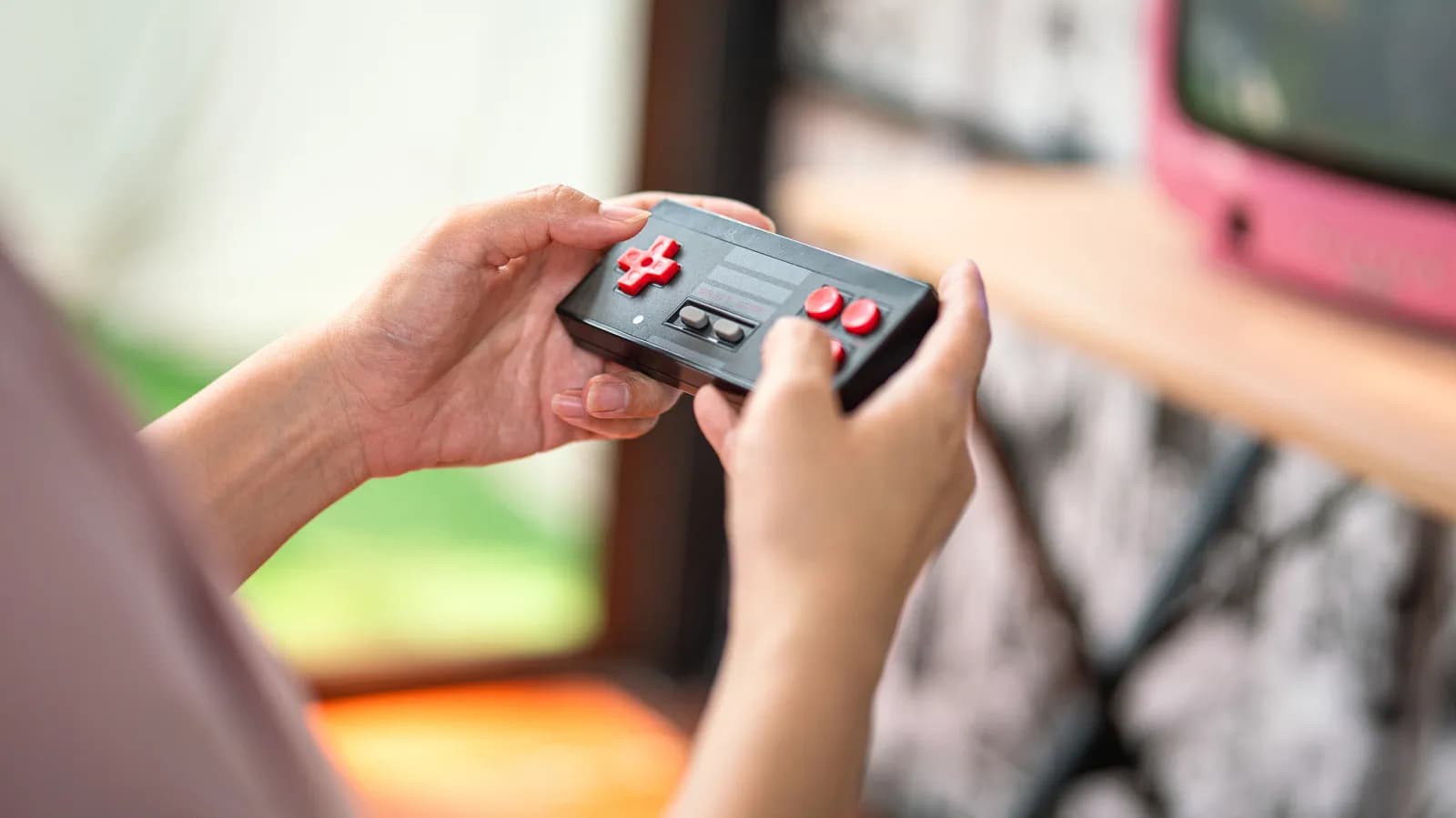
Today, picking up a gaming controller and playing from the couch without a physical cord connecting you to the console or PC is completely second nature. From the DualSense and Xbox Wireless Controller to modern PC gamepads and mobile accessories, untethered play is the baseline expectation rather than a luxury. Yet this seamless convenience was not born overnight. Long before Bluetooth and low-latency 2.4 GHz radio links became standard fixtures of consumer hardware, engineers and peripheral designers spent decades attempting to sever the cord—often running directly into the unforgiving limits of contemporary electronics.
The Infrared Era: Line-of-Sight Frustrations and Early Experiments
The desire to eliminate controller cables dates back much further than most modern gamers realize. In the early days of home video game consoles during the late 1970s and 1980s, living room setups were already becoming cluttered with cables stretched across carpets. Peripheral makers and console manufacturers recognized the appeal of wireless operation almost immediately, leading to early experiments that relied on the only widely accessible wireless tech of the era: infrared (IR) light.
Much like television remote controls, early wireless controllers transmitted signals using pulsed infrared beams. Third-party manufacturers produced bulky wireless sticks for platforms like the Atari 2600 and the Nintendo Entertainment System. However, infrared had severe structural flaws for real-time gaming. It required an unobstructed direct line of sight between the controller's emitter and the console's receiver. If a pet walked past, someone crossed the room, or the player casually dropped their hands beneath their knees, the signal dropped instantly, causing characters to freeze or walk off cliffs. Coupled with abysmal battery life that chewed through alkaline cells in a matter of hours, these early efforts remained quirky novelties rather than practical gaming tools.
The Radio Frequency Breakthrough: Moving Beyond Optical Paths
By the 1990s and early 2000s, it had become painfully clear that infrared was a dead end for responsive video game input. The solution lay in radio frequency (RF) transmission, which could penetrate obstacles, bounce off walls, and function reliably regardless of which direction the player was facing. Early RF adapters and third-party controllers appeared during the 16-bit and 32-bit console eras, but they often suffered from signal interference, high cost, and unaddressed latency spikes.
The watershed moment arrived in 2002 with the release of the Nintendo GameCube WaveBird controller. Operating over the 900 MHz RF spectrum, the WaveBird proved to the broader industry that a wireless gamepad could deliver responsiveness virtually indistinguishable from a wired counterpart under everyday conditions. It required manual channel selection dials to avoid interference when multiple controllers were in the room, and it sacrificed vibration feedback to preserve battery life, but it achieved legendary status among competitive players for its rock-solid reliability. The WaveBird proved that cords were no longer technologically mandatory.
The Seventh Generation: Wireless as the Default Standard
While the WaveBird demonstrated what was possible, wireless controllers were still optional accessories sold separately from base hardware. That paradigm shifted permanently in the mid-2000s with the launch of the seventh console generation: Microsoft's Xbox 360, Sony's PlayStation 3, and Nintendo's Wii. For the first time in industry history, wireless gamepads came bundled right out of the box as the primary input mechanism.
This generational shift forced hardware teams to solve massive engineering challenges simultaneously. Sony opted for Bluetooth 2.0 coupled with internal rechargeable lithium-ion batteries. Microsoft developed a proprietary 2.4 GHz low-latency RF protocol for the Xbox 360, choosing swappable AA packs and optional rechargeable modules. Meanwhile, Nintendo used Bluetooth to transmit not just button inputs, but complex motion-sensor data and pointer telemetry from the Wii Remote. Within a single console lifecycle, wired controllers transformed from the industry default into specialized tournament gear or budget third-party alternatives.
Under the Hood: Latency, Polling Rates, and Protocol Engineering
To software engineers and embedded systems developers, the transition to wireless represents a masterclass in latency management and transmission trade-offs. In an ideal wired setup, a controller communicates via USB using a consistent polling rate—often 125 Hz, 250 Hz, or 1000 Hz—yielding predictable millisecond delays between button actuation and CPU register updates. When moving to wireless, the input pipeline suddenly encounters packet loss, frequency hopping, signal contention, and transceiver sleep states.
Engineers had to optimize the entire communication stack to ensure wireless input felt immediate. In standard Bluetooth configurations, human interface device (HID) profiles can introduce jitter and queue delays if the operating system's Bluetooth stack handles too many competing tasks. To counteract this, modern gaming hardware frequently relies on customized 2.4 GHz transceivers that bypass generic consumer Bluetooth stacks in favor of high-throughput, low-overhead custom protocols. These dedicated links allow controllers to sustain 500 Hz to 1000 Hz effective polling rates while actively scanning and hopping between clean frequency bands to avoid Wi-Fi congestion in crowded households.
The Developer's Perspective: Accommodating Asynchronous Input
From a game engine perspective, the unreliability of early wireless inputs necessitated robust software architecture. Game loops running at 60 or 120 frames per second cannot afford to block while waiting for a peripheral packet. Modern game engines treat input polling as an asynchronous subsystem, using predictive smoothing, timestamped input packets, and state interpolation to mask minor micro-stutters in wireless communication.
Moreover, modern wireless controllers do far more than just report directional buttons. They transmit multi-axis gyroscopic motion data, capacitive touch positions, dynamic resistance trigger states, and advanced haptic audio telemetry. Balancing this high-bandwidth, bidirectional communication over an ultra-low-power radio link while preserving sub-10ms latency requires exceptionally tight coordination between embedded firmware and host-side driver software. Every extra millisecond added by a sluggish transport layer eats directly into the rendering and frame budget of the game itself.
The Horizon: Direct-to-Cloud Transmission and Ultra-Low Power
As gaming infrastructure expands beyond traditional local machines and into cloud streaming environments, wireless input architecture is evolving once again. Controllers like Amazon Luna's and Google's discontinued Stadia gamepad introduced Wi-Fi direct architecture, allowing the controller to connect straight to a local router and send input packets directly to cloud data centers, skipping the local display device entirely to eliminate a full hop of input latency.
Looking ahead, emerging standards like ultra-wideband (UWB) and advanced Bluetooth LE Audio protocols are creating opportunities for even lower power consumption, pinpoint spatial positioning, and minimal transport latency. As microcontrollers become more efficient and wireless radios become smarter at dodging crowded RF spectra, the historical compromises between wired precision and wireless freedom have practically vanished. What began decades ago as an erratic burst of infrared light has matured into one of the most sophisticated, seamless human-machine interfaces in modern computing.
Source: engadget.com