
Decoding Digital Provenance: How Google SynthID Is Tackling the AI Detection Challenge

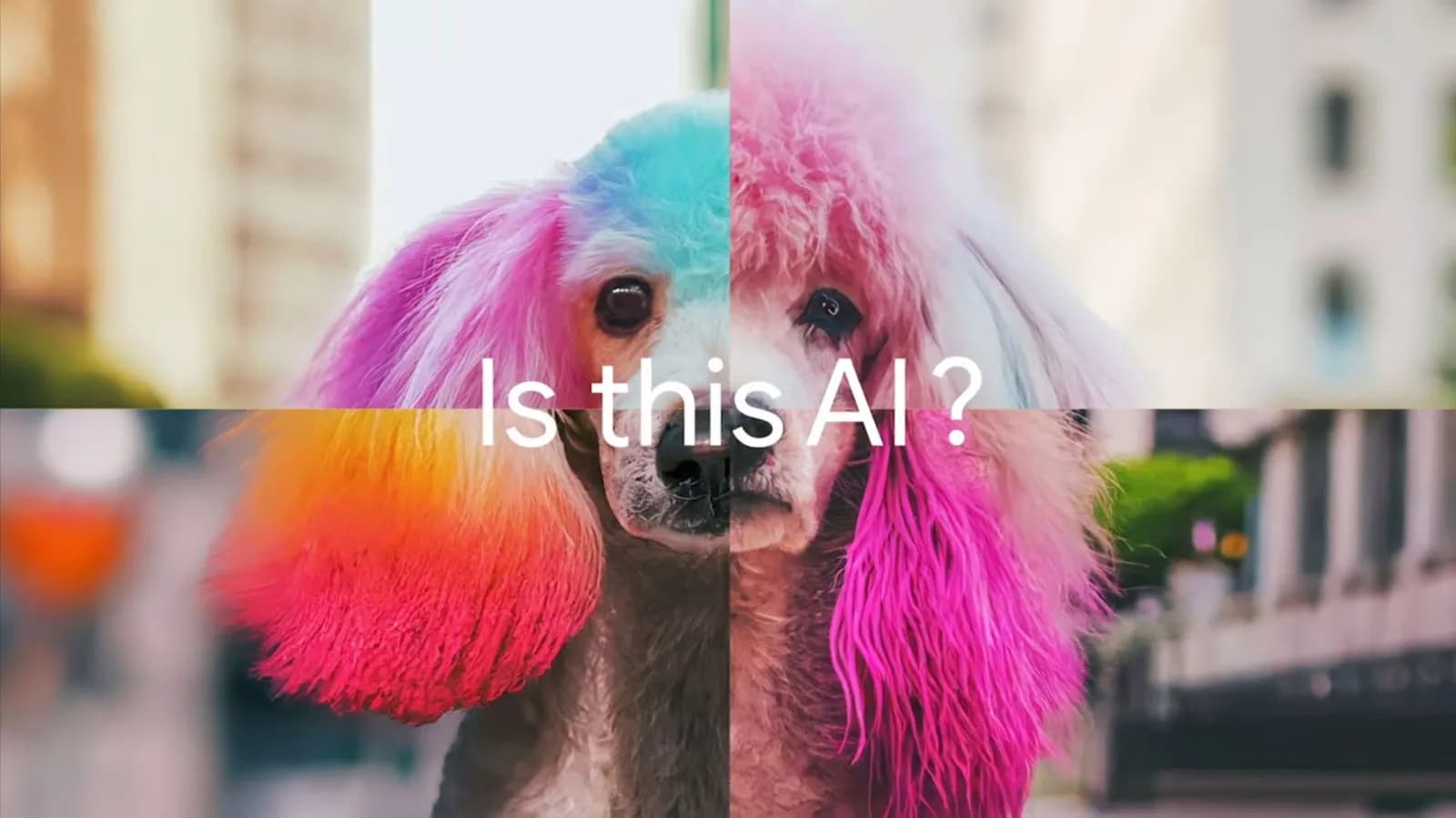
As generative models reach unprecedented levels of photorealism, the distinction between authentic photography and synthetic imagery has blurred beyond the capability of the human eye. In response to mounting concerns over misinformation, intellectual property infringement, and synthetic impersonation, tech giants have scrambled to develop reliable verification mechanisms. Google has made a notable stride in this arena by expanding access to SynthID, its proprietary watermarking and identification framework designed to detect machine-generated media without degrading perceptual quality.
Originally developed by Google DeepMind and deployed across select enterprise and generative services, SynthID represents a fundamental shift away from post-hoc heuristic classifiers toward deliberate, algorithmic watermarking. With a dedicated web interface now allowing users to test images and evaluate whether content originated from or was modified by generative pipelines, the tool brings theoretical research into practical utility—while also illustrating the significant complexities and engineering constraints that govern digital media provenance.
The Mechanics of Imperceptible Watermarking
Traditional watermarking techniques typically rely on metadata headers (such as EXIF data) or visible overlays. Both approaches suffer from glaring vulnerabilities: visible marks ruin visual aesthetics and are trivial to crop out, while metadata is almost universally stripped the moment an image is uploaded to major social networks, messaging apps, or content delivery networks. Early automated AI detectors, on the other hand, attempted to spot subtle pixel artifacts left behind by generative adversarial networks (GANs) or diffusion architectures. These classifiers have proven notoriously unreliable, suffering from high false-positive rates and deteriorating rapidly whenever images undergo compression or slight filtering.
SynthID tackles the problem at generation time by integrating deep inside the neural network itself. Rather than modifying an existing raster after the fact, the algorithm injects an imperceptible, mathematically distinct signature into the latent space or frequency components of the output image. To the human visual cortex, the pixels remain completely unaltered in color, sharpness, and fidelity. To a specialized neural detector trained alongside the watermark generator, however, the embedded pattern acts as an undeniable fingerprint indicating synthetic provenance.
Interfacing with the Detector: User Experience and Workflow
The web-based detection tool simplifies this complex mathematical verification into an accessible workflow. Users submit an image through the portal, which then passes the asset through SynthID's verification pipeline. Rather than issuing a binary "real or fake" verdict, the system evaluates the statistical presence of the embedded signature, weighing the likelihood that the media was produced or edited using compatible generative models.
This probabilistic readout is a critical engineering choice. Synthetic detection in real-world scenarios is rarely black and white. Because images encounter varied degrees of transformation, compression, and scaling, the detector delivers confidence levels that represent the strength of the recovered signal. This approach mirrors modern cryptographic and statistical verification models, giving analysts and developers a nuanced look at image authenticity rather than a deceptive binary certainty.
Resilience Against Common Image Manipulations
One of the primary selling points of SynthID's underlying architecture is its durability against standard digital post-processing. Historically, fragile watermarks break down as soon as an image is saved in a lossy format like JPEG or downscaled for a mobile viewport. DeepMind's research teams designed the watermark to persist through several common transformations that everyday internet traffic imposes on digital assets.
The signature is calibrated to survive aggressive JPEG re-compression, basic cropping, subtle color grading, brightness adjustments, and the addition of Gaussian noise. By distributing the watermark across widespread spatial and frequency representations rather than local pixel clusters, the system ensures that altering one section of the canvas does not necessarily invalidate the identifier across the remainder of the composition. For platforms attempting to trace media pipelines, this resilience is essential.
Critical Caveats and Technical Blind Spots
Despite its technical sophistication, SynthID is not an infallible panacea for the synthetic media problem, and understanding its limitations is essential for any engineering or security team evaluating its utility. First and foremost, SynthID operates primarily as an ecosystem-specific technology. It excels at identifying media generated by models where the watermarking pipeline was explicitly incorporated during inference—such as Google's own Imagen models. It cannot magically identify images generated by open-weight models like Stable Diffusion or proprietary competitors like Midjourney unless those platforms independently adopt and implement identical latent watermarking protocols.
Furthermore, adversarial manipulation remains a continuous threat. While the watermark withstands conventional social media compression, targeted attacks designed to disrupt frequency spaces—such as heavy blurring, extreme geometric warping, deep recursive filtering, or passing the image through secondary AI style-transfer networks—can degrade the signal beyond the detector's threshold. As with any cryptographic or security primitive, watermarking is subject to an ongoing cat-and-mouse game between model creators and adversarial actors seeking to sanitize synthetic outputs.
Industry Impact and the Battle for Provenance Standards
The broader significance of Google expanding SynthID lies in the industry-wide debate over provenance architectures. Two distinct philosophies are competing for supremacy in digital authentication. On one side are metadata-centric cryptographic consortia, such as the Coalition for Content Provenance and Authenticity (C2PA), which embed cryptographically signed manifests inside media files to track lineage. On the other side are intrinsic watermarking technologies like SynthID that embed provenance directly into the perceptual data itself.
In practice, the future of content authenticity will likely require a hybrid defense-in-depth model. C2PA manifests provide tamper-evident ledgers detailing camera hardware, editing software, and author identity, but remain vulnerable to platforms that drop metadata. SynthID and similar latent watermarking algorithms provide an enduring payload that survives metadata stripping, serving as a secondary verification tier. As regulatory frameworks such as the European Union's AI Act begin mandating watermarks and clear disclosures for generated content, tools like SynthID transition from experimental research demos into mission-critical compliance infrastructure.
What Developers Need to Know Moving Forward
For software engineers, product managers, and platform architects, the public availability of SynthID signals a clear trajectory: media processing pipelines will increasingly require automated authenticity checks at ingest. Developers building content management systems, community moderation tools, or media-sharing applications should begin factoring provenance validation into their architectural roadmaps.
Integrating these capabilities will ultimately demand standardized APIs that can query multiple detection mechanisms in parallel. Rather than betting exclusively on a single vendor's watermark, robust verification systems will evaluate C2PA manifests, verify SynthID signals, and run secondary artifact detection pipelines to yield composite trustworthiness scores. Software teams should monitor how Google continues to open-source or offer programmatic API access to SynthID, as seamless developer integration will be the determining factor in whether the technology achieves broad industry adoption or remains confined to Google's proprietary ecosystem.
The Long Road to Visual Integrity
The launch of an accessible SynthID detection interface marks an important milestone in demystifying synthetic media verification for the broader public and developer community. It transforms abstract research into an operational utility, offering an honest look at both the power of latent watermarking and the stubborn constraints imposed by lossy digital pipelines. While no single tool can entirely eliminate synthetic deception on the web, technologies like SynthID provide the foundational building blocks needed to reconstruct trust in digital media.
Source: engadget.com