
Discord Explores Search Engine Indexing for Public Servers: What It Means for Developers and Communities

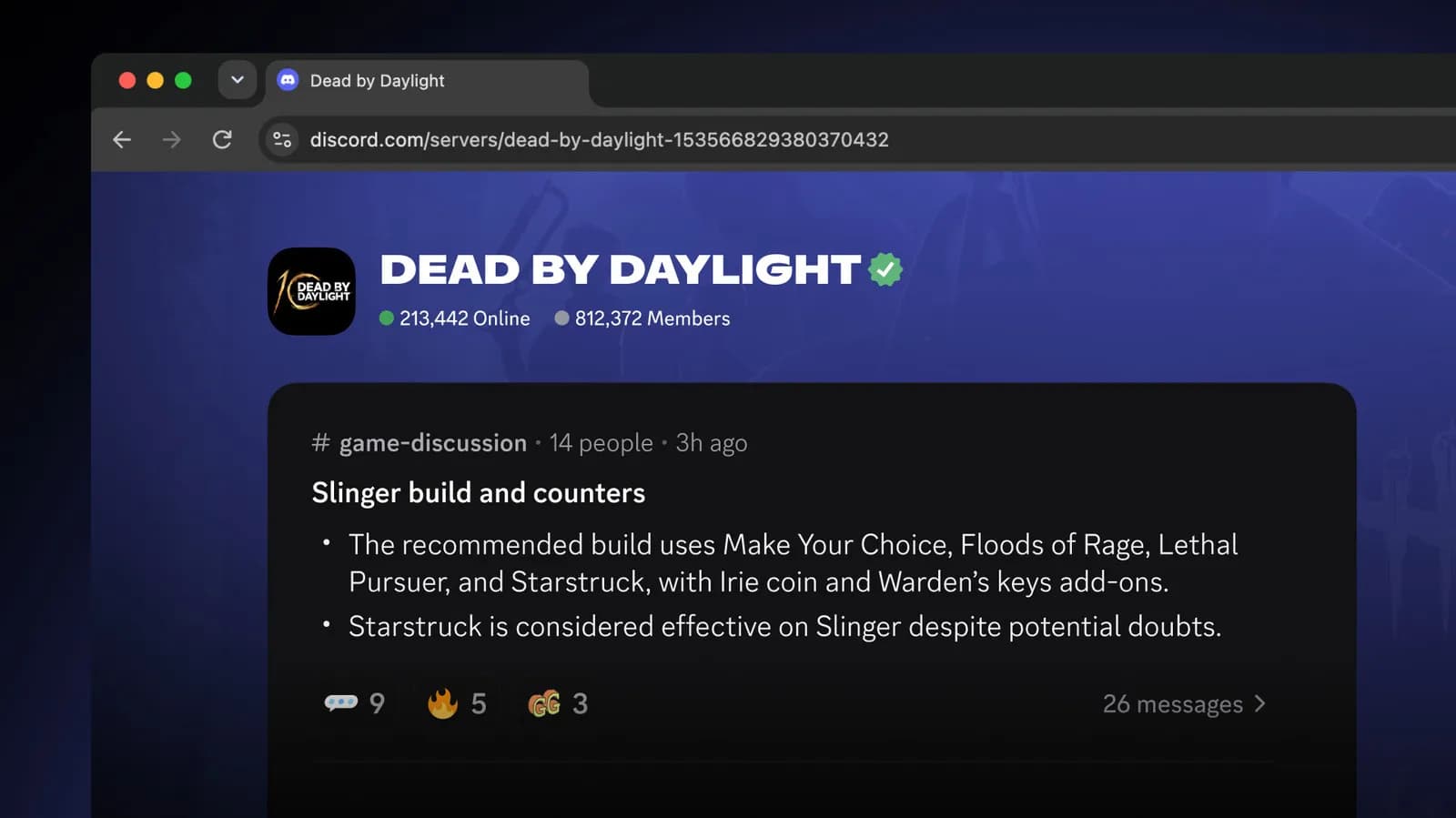
For years, Discord has occupied a unique and sometimes contentious place in the modern internet ecosystem. Initially conceived as a lightweight voice and text chat platform for online gamers, it has quietly evolved into the de facto home for open-source projects, developer ecosystems, framework discussions, and Web3 communities. Yet, despite housing millions of troubleshooting exchanges, debugging tips, and architectural debates, this repository of human problem-solving has remained essentially invisible to the broader web—locked behind an authentication wall in what technologists frequently call the modern "dark social" web. That dynamic is now poised for a massive shift, as Discord prepares to allow messages from public, discoverable servers to be crawled and indexed by search engines such as Google.
While the platform plans to provide opt-out controls to give communities autonomy over their visibility, the transition marks one of the most substantial structural changes in Discord's history. By opening up public channels to web search crawlers, Discord is positioning itself to compete directly with traditional forum software, documentation portals, and platforms like Reddit and Stack Overflow. However, this evolution introduces intricate trade-offs regarding user expectations, privacy norms, software documentation accessibility, and the race to feed search algorithms and artificial intelligence data pipelines.
The End of Discord's Walled Garden Era
Since its launch, Discord’s architectural model was predicated on closed or invitation-based communities known as "guilds." Even as the company introduced public discovery features—enabling users to browse and join servers dedicated to widely used programming languages, gaming titles, and creative tools—the actual content inside those servers remained shielded from external search spiders. If a developer spent three days solving an obscure compiler bug inside a framework's official Discord server, that valuable breakthrough was completely invisible to someone typing the exact same error message into a Google search bar.
This closed model created widespread friction across the software engineering landscape. A common complaint among developers has been the steady cannibalization of traditional web forums and bulletin boards by Discord. Community managers and maintainers loved Discord's real-time interaction, rich bot integrations, and voice channels, but critics noted that moving support discussions into chat rooms resulted in a net loss for the open internet. Knowledge became ephemeral, repetitive questions proliferated, and searchable institutional memory disappeared. Opening discoverable servers to search indexing is Discord’s most direct effort yet to resolve this structural tension.
How Public Message Indexing Is Poised to Work
Under the proposed indexing mechanism, only servers that have explicitly enrolled in Discord's Discovery program—the directory of publicly accessible communities that meet strict membership and moderation guidelines—would be eligible to have their chat histories indexed. Furthermore, Discord is incorporating administrative toggles that allow server operators to opt out of search engine discovery, ensuring that communities intending to maintain a relative degree of insular privacy can do so without losing their general discoverability within the Discord client.
From a technical implementation standpoint, making chat archives visible to search engines involves generating clean, static or server-rendered web representations of conversational threads. Traditional single-page application (SPA) architectures that rely heavily on client-side state and authenticated WebSockets are notoriously difficult for web crawlers to parse efficiently. By exposing public channel threads as crawlable HTML pages, Discord can provide search engines like Google with semantic markup, canonical URLs, and structured data, effectively transforming bustling chat rooms into read-only web documents for non-logged-in visitors.
The Developer Perspective: Surfacing Buried Knowledge
For software engineers and tech enthusiasts, the prospect of Discord messages appearing in Google search results is largely a welcome development with immediate practical benefits. In recent years, search engine result quality for technical queries has visibly degraded, frequently clogged with search engine optimization (SEO) farms, auto-generated scraper websites, and low-quality summaries that fail to answer nuanced technical questions. Surfacing genuine, peer-to-peer discussions where engineers troubleshoot library updates, configuration flags, and edge cases could breathe new life into technical search results.
Many open-source maintainers currently face severe support fatigue because newcomers repeatedly ask questions that were answered in detail just days earlier in a different channel. While community bots and FAQ forums have attempted to alleviate this burden, nothing matches the efficiency of a user independently finding an answer via a search query before they even consider posting. If Discord threads can rank alongside GitHub issues and Stack Overflow threads, the developer onboarding curve for emerging frameworks and libraries could become considerably smoother.
Privacy Concerns and the Recontextualization of Chat
Despite the functional advantages, the move introduces deep privacy concerns and challenges surrounding user consent. Chat platforms cultivate an informal, conversational atmosphere that feels fundamentally distinct from publishing an article or authoring an answer on a public forum. When individuals post on Discord, they frequently treat the medium like an ongoing, semi-private chat among peers, even when they know the server is technically open to anyone with an invite link.
Indexed messages mean that off-the-cuff remarks, personal frustrations, casual banter, or past opinions could suddenly become tied to an individual's persistent digital footprint and surfaced directly via their username in standard web searches. Although opt-out settings will be available to server owners, everyday members rarely hold administrative privileges. If a server administrator chooses to allow indexing, individual users may find their past contributions exposed to search spiders unless comprehensive, per-user privacy controls and message deletion guarantees are implemented with robust compliance mechanisms like the Right to be Forgotten.
The AI Data Race and Search Real Estate
It is impossible to analyze this transition without examining the current macroeconomic dynamics of internet platforms, artificial intelligence, and search partnerships. With the explosion of large language models (LLMs), high-quality human conversational data has become one of the most valuable commodities on the web. Search engines are aggressively competing to surface fresh, authoritative human experiences, while AI labs are constantly searching for authentic dialog to train next-generation models.
Platforms like Reddit have recently capitalized on their massive repositories of user-generated text through multi-million-dollar data licensing agreements with major AI providers and search conglomerates. Discord holds one of the largest untapped reserves of conversational data on earth. By transitioning discoverable server messages into public web documents, Discord not only boosts its incoming organic traffic and user acquisition funnel from web searchers, but also potentially lays the groundwork for structured data ingestion and commercial partnerships in an AI-driven search landscape.
What Server Administrators and Communities Should Do Next
As this feature edges closer to widespread deployment, community administrators must proactively evaluate their server settings and establish clear guidelines for their members. The first critical step is auditing the server's public discoverability settings. Administrators running sensitive support groups, hobbyist spaces, or internal industry cohorts must deliberate on whether public web visibility aligns with their community charter, and be prepared to trigger the opt-out mechanism before web spiders begin systematically archiving historical threads.
For communities that do embrace indexing—such as developer tool discords, gaming wikis, and open-source project hubs—moderation policies will need an overhaul. Publicly indexed channels will inevitably become attractive targets for spammers, link farmers, and malicious actors seeking backlink authority from high-reputation domains. Server staff will need to implement stricter automated verification, robust content filtering, and clear channel partitioning to ensure that only designated knowledge-sharing channels are exposed to the public internet, while general chit-chat and off-topic areas remain secluded.
The Future of Open Communication Platforms
Discord’s evolution toward public search visibility underscores a cyclical reality of internet infrastructure: walled gardens eventually feel the gravitational pull of the open web. While centralized platforms offer unmatched convenience and engagement tools, the web's utility relies on interconnected, universally accessible information that outlasts any single proprietary application. If Discord balances community consent and privacy with genuine indexability, it may finally bridge the gap between real-time community chat and enduring web knowledge.
Source: engadget.com