
Do Mobile Phone Coolers Actually Deliver Real Performance Gains?

The Rise of Mobile Thermal Management
Modern smartphones are marvels of micro-engineering. Packing multi-core processors, dedicated graphics chips, and sophisticated neural engines into a chassis less than a centimeter thick requires pushing silicon to its absolute limits. However, physics remains an unforgiving master. As mobile processors handle intense computational loads—whether rendering high-end 3D graphics or running complex machine learning inferences on-device—they generate substantial heat. Because phones lack active cooling fans like those found in laptops or desktop computers, they rely entirely on passive dissipation through their glass and metal frames.
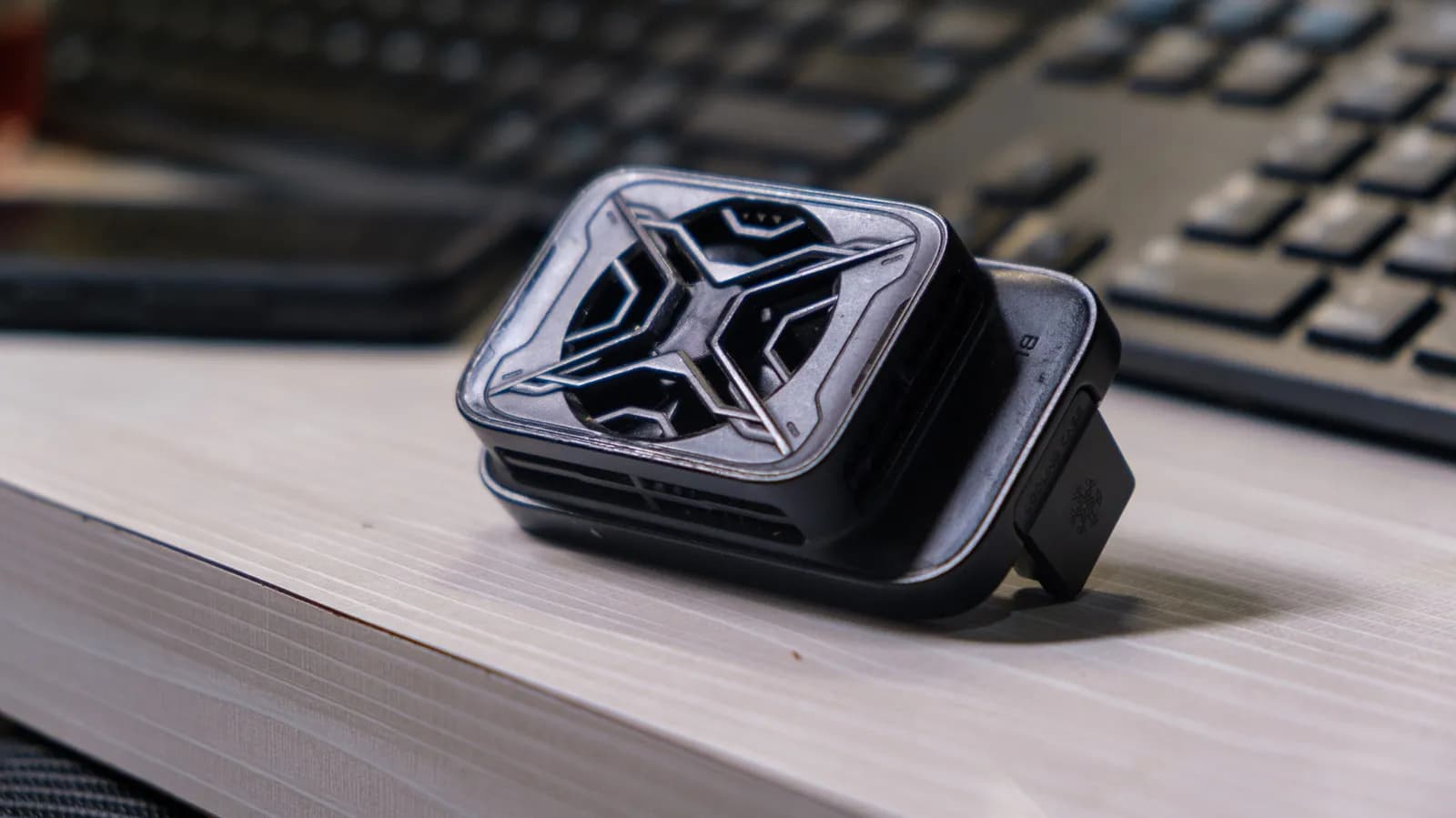
This thermal bottleneck has given rise to an unexpected niche in the mobile accessory market: external smartphone coolers. These clip-on devices typically employ semiconductor thermoelectric cooling (Peltier coolers) paired with small electric fans to forcefully draw heat away from the rear glass panel of the handset. While mobile gamers have enthusiastically adopted these accessories to combat frame-rate drops, the broader developer and tech community often views them with skepticism, questioning whether strapping an external peltier tile to a phone yields meaningful performance improvements or simply treats the symptoms of a deeper architectural challenge.
How Thermoelectric Cooling Operates on Mobile Devices
To understand the utility of these accessories, it helps to examine the underlying physics and hardware. External phone coolers frequently utilize the Peltier effect, a thermoelectric phenomenon where a voltage is applied across two different conductors to create a heat pump. One side of the module becomes intensely cold while the other dissipates heat, which is then blown away by an integrated fan. When clamped onto the back of a smartphone, this localized refrigeration unit rapidly chills the exterior chassis, creating a steeper thermal gradient between the internal system-on-a-chip and the outside environment.
From a purely thermodynamic standpoint, this forced cooling undeniably works. The exterior surface temperature of the phone drops significantly during operation, preventing the device from triggering its internal thermal protection thresholds. Normally, when a smartphone's internal temperature sensors detect overheating, the operating system initiates thermal throttling—aggressively scaling down CPU and GPU clock speeds to prevent hardware degradation and battery damage. By artificially cooling the exterior chassis, these external accessories help maintain higher heat dissipation rates, theoretically allowing the processor to sustain peak performance frequencies for longer periods.
The Practical Impact on Sustained Performance
While the hardware mechanics are sound, the practical impact on everyday user experience and developer workloads varies wildly depending on the application. For casual tasks, web browsing, and standard productivity apps, a phone cooler is entirely superfluous because these workloads rarely push modern silicon to its thermal limits. Even for moderately demanding tasks, the operating system manages heat efficiently through passive cooling without requiring external hardware intervention.
The narrative shifts, however, when examining extreme scenarios such as competitive mobile gaming, long-form video recording at high resolutions, or executing heavy local AI model inference. Under these sustained maximum workloads, mobile processors rapidly hit their thermal walls, resulting in noticeable stuttering, lagging, or forced application termination. In these specific, high-stress environments, a phone cooler can prevent thermal throttling, ensuring that frame rates remain stable and processing pipelines do not experience sudden latency spikes. Yet, whether this justifies carrying an extra battery-powered accessory is a persistent debate among mobile power users.
Developer Implications: Benchmarking and Optimization
For software engineers and mobile developers, the existence of external coolers highlights the ongoing tension between raw compute capability and thermal design power in mobile ecosystems. When benchmarking mobile applications, games, or machine learning models, developers must account for how thermal throttling skews performance metrics over time. A benchmark that looks stellar during the first thirty seconds may reveal significant performance degradation by the five-minute mark as the device heats up and throttles its clock speeds.
This behavior forces developers to design adaptive algorithms that gracefully degrade visual fidelity or computational complexity rather than relying on hardware staying at peak performance indefinitely. Furthermore, it raises interesting questions about how edge computing and mobile AI workloads should be scheduled. If users must rely on external refrigeration to run local language models or complex computer vision tasks smoothly, the industry may need to rethink how mobile applications manage sustained computational intensity versus burst workloads.
Diminishing Returns and Real-World Trade-Offs
Despite their cooling capabilities, external phone coolers come with notable trade-offs that complicate their practical utility. Most high-performance coolers require a continuous external power source, either via a wired USB-C connection or an integrated rechargeable battery that adds considerable weight and bulk to the phone. Strapping a heavy, cold block of metal and plastic onto a mobile device completely undermines the sleek, lightweight ergonomics that make smartphones appealing in the first place.
Moreover, there is the risk of unintended consequences, such as moisture condensation. When a Peltier cooler drops the exterior temperature of a phone below the dew point of the surrounding air, water droplets can form on the chassis and potentially seep into ports or seams. While manufacturers design these devices to mitigate such risks, the thermodynamic reality of localized sub-ambient cooling means that moisture management remains a minor hazard, particularly in humid environments.
The Verdict for Tech Enthusiasts and Power Users
Ultimately, the value proposition of a smartphone cooler depends entirely on specific use cases rather than general utility. For the average developer, tester, or consumer, these accessories are largely an unnecessary luxury that solves a problem most people never encounter during daily operation. Modern mobile operating systems and silicon architectures are remarkably adept at balancing performance and thermal output for standard software tasks and mobile workloads.
However, for a dedicated subset of mobile gamers, hardware testers pushing experimental software, or developers stress-testing resource-heavy applications, phone coolers offer a tangible technical advantage. By artificially extending the window before thermal throttling kicks in, they provide a reliable way to benchmark and execute sustained, high-intensity mobile workloads. As mobile processors continue to grow more powerful and capable of running increasingly complex local tasks, understanding and managing mobile thermodynamics will only become more critical for both hardware designers and software engineers.
Source: engadget.com