
Dyson’s Next-Gen Nurovi Robot Vacuums Bring Advanced Lidar and Retail-Specific Models to the Home

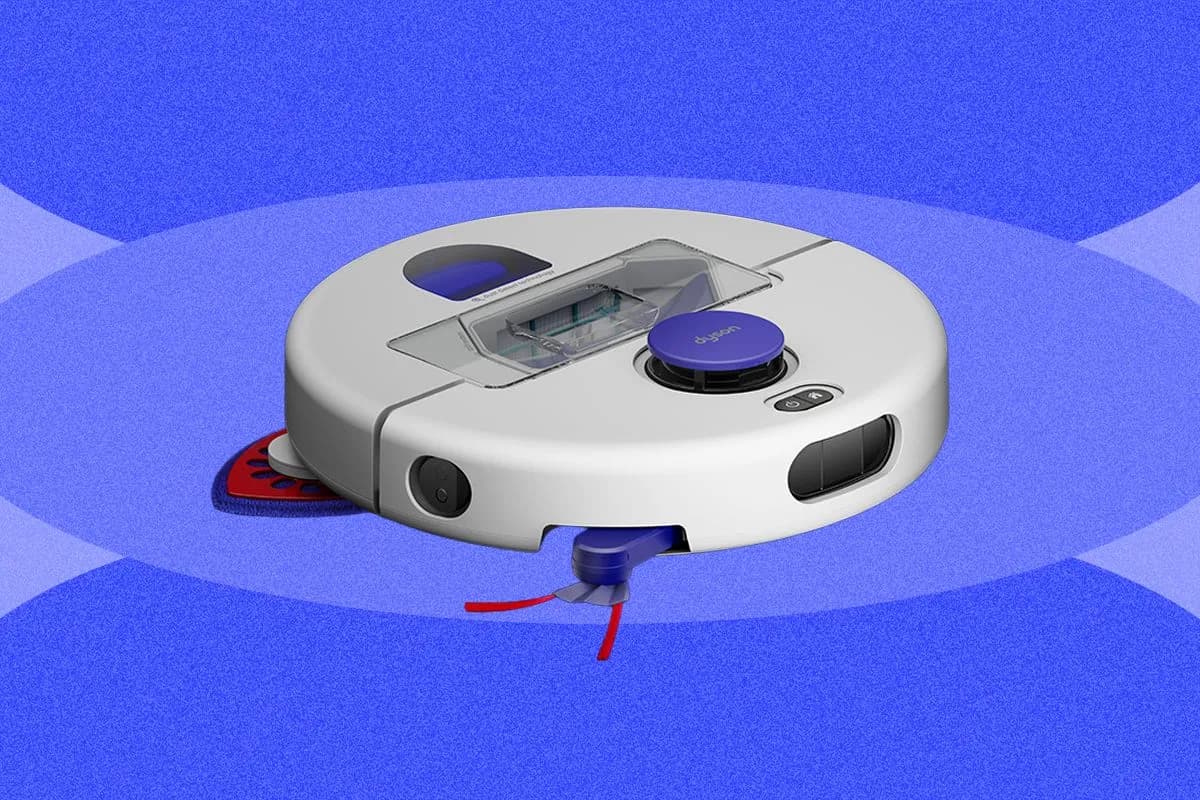
Introduction to Dyson’s Next-Gen Autonomous Cleaning Line
The consumer robotics landscape is shifting rapidly as brands move past simple random-bounce navigation into sophisticated, spatial-mapping architectures. Dyson, a company long recognized for its high-powered cordless uprights and premium air treatment hardware, has steadily evolved its footprint in autonomous cleaning. With the introduction of the Nurovi robot vacuum series, the engineering-heavy brand is redefining what users can expect from robotic floor care, combining high-velocity suction mechanics with modern lidar mapping suites. This release marks an aggressive push to capture market share in a crowded smart home segment where precision navigation and ecosystem integration are paramount.
What makes the Nurovi rollout particularly interesting isn't just the hardware upgrades, but the commercial strategy behind it. Spanning multiple tiers to address different consumer needs and price points, the lineup introduces a unique twist: a standout model restricted to members of a major warehouse retailer. As hardware manufacturers increasingly experiment with retail-exclusive variants to segment their product lines, this approach raises questions about accessibility and consumer choice. For tech enthusiasts and homeowners alike, unpacking what the Nurovi series offers provides a fascinating look at the current state of consumer robotics engineering.
The Technical Architecture of the Nurovi Series
At the core of the Nurovi lineup is a heavy reliance on lidar (Light Detection and Recognition) technology, representing a notable maturation in how Dyson approaches autonomous spatial awareness. Earlier iterations of autonomous cleaners from the brand often utilized alternative vision-based localization methods, which excelled in certain environments but struggled under low-light conditions or heavy shadows. By incorporating robust lidar sensors, the Nurovi units can rapidly construct precise, real-time floor plans of complex living spaces, ensuring systematic cleaning paths rather than erratic patterns.
Beyond navigation, these machines are built upon Dyson's foundational engineering strengths: relentless motor design and advanced cyclone separation. Integrating high-performance filtration into a chassis compact enough to navigate under low-profile furniture requires meticulous thermal and spatial design. The Nurovi models leverage optimized brush roll geometries and adaptive suction adjustments, automatically scaling power when transitioning from hard floors to dense carpets. This synthesis of precise mapping and brute-force cleaning capability addresses the two primary complaints historical users have had with robotic vacuums: getting stuck and leaving behind embedded debris.
Decoding the Lineup and the Warehouse Exclusive Strategy
The Nurovi series rolls out as a tiered family of devices, allowing Dyson to cater to various consumer budgets and feature preferences. However, the most compelling iteration of the lineup—the model generating the heaviest buzz among tech reviewers—comes with a distinct catch: prospective buyers must secure a membership with a specific warehouse club, namely Costco, to purchase it. This model sits at a strategic sweet spot in the product matrix, offering an enticing balance of advanced feature sets and pricing that differentiates it from both the base-tier options and the ultra-premium flagship variant.
Exclusive retail partnerships are a time-tested playbook in consumer electronics, allowing manufacturers to move high volumes while offering retailers a unique selling proposition. For the end consumer, however, this fragmentation can sometimes feel frustrating. Buyers who prefer direct-to-consumer ordering or shopping through traditional electronics channels might find themselves jumping through hoops to acquire the exact feature configuration they want. Despite these friction points, the strategy highlights how legacy appliance brands are utilizing modern retail channels to target value-conscious yet tech-savvy homeowners who demand premium performance without paying direct flagship prices.
Contextualizing Nurovi in the Modern Smart Home Ecosystem
The release of the Nurovi line arrives at a time when smart home appliances are no longer judged solely by their physical mechanics, but by their software polish and ecosystem synergy. Today's consumers expect seamless companion applications that offer granular control over scheduling, virtual barrier placement, and real-time cleaning status updates. Dyson’s platform has matured significantly over the years, evolving into a unified dashboard that manages everything from environmental purifiers to advanced cleaning robots, and the Nurovi series slots neatly into this digital ecosystem.
Furthermore, the competitive pressures in the automated vacuum market are immense. Competitors ranging from established smart home specialists to emerging global tech giants are constantly pushing the envelope with self-emptying docks, AI-driven obstacle avoidance cameras, and integrated mopping systems. By anchoring the Nurovi line with reliable lidar and Dyson’s signature suction power, the company is staking its claim on core cleaning performance. While the battle for the smart home is fought on many fronts—including voice assistant integration and automated maintenance docks—hardware reliability remains the ultimate acid test for consumers investing hundreds of dollars into a robotic appliance.
Industry and Developer Perspective: Software, Mapping, and Autonomy
From an engineering and developer standpoint, the evolution of robot vacuums like the Nurovi series reflects broader advancements in edge computing and spatial mapping algorithms. Autonomous consumer robots are essentially mobile edge devices operating in highly unpredictable, unstructured environments—our living rooms, kitchens, and hallways. The transition to lidar signifies a reliance on active sensor fusion to handle dynamic obstacles, from stray cables and pet toys to shifting furniture arrangements.
For software developers working in robotics and IoT, the challenge lies in optimizing localization algorithms to run efficiently on low-power onboard hardware while maintaining responsiveness. As these devices generate rich spatial datasets, questions around local data processing, cloud telemetry, and user privacy become increasingly critical. While consumers primarily view these machines as automated housekeepers, under the hood they are sophisticated robotics platforms executing complex Simultaneous Localization and Mapping (SLAM) routines every time they undock to clean a floor.
Risks, Open Questions, and Market Adoption Challenges
Despite the excitement surrounding the Nurovi launch, several open questions remain regarding long-term market adoption and real-world performance. High-end robotic vacuums represent a significant financial investment, and consumers are notoriously demanding when it comes to durability. Issues such as brush roll tangles, sensor degradation over time, and dock maintenance requirements can quickly sour user experience if not engineered with extreme robustness. Furthermore, the reliance on specific retail channels like Costco could potentially limit initial accessibility for international markets or regions where those warehouse memberships are less common.
Another factor to watch is how well Dyson's software ecosystem scales to support the nuanced features of the tiered Nurovi models. Software updates, bug fixes, and app stability dictate whether a smart device remains a joy to use or becomes a daily frustration. As consumers grow increasingly weary of fragmented app ecosystems and subscription models for basic hardware features, Dyson will need to ensure that the out-of-the-box software experience is polished, reliable, and completely transparent regarding data handling.
Final Takeaway
Dyson's Nurovi robot vacuum series underscores the brand's serious commitment to mastering autonomous home cleaning through precision lidar navigation and powerful mechanical engineering. By offering a tiered product lineup—complete with a strategic warehouse club exclusive—Dyson is navigating the complexities of modern consumer retail while delivering high-end tech to a broader audience. As these machines roll out into homes, their success will ultimately hinge on how seamlessly their sophisticated mapping software translates into everyday, hassle-free cleaning performance.
Source: wired.com