
Engineering the Future of Life: How AI and Protein Design Are Breaking Beyond Nature

Introduction to the Computational Biology Revolution
For billions of years, the blueprint of all living things on Earth was dictated by a single, relentless evolutionary process: natural selection. Organisms adapted slowly to their environments, mutating and selecting proteins that could sustain life, fight infections, and catalyze metabolic reactions. Today, however, that paradigm is shifting dramatically. Thanks to the convergence of advanced computing and molecular biology, scientists are no longer bound by the limits of what nature happened to invent.
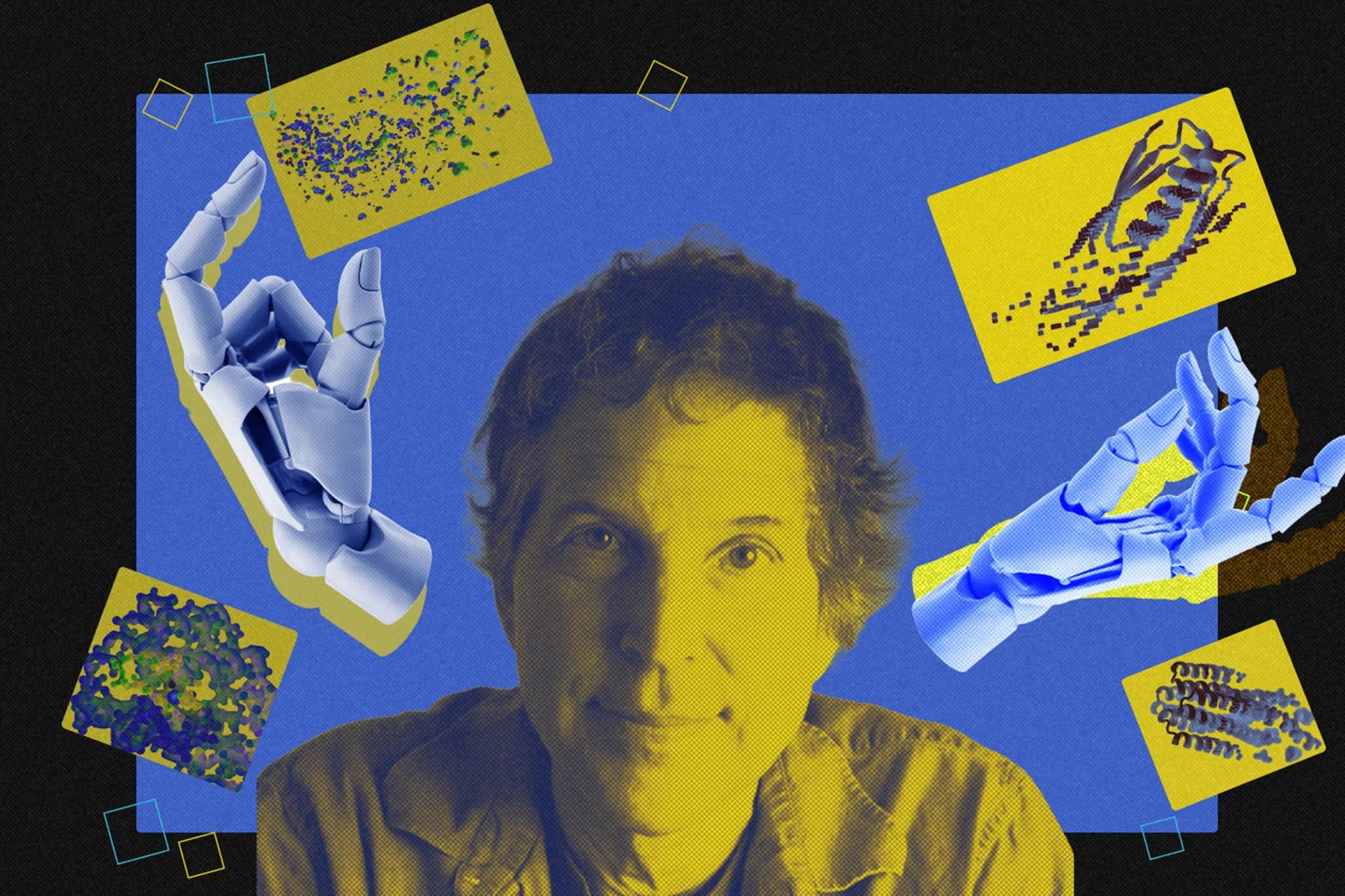
At the forefront of this monumental shift is David Baker, whose pioneering work in computational protein design recently earned him a Nobel Prize. In recent discussions about the future of his field, Baker highlighted how artificial intelligence has supercharged our ability to engineer custom molecules from scratch. This development is not merely an academic triumph; it represents a fundamental transition of biology into an engineering discipline, opening doors to custom-built therapeutics and materials that have never existed in the natural world.
Decoding the Blueprint: The Rise of De Novo Protein Design
Proteins are the workhorses of biology, executing almost every cellular task imaginable. Their complex functions are dictated by their three-dimensional structures, which in turn are determined by linear sequences of amino acids. For decades, biochemistry focused on analyzing and modifying naturally occurring proteins. However, the true holy grail for researchers was de novo design—building entirely new proteins with specific, desired functions straight from computational models.
Achieving this required solving an astronomical computational puzzle. The number of possible amino acid combinations for even a modestly sized protein is staggering, far exceeding the number of atoms in the observable universe. Early computational attempts relied heavily on simplified physical approximations and brute-force sampling, which yielded limited success. The breakthrough came when researchers began leveraging algorithms that could accurately predict how amino acid chains fold into stable three-dimensional shapes, allowing them to work backward from a desired function to an engineered molecular structure.
The Machine Learning Turning Point
The introduction of deep learning architectures transformed structural biology almost overnight. Machine learning models trained on vast databases of known protein structures learned the hidden grammar of molecular folding with unprecedented precision. Instead of relying purely on rigid physics-based simulations, modern AI systems can generate novel protein backbones and sequences almost instantaneously.
This integration of generative AI into biochemistry mirrors the language models that write text or generate images. By treating amino acids as a biological vocabulary, algorithms can compose entirely functional molecular sentences. These tools enable scientists to specify constraints—such as binding tightly to a specific viral target or catalyzing a tricky chemical reaction—and have the software output a tailored protein design ready for laboratory synthesis and testing.
Why This Matters for Medicine and Industry
The practical implications of programming biology with code are profound. In the realm of medicine, custom-designed proteins can act as precision therapeutics, capable of neutralizing drug-resistant pathogens, targeting cancer cells with minimal side effects, or serving as hyper-stable vaccines. Unlike traditional biologics harvested from living cells, these synthetic molecules can be optimized for durability, manufacturing ease, and exact pharmacological profiles.
Beyond healthcare, the industrial applications are vast. Engineered enzymes could be deployed to break down persistent environmental pollutants like plastics, capture carbon emissions efficiently, or synthesize green chemicals and sustainable materials. By stepping outside the library of natural evolution, humanity gains a versatile molecular toolkit designed specifically to tackle modern ecological and industrial challenges.
The Developer's Perspective: Biology as Code
For software engineers and data scientists, the current era of biotechnology feels strikingly familiar. Biological research has increasingly become an information science. DNA, RNA, and amino acid sequences are digital data strings; folding algorithms are computational pipelines; and laboratories are moving toward automated, high-throughput testing facilities that function much like continuous integration servers.
This intersection of tech and biology creates exciting new paradigms for developers. Open-source models, API-driven biological design platforms, and specialized hardware accelerators are becoming standard tools in biotech startups. The developer mindset—focused on modularity, optimization, abstraction, and rapid iteration—is driving a new wave of innovation where writing software translates directly into manufacturing physical matter.
Risks, Biosecurity, and Open Questions
As with any transformative technology, the ability to engineer novel biology carries significant risks. The same computational tools that can design life-saving therapeutics could theoretically be misused to synthesize dangerous toxins or pathogens. Ensuring responsible stewardship of generative biological software is one of the most pressing challenges facing the scientific and regulatory communities today.
Questions regarding intellectual property, environmental impact, and dual-use research governance must be addressed proactively. As open-source protein design models become more accessible, striking the right balance between open scientific collaboration and robust biosecurity safeguards will be crucial to preventing unintended harm while continuing to reap the immense benefits of synthetic biology.
The Road Ahead
We are only scratching the surface of what is possible when human ingenuity meets computational biology. As algorithms grow more powerful and our understanding of cellular machinery deepens, the boundary between living systems and engineered technology will continue to blur. The transition from discovering nature to writing it from scratch is well underway, promising a future defined by custom-tailored molecular solutions to our most complex problems.
Source: wired.com