
Fitbit Edge vs. Fitbit Air: Architectural Trade-Offs in Modern Wearable Design

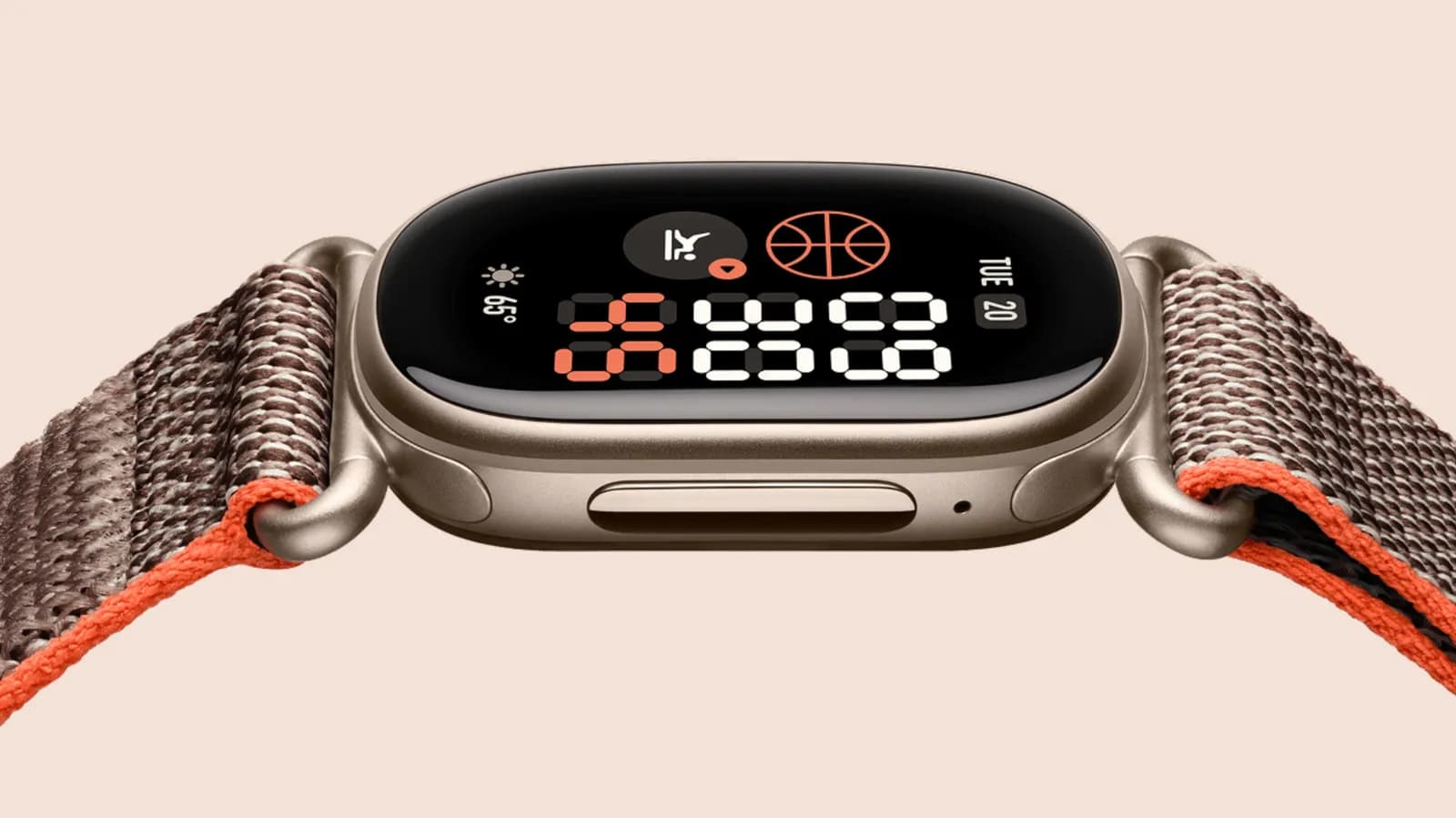
Rethinking the Screen in Connected Fitness
In the evolving landscape of wearable consumer electronics, product tiers have traditionally been segmented by obvious aesthetic and functional markers. The presence or absence of a digital display has long stood as the definitive line between a dedicated biometric tracker and an interactive smartwatch. Yet, as Google continues to refine its Fitbit hardware ecosystem, recent comparisons between devices like the Fitbit Edge and the screenless or minimalist concepts seen in the Fitbit Air illustrate that surface-level design choices barely scratch the surface of modern embedded systems engineering.
At first glance, it is easy for observers to dismiss one wearable as simply another variant equipped with an interactive display panel. However, hardware engineers and embedded software developers recognize that integrating a screen changes every constraint within a micro-device. From thermal dissipation and PCB real estate to operating system selection and memory footprints, the divergence between an interactive fitness band and a passive background sensor platform dictates fundamentally different approaches to hardware architecture and user experience design.
Under the Hood: Microcontroller Constraints and RTOS Pipelines
Building a low-power, ambient health tracker requires extreme discipline in component selection. When an engineering team targets weeks of operational autonomy without an active display—as characterized by minimalist trackers in the vein of the Air series—the entire hardware stack is optimized for low duty cycles. The system typically revolves around an ultra-low-power ARM Cortex-M microcontroller running a lightweight Real-Time Operating System (RTOS) like FreeRTOS or Zephyr. In this configuration, the processor spends most of its lifecycle suspended in deep-sleep states, waking intermittently to pull biometric readings from integrated sensor hubs via SPI or I2C buses before immediately powering down.
Conversely, introducing a rich, responsive display panel—such as the one defining the Edge—completely upends this power budget. Rendering user interfaces at smooth frame rates requires dedicated 2D graphics accelerators, larger static RAM pools for frame buffering, and significantly higher clock frequencies. The device can no longer rely purely on passive event loops; it must sustain an interactive UI thread, process capacitive touch inputs with negligible latency, and manage continuous visual feedback. Consequently, the software architecture shifts toward a more complex RTOS or hybrid micro-platform, requiring partitioned processing cores where one core manages high-frequency sensor acquisition while another handles graphics rendering and user interface navigation.
The Display Dilemma: Power Budgets vs. Instantaneous Feedback
The philosophical division between these two product philosophies highlights a central tension in wearable product strategy: passive data gathering versus actionable real-time feedback. Wearables that omit full-color interactive panels prioritize friction-free longevity. By removing the primary power drain of a digital device—the display backlighting and driver ICs—manufacturers can shrink the physical battery cell while simultaneously extending operational battery life, allowing the device to disappear into the wearer’s routine.
Yet, screen-driven devices like the Edge fulfill an entirely distinct operational objective. They provide immediate, deterministic feedback loops that allow users to alter their behavior mid-session. Whether adjusting cardiovascular pacing during a workout, verifying satellite signal lock, or responding to high-priority system alerts, the presence of a visual interface fundamentally transforms the relationship between user and sensor platform. For developers, this creates an interface surface that must balance informative visual hierarchy against aggressive display sleep timeouts to avoid gutting the device’s daily endurance.
Sensor Integration and Edge Computing Capabilities
Beyond the optical and mechanical distinctions, sensor fusion pipelines differ markedly across these tiers of hardware. Modern health wearables are no longer simple step counters; they are sophisticated edge-computing nodes capable of continuously evaluating photoplethysmography (PPG) arrays, electrodermal activity (EDA), skin temperature thermistors, and high-g multi-axis accelerometers. The way data from these sensors is processed reflects the device’s broader system constraints.
In a minimalist, display-agnostic tracker, the raw biometric signals are frequently compressed and processed asynchronously. Algorithms run periodically to detect sleep staging, baseline heart-rate variability (HRV), and systemic recovery metrics, often offloading heavier heuristic analysis to a paired mobile companion app or cloud-based machine learning models. In contrast, an interactive device equipped with a responsive screen must perform edge inference in real time. The on-device silicon must run continuous heart rate algorithms and immediate cadence estimations with virtually zero delay to reflect live performance on the screen, necessitating dedicated digital signal processing (DSP) blocks integrated directly into the system-on-chip.
Developer Ecosystems and API Paradigms
From a software development perspective, the divide between minimalist and interactive fitness bands influences how third-party developers and enterprise platforms interact with wearable health data. Google’s broader ecosystem strategy, spanning Health Connect on Android and traditional Fitbit Web APIs, serves as the unifying connective tissue between these disparate hardware profiles. However, the developer experience on the client side remains sharply differentiated.
Interactive devices open avenues for micro-applications, modular watch faces, and localized telemetry widgets. Developers working within these constraints must master compact UI frameworks, strictly manage asset sizes to fit constrained flash storage, and adhere to strict memory-leak prevention guidelines to preserve battery life. Screen-light or passive trackers, by comparison, shift third-party development entirely to the background pipeline. For these platforms, developers focus on data ingestion, background synchronization, and deriving longitudinal health insights from passive data streams, operating entirely downstream from the physical device itself.
Market Positioning: Google’s Multi-Pronged Wearable Strategy
Google’s handling of the Fitbit portfolio demonstrates a conscious move away from a monolithic, one-size-fits-all hardware vision. By maintaining distinct devices tailored to different user archetypes, the company is hedging its bets across the entire wearable computing spectrum. The high-end Pixel Watch line captures the luxury, Wear OS-powered computing segment; interactive Fitbit bands capture dedicated fitness enthusiasts who demand direct workout controls; and streamlined, low-profile trackers appeal to users suffering from screen fatigue who simply want continuous biometric monitoring.
This tiered strategy is crucial in an increasingly crowded consumer electronics sector. As continuous health monitoring becomes commoditized, differentiation lies not merely in who possesses the most accurate optical sensors, but in how seamlessly the hardware integrates into the user's daily habits. By engineering devices that diverge deeply in their operational trade-offs, Google acknowledges that a display is not an absolute upgrade—it is a specific functional compromise tailored to specific use cases.
Looking Ahead: The Convergence of Ambient AI and Wearables
As microelectronics continue to shrink and on-device machine learning models become drastically more efficient, the technical boundaries separating these device classes will inevitably evolve. Future iterations of minimalist trackers may integrate sophisticated haptic feedback engines and low-power audio prompts, bridging the information gap without ever needing a high-drain display. Concurrently, advances in microLED and ultra-low-power reflective display technologies could eventually eliminate the severe battery penalty currently associated with screen-bearing devices.
For now, the contrast between the Fitbit Edge and minimalist designs like the Air serves as a masterclass in modern hardware trade-offs. What casual observers see as a basic choice between having a screen or going without is, in reality, a complex balancing act involving power budgets, RTOS design, real-time sensor processing, and developer surfaces. As the wearable ecosystem matures, success will belong to the platforms that recognize a display is not merely a piece of glass, but a pivotal architectural decision that reshapes the entire computing stack.
Source: engadget.com