
Honoring Margaret Hamilton: The Pioneer Who Named and Saved Software Engineering

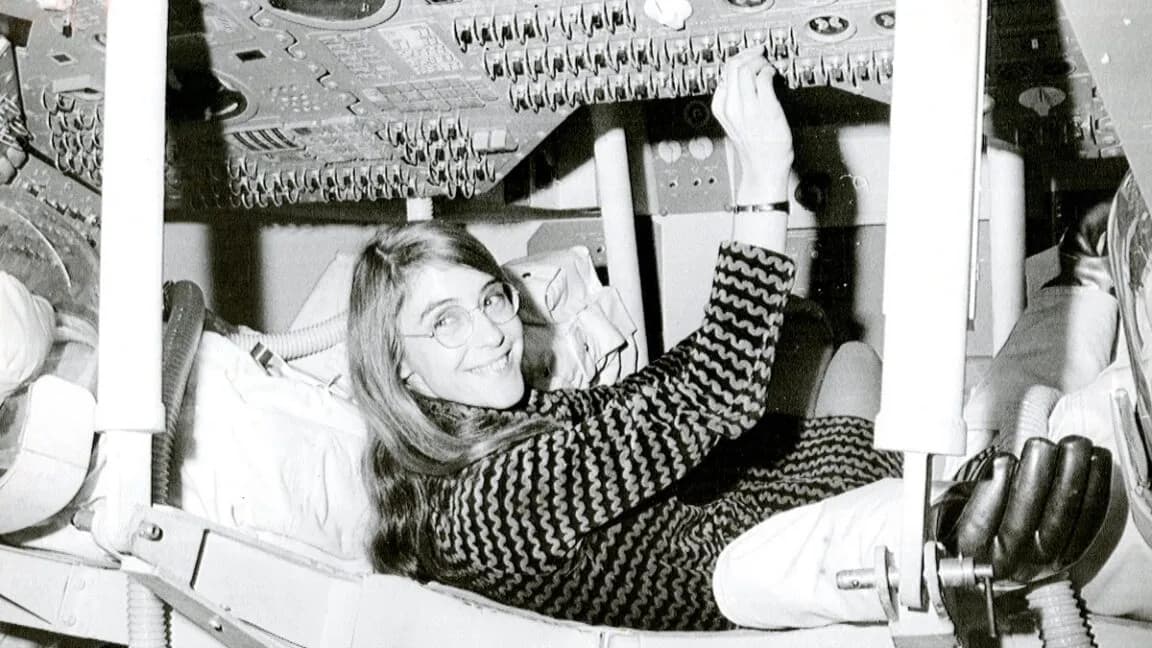
Introduction to a Computing Icon
The history of technology is often chronicled through the evolution of hardware—from vacuum tubes to silicon microprocessors. Yet, the invisible infrastructure of code has always been the true engine driving digital progress. Few individuals embody this truth more profoundly than Margaret Hamilton, whose foundational work not only guided humanity to the lunar surface but also legitimized the very practice of writing code as a rigorous engineering discipline. Her passing marks the loss of a titan whose foresight continues to influence every line of code written today.
Long before software development was viewed as a mainstream profession, Hamilton was already confronting the chaotic reality of large-scale systems programming. As the director of the Software Engineering Division for the MIT Instrumentation Laboratory, she led the team responsible for building the onboard flight software for the Apollo space program. Her legacy is a masterclass in resilience, architectural rigor, and the vital necessity of fault-tolerant design in mission-critical environments.
The Apollo 11 Crisis: When Code Saved the Mission
Every developer knows the sinking feeling of watching a system throw an unexpected exception, but few have experienced it with the stakes of the Apollo 11 Moon landing. Just minutes before Neil Armstrong and Buzz Aldrin were set to touch down, the spacecraft's guidance computer was suddenly overwhelmed with a flurry of priority interrupts. A radar switch had been left in the wrong position, flooding the system with unnecessary data and threatening to crash the guidance computer entirely.
In a lesser-designed system, this memory overload would have resulted in a total reboot or catastrophic failure, likely forcing an aborted landing. However, Hamilton and her team had anticipated the unpredictable nature of operational environments. They engineered the architecture with asynchronous executive priority scheduling. When the CPU became overburdened, the operating system intelligently dropped low-priority tasks—such as updating the display—to focus entirely on the critical thruster and guidance loops, ensuring the lunar module landed safely.
Inventing the Term 'Software Engineering'
In the early days of computing, writing code was often dismissed as a mere clerical task—something secondary to the creation of heavy machinery and electronic circuits. Programmers were frequently viewed as glorified typists who translated mathematical formulas into machine instructions. Hamilton recognized the absurdity of this hierarchy and fought to elevate software development to the status of traditional engineering.
To establish this professional legitimacy, she deliberately coined the term "software engineering." By pairing 'software' with 'engineering,' she sought to give the discipline the same level of respect, accountability, and methodical rigor applied to civil or mechanical engineering. This wasn't merely a semantic shift; it was a philosophical declaration that writing complex code required systematic design, thorough testing, and uncompromising quality control.
Pioneering Software Reliability and Fault Tolerance
Modern DevOps and site reliability engineering (SRE) emphasize concepts like graceful degradation, system resilience, and fault tolerance as modern best practices. Hamilton was implementing these exact philosophies decades before the terms existed. She understood that human error was inevitable and that hardware would inevitably fail, meaning software had to be robust enough to withstand catastrophic surprises.
Her team pioneered rigorous testing methodologies, simulating edge cases and failure modes long before automated testing frameworks became standard industry tooling. By treating software as a complex, interlocking ecosystem rather than a linear script, Hamilton established standards of reliability that paved the way for modern aviation, automotive systems, and global digital infrastructure.
Entrepreneurship and Post-NASA Impact
After her monumental work at NASA, Hamilton did not rest on her laurels. She transitioned into the private sector, applying her uncompromising standards to commercial systems and enterprise technology. She founded and led multiple software companies, bringing the rigorous methodologies she developed at MIT into the broader corporate and industrial landscape.
Her entrepreneurial ventures demonstrated that the principles of robust software architecture were universally applicable, whether guiding a spacecraft through the vacuum of space or managing complex data systems on Earth. Through her companies, she continued to mentor new generations of technologists, instilling a deep respect for clean architecture and system reliability.
Furthermore, Hamilton's influence extended into theoretical computer science, where she helped shape how developers think about higher-order programming and system reliability. Her foresight laid the groundwork for modern paradigms in system safety, proving that proactive design is always superior to reactive debugging.
Legacy for Modern Developers
Today's software developers enjoy advanced IDEs, automated pipelines, sophisticated version control, and vast ecosystems of open-source libraries. Yet, the fundamental challenges of the craft remain unchanged: managing complexity, anticipating failure, and delivering reliable systems under immense pressure. Margaret Hamilton's work serves as a timeless reminder that behind every smooth user experience lies deep, disciplined architecture.
As the tech industry continues to evolve through artificial intelligence, cloud-native architectures, and distributed systems, the core tenets championed by Hamilton are more relevant than ever. Whenever engineers design fault-tolerant microservices or write self-healing infrastructure, they are walking a path she blazed decades ago.
Closing Takeaway
Margaret Hamilton transformed software from an ad-hoc hobby into a respected engineering discipline, saving the Apollo 11 mission through sheer architectural brilliance. Her indelible mark on technology ensures that her pioneering spirit will live on in every resilient system and thoughtful line of code written today.
Source: arstechnica.com