
Inside IceCube: How Massive Antarctic Detectors Capture Cosmic Ghosts

Introduction to the Cosmic Ghost Particles
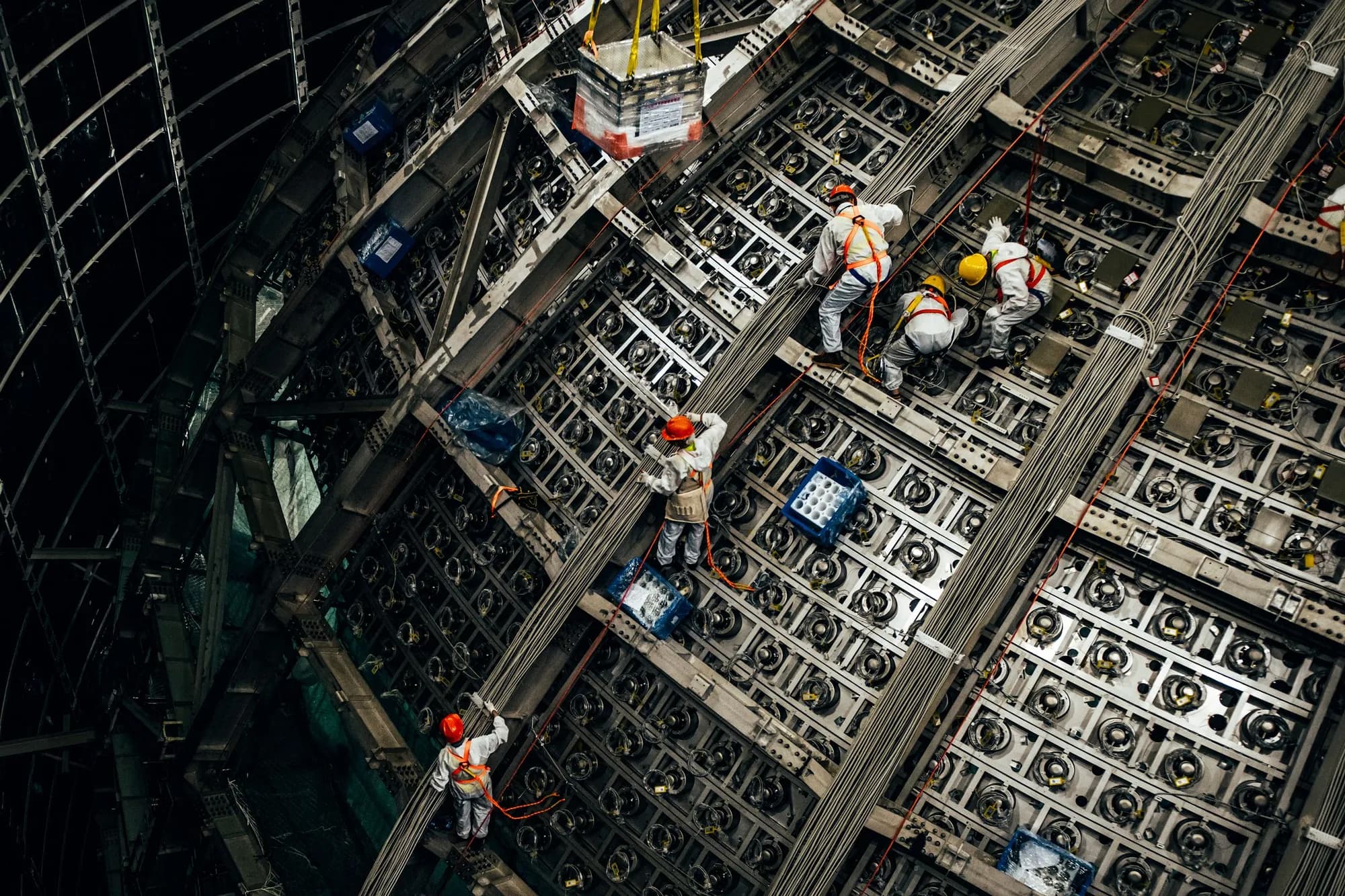
For decades, physicists have chased one of the universe's most elusive phenomena: the neutrino. Often dubbed 'ghost particles,' neutrinos interact so rarely with ordinary matter that trillions of them pass through our bodies every second without leaving a trace. Detecting them requires colossal engineering efforts that push the boundaries of modern technology, data processing, and hardware design. One of the most ambitious projects tackling this challenge is the IceCube Neutrino Observatory, buried deep beneath the Antarctic ice sheet.
Understanding neutrinos offers humanity a window into the most violent and energetic processes in the universe, from exploding stars to distant active galactic nuclei. Because they travel across the cosmos in a nearly straight line, unhindered by magnetic fields or dense cosmic dust, they serve as pristine messengers. Yet, building an instrument capable of spotting these ghost particles is an exercise in extreme distributed systems and low-temperature hardware reliability.
The Engineering Marvel Beneath the Ice
Constructing the IceCube detector was a logistical and technical triumph unlike almost any other in modern science. Located at the Amundsen-Scott South Pole Station, the observatory consists of a cubic kilometer of pristine ice outfitted with thousands of digital optical modules (DOMs). To install these sensors, engineers used specialized hot-water drills to melt holes nearly two and a half kilometers deep into the ice cap, lowering strings of sensors before the water refroze.
Each DOM is a marvel of resilient hardware engineering, designed to operate in total darkness at crushing pressures and freezing temperatures without maintenance. These sensors look for Cherenkov radiation—a faint blue glow emitted when a neutrino occasionally collides with an atomic nucleus in the ice, producing a secondary particle traveling faster than the local speed of light in that medium. Capturing this fleeting photon burst requires precise timing and robust electronics capable of surviving the harshest environment on Earth.
Handling the Data Deluge at the Edge
The sheer scale of data acquisition required by IceCube presents a massive computing and network challenge. The detector generates an immense continuous stream of raw analog data from its thousands of photomultiplier tubes. Transmitting all of this raw data via satellite from the remote South Pole station is entirely unfeasible due to severe bandwidth constraints.
To solve this, IceCube relies heavily on edge computing and real-time filtering algorithms. Each DOM incorporates onboard digitization hardware that timestamps photon arrivals with nanosecond precision before transmitting digitized pulses upward. Local cluster computers at the surface filter out background noise—such as natural radioactive decay within the ice—and flag high-energy cosmic events to be prioritized for satellite transmission to researchers worldwide.
Why Neutrino Astronomy Matters to Developers and Engineers
While neutrino detectors operate far outside the typical software engineering stack, the technological hurdles they overcome mirror those faced by modern distributed systems. From processing high-throughput telemetry streams at the edge to building fault-tolerant hardware that cannot be physically serviced for months or years, IceCube is a masterclass in extreme systems architecture.
Furthermore, analyzing neutrino data requires advanced machine learning, high-performance computing (HPC), and sophisticated simulation pipelines. Physicists and data scientists build complex neural networks to reconstruct particle trajectories and energy levels from sparse sensor hits. These data-handling techniques directly inform how engineers process massive, noisy datasets in fields like autonomous driving, IoT telemetry, and financial modeling.
The collaborative nature of these scientific projects also highlights modern open-source and open-science paradigms. Teams scattered across continents must coordinate software releases, data schemas, and analysis pipelines with rigorous version control and continuous integration, ensuring reproducibility across heterogeneous computing clusters.
Overcoming Noise and Calibration Challenges
One of the most complex aspects of operating a detector buried in dynamic glacial ice is maintaining calibration. Unlike a manufactured silicon chip, the Antarctic ice sheet is a natural medium with varying optical properties, impurities, and temperature gradients that affect how light propagates through it.
Researchers must continuously run calibration routines using onboard LEDs and lasers built into the sensor strings to map the local optical characteristics of the ice. This ongoing calibration loop is analogous to correcting sensor drift in robotics or fine-tuning machine learning models against shifting real-world distributions. The software must dynamically adjust its reconstruction algorithms to account for the physical realities of the medium.
The Future of High-Energy Astrophysics
As neutrino astronomy matures, the scientific community is already looking toward the next generation of detectors, such as IceCube-Gen2. This planned expansion will dramatically increase the instrument's footprint, allowing researchers to capture even higher-energy neutrinos and map the universe with unprecedented resolution. These upgrades will require even more advanced data processing pipelines, pushing the envelope of low-power computing and real-time anomaly detection.
The transition toward larger arrays means engineering teams will have to rethink power distribution, data compression, and automated anomaly detection at the edge. As these systems grow more sophisticated, they will continue to drive hardware and software innovations that trickle down into mainstream technology sectors.
Closing Thoughts
The IceCube Neutrino Observatory stands as a testament to what humanity can achieve when pushing the absolute limits of hardware, software, and distributed systems. By turning a cubic kilometer of ice into a telescope, researchers are not only unlocking the secrets of cosmic cataclysms but also pioneering techniques in edge computing, signal processing, and massive data management that resonate far beyond the polar ice caps.
Source: wired.com