
Inside SpaceX's Starship Milestone: A Developer's Look at High-Stakes Aerospace Systems

The Countdown to a New Era in Heavy-Lift Rocketry
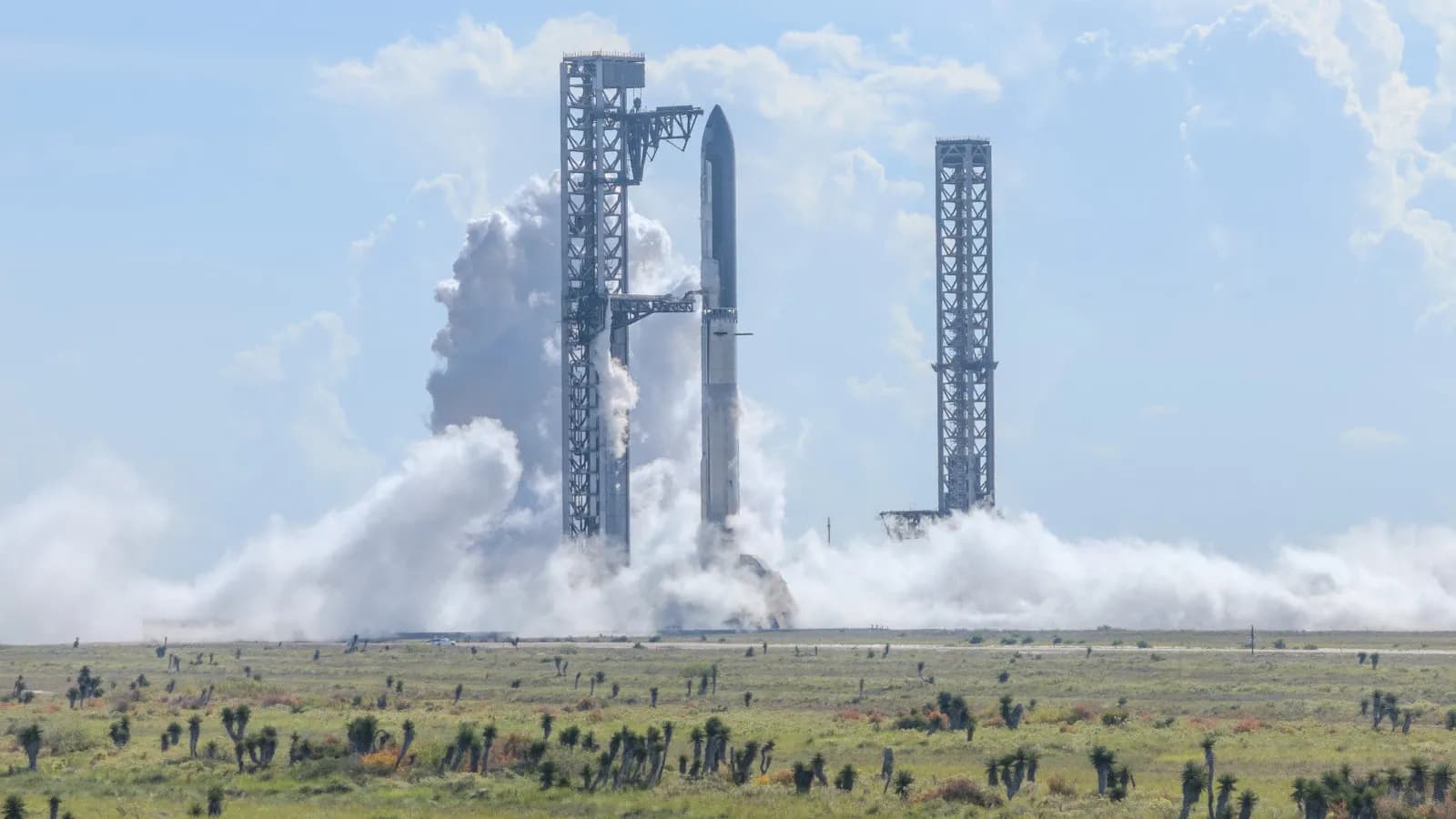
The aerospace industry stands on the precipice of a major milestone as SpaceX successfully concludes a comprehensive wet dress rehearsal for its massive Starship vehicle. This crucial dry run mirrors the exact sequence of events leading up to liftoff, culminating in the complete loading of cryogenic propellants into both the Super Heavy booster and the upper-stage spacecraft. For engineers and technologists watching from the sidelines, witnessing a rocket of this unprecedented scale cycle through propellant loading, pressurization, and terminal countdown counts as a masterclass in complex distributed systems management.
Achieving this rehearsal milestone means that the hardware, the launch mount infrastructure, and the ground software have successfully communicated under near-flight conditions. In complex engineering projects, the transition from paper designs to physical execution invariably uncovers edge cases that simulation software misses. By ticking off this dress rehearsal, the team has signaled that their avionics, telemetry, and automated abort protocols are functioning cohesively, clearing the path for the upcoming orbital flight test attempt.
Understanding the Mechanics of a Wet Dress Rehearsal
For those accustomed to software release cycles, a wet dress rehearsal is the aerospace equivalent of a comprehensive staging deployment. Before pushing a mission-critical build to production, operations teams must verify that all downstream dependencies, hardware states, and environmental variables behave predictably. In the context of Starship, a wet dress rehearsal involves chilling down miles of plumbing, managing extreme thermal gradients, and loading thousands of metric tons of super-chilled liquid oxygen and methane into the vehicle.
The technical hurdles involved in managing these propellants are immense. Liquid methane and sub-cooled liquid oxygen require precise temperature and pressure regulations to prevent boil-off and structural compromise. The ground control software must constantly monitor thousands of sensor channels simultaneously, executing automated sequences that would be impossible for human operators to manage manually in real time. The successful completion of this test demonstrates that the autonomous flight control architecture and the ground infrastructure can synchronize successfully under extreme operational stress.
Software, Telemetry, and the Scale of Modern Flight
Modern rocketry is fundamentally a software-driven discipline, and the Starship program represents the bleeding edge of this paradigm. Where historical space programs relied heavily on rigid, hard-coded procedures and massive manual oversight, contemporary heavy-lift development leans heavily on iterative software deployment, rapid feedback loops, and extensive telemetry analysis. Every second of the wet dress rehearsal generates terabytes of diagnostic data, tracking valve actuation speeds, structural flexing, and propellant flow rates.
Software engineers building enterprise systems often talk about high availability and fault tolerance, but those concepts take on an entirely different dimension when a software bug can result in the loss of a multi-million-dollar asset. The flight computer software running aboard Starship must handle unpredictable physical phenomena while making instantaneous decisions regarding vehicle health. The successful wet dress rehearsal serves as a validation of this software stack, proving that the distributed control nodes spread across the vehicle can communicate reliably despite intense electromagnetic and vibrational environments.
- Massive telemetry streams require real-time processing pipelines.
- Automated countdown sequencers must handle thousands of conditional checks per second.
- Fault-tolerant hardware architecture prevents single points of failure from aborting missions.
Why This Launch Test Matters for the Broader Tech Ecosystem
While space exploration often feels detached from everyday software engineering, the technological downstream effects of programs like Starship eventually permeate the broader tech landscape. The engineering methodologies required to build, test, and fly a fully reusable orbital-class vehicle demand innovations in materials science, edge computing, power management, and automated testing frameworks. When a company pushes the boundaries of physical engineering, it routinely forces advancements in the tools used to design and monitor those systems.
Furthermore, the promise of rapidly reusable heavy-lift infrastructure radically alters the economics of deploying orbital assets. For developers working on satellite constellations, global communication networks, or space-based scientific hardware, the cost per kilogram to orbit dictates product viability. A successful orbital test flight brings humanity one step closer to an era of high-frequency space logistics, opening up entirely new markets for orbital manufacturing, remote sensing, and extraterrestrial data processing.
Navigating Risk, Failure, and Iterative Design
The philosophy underpinning SpaceX's engineering approach is rooted in rapid iteration and the acceptance of failure as a learning mechanism, mirroring modern DevOps practices like continuous integration and continuous deployment. Traditional aerospace projects often spend decades in planning to minimize the risk of a single catastrophic failure. In contrast, the Starship program embraces a philosophy where hardware is built quickly, tested to its absolute limits, and refined based on empirical data gathered from real-world flights.
This iterative mindset introduces unique regulatory and public relations challenges, as high-profile flight tests can occasionally end in spectacular explosions. However, from a technical standpoint, every anomaly provides invaluable telemetry that cannot be replicated in a laboratory setting. The wet dress rehearsal is just the first major hurdle in a sequence of stress tests designed to push the vehicle toward its structural and operational boundaries, ensuring that future iterations are safer, lighter, and more reliable.
The Road Ahead: What to Watch For Next
With the wet dress rehearsal successfully behind them, the immediate focus shifts to data review and regulatory sign-offs. Engineers will spend countless hours poring over the telemetry logs to verify that every valve, pump, and sensor performed within expected nominal parameters. Once the data is cleared and the necessary launch licenses are secured, the team will set a target date for the historic orbital flight test attempt.
For the developer community and technology enthusiasts alike, the upcoming launch represents a compelling spectacle of applied physics and software engineering. Whether the initial orbital flight achieves all its ambitious objectives on the first try or requires subsequent iterations, the milestone marks a undeniable turning point in how humanity approaches interplanetary transport and heavy-lift infrastructure. The foundations are being laid for a new generation of aerospace capabilities, driven by modern software practices and an uncompromising commitment to rapid physical iteration.
Closing Takeaway
The successful wet dress rehearsal of SpaceX's Starship is far more than a routine procedural check; it is a testament to the power of modern, software-driven aerospace engineering. As the industry moves closer to the first orbital test flight, the ripple effects of these technological advancements will continue to challenge our understanding of scale, automation, and systems reliability. For developers and technologists, watching these complex systems come to life offers a powerful reminder of what can be achieved when rigorous software architecture meets ambitious physical engineering.
Source: engadget.com