
Jagex Embraces Unreal Engine for RuneScape 4: A Turning Point in MMO Architecture

A Major Shift for a Legendary MMO Franchise
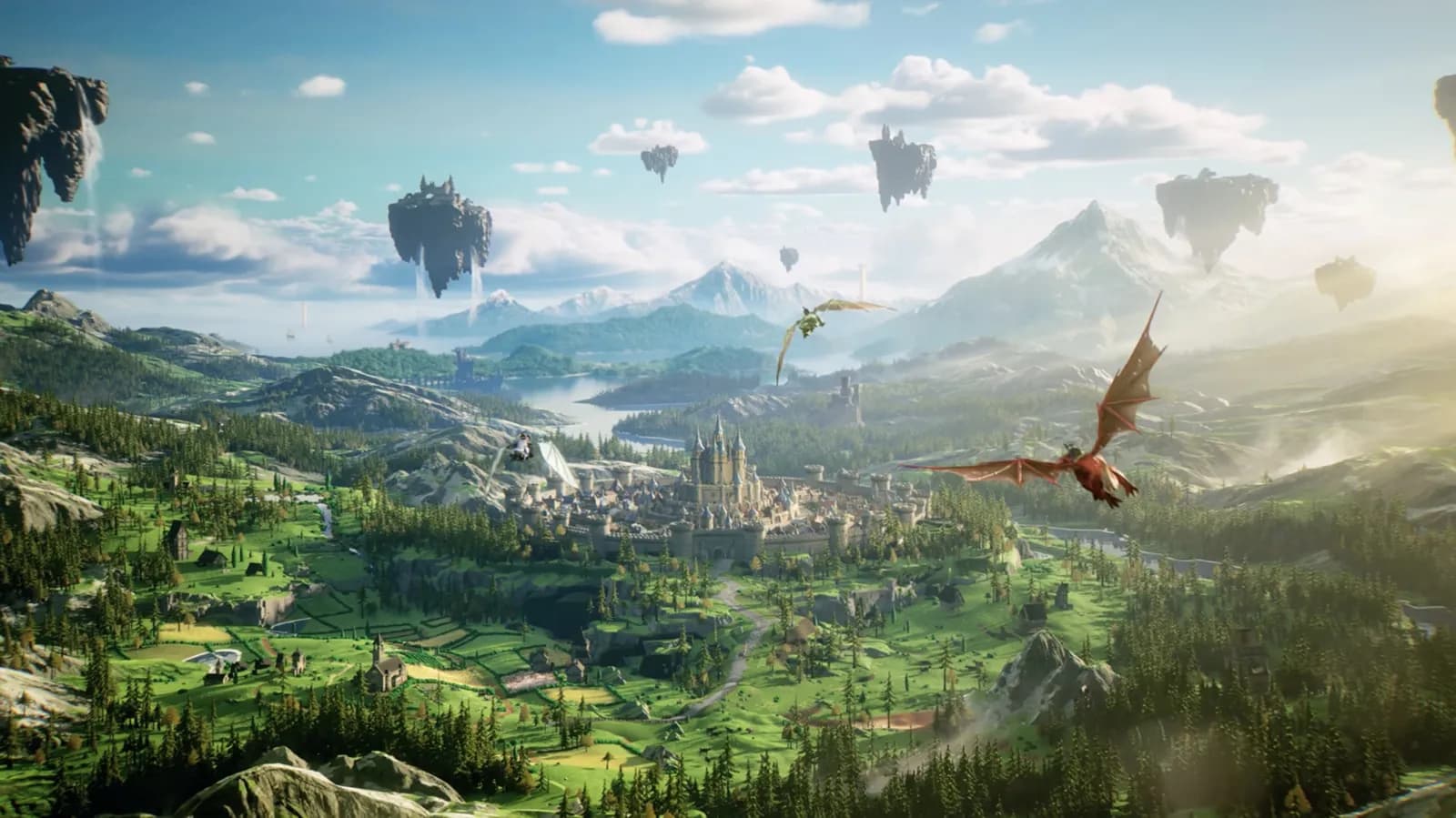
For more than two decades, the RuneScape universe has been defined as much by its unique proprietary technology as by its rich medieval fantasy lore. From its humble origins as a browser-based Java game running on dial-up connections to its evolution into custom C++ desktop clients, British developer Jagex has historically relied on bespoke in-house software to power the world of Gielinor. That paradigm is about to undergo its most significant transformation yet. Jagex has confirmed that a fourth mainline RuneScape title, tentatively designated as RuneScape 4 (RS4), is actively under development using Epic Games' Unreal Engine, with a broader public reveal planned for next year.
This transition represents far more than a routine visual facelift. Building an online persistent-world game inside Unreal Engine marks a fundamental philosophical and architectural pivot for Jagex. For a studio whose engineering identity was forged around low-bandwidth networking, custom scripting environments, and tightly bound grid systems, stepping into an industry-standard commercial engine opens massive new creative horizons while simultaneously presenting formidable engineering challenges.
The Legacy of Bespoke Engineering at Jagex
To fully grasp the magnitude of this architectural shift, one must look at how RuneScape was historically constructed. When Andrew and Paul Gower launched RuneScape in 2001, the web landscape was drastically different. The game was architected in Java, enabling players across the globe to run full-fledged 3D role-playing adventures directly within standard web browsers without demanding heavy client-side downloads or high-end graphics hardware. This low barrier to entry fueled an international phenomenon, but it also required extreme technological discipline.
Over the years, Jagex created RuneScript, a proprietary domain-specific scripting language engineered to handle game mechanics, quest logic, and world events with minimal computational overhead. Server interactions were governed by a strict 600-millisecond server tick loop, dictating how movement, combat calculations, and pathfinding operated. Even when modern browser plugin deprecation pushed the studio to retire the Java client in favor of the custom C++ 'NXT' engine in 2016, the underlying game logic and asset pipelines remained anchored to these deeply rooted, custom-built architectures. While this proprietary heritage granted complete low-level control, it increasingly isolated the studio from modern development workflows.
Why Modern Game Studios Abandon Proprietary Engines
Across the software and gaming industries, maintaining a custom in-house engine has become an expensive, uphill battle against economies of scale. Studios like CD Projekt Red, which famously transitioned from their internal REDengine to Unreal Engine for future projects, have demonstrated that engineering teams can no longer easily justify spending years maintaining core rendering, physics, and tooling pipelines that third-party platforms deliver out of the box.
By selecting Unreal Engine for RS4, Jagex instantly gains access to a world-class graphical suite, including advanced rendering pipelines, robust physics simulations, dynamic global illumination, and high-fidelity asset management systems. Instead of allocating senior software engineers to patch rendering backends or build custom animation toolsets, Jagex can redirect its technical talent toward gameplay logic, narrative systems, and community-driven features. Furthermore, modern off-the-shelf engines dramatically accelerate onboarding; instead of training new hires for months on idiosyncratic internal tools and proprietary scripting syntax, Jagex can recruit directly from a vast international pool of engineers and technical artists already fluent in modern game dev standards.
The Architectural Dilemma: Massively Multiplayer on Unreal
While Unreal Engine provides unparalleled graphical fidelity and developer tooling, utilizing it for a massive multiplayer online role-playing game is far from trivial. Historically, Unreal Engine's built-in networking framework was optimized for session-based multiplayer titles with moderate player counts—such as battle royales, tactical shooters, and arena brawlers—rather than persistent worlds supporting thousands of concurrent players in a single continuous geography.
Integrating RuneScape's traditional design pillars with an Unreal framework presents distinct networking and server-side challenges:
- Massive Concurrency and Spatial Partitioning: Jagex engineers will need to implement or heavily customize distributed server architectures to handle hundreds of players congregating in trading hubs and major cities without client frame drops or server desynchronization.
- Custom Replication and Netcode: Standard engine client-server replication models consume significant bandwidth when scaling to MMO proportions, requiring bespoke interest management, spatial culling, and state serialization layers.
- Tick Rate and Gameplay Physics: Translating RuneScape's deliberate, tactical, grid-and-tick movement mechanics into a continuous, real-time physics environment demands a delicate balance between modern fluid character control and strategic combat predictability.
- Deterministic Simulation and Anti-Cheat: Persistent economies demand absolute server authority to prevent speed hacking, position spoofing, and item duplication exploits, requiring deep modifications to how physics and player inputs are validated.
Preserving Identity in an Era of High-End Fidelity
Beyond the raw technical requirements lies an equally critical design question: how does a developer preserve the distinct charm and mechanical identity of RuneScape when rebuilding it in a photorealistic or semi-stylized modern engine? Both Old School RuneScape (OSRS) and RuneScape 3 have thrived precisely because their stylized simplicity and mechanical clarity feel unique in a market saturated with generic action-RPGs.
If RS4 adopts an over-the-shoulder action combat model or leans heavily into hyper-realistic aesthetics, it risks alienating veterans who value the deep economic simulation, afk-friendly skilling loops, and tactical combat rhythm of Gielinor. Conversely, merely copying 20-year-old grid mechanics onto high-polygon Unreal models could feel jarring and unresponsive to a younger demographic accustomed to fluid modern controls. Navigating this intersection of nostalgic design and modern technical capability will likely be the primary creative challenge for Jagex as production matures.
The Cross-Platform Future and Cloud Ecosystem
Another major advantage of building on Unreal Engine is native multi-platform deployment. Jagex demonstrated remarkable commercial foresight when it brought both OSRS and RuneScape 3 to mobile platforms, sparking dramatic surges in engagement and proving that persistent MMORPGs can thrive across mobile and desktop interfaces simultaneously.
With Unreal Engine's sophisticated cross-compilation toolchains, RS4 is uniquely positioned to target PC, current-generation consoles, mobile hardware, and emerging cloud gaming platforms from a unified codebase. Providing seamless cross-play and cross-progression has shifted from an optional novelty to a fundamental expectation for contemporary live-service games. An Unreal-powered architecture allows Jagex to ship client updates, shader pipelines, and content patches across varied platforms with far less friction than their legacy dual-engine systems ever permitted.
Looking Ahead to the Next Generation of Gielinor
Jagex has signaled that detailed gameplay reveals, narrative overviews, and structural deep dives for the tentatively named RS4 will emerge next year. In the interim, both Old School RuneScape and RuneScape 3 continue to receive dedicated updates, underscoring that this upcoming title is designed to expand the franchise rather than immediately replace its thriving forebears.
For the broader software engineering and game development communities, Jagex's move serves as another compelling case study in the consolidation of modern game development technology. As iconic legacy studios gradually phase out decades-old proprietary codebases in favor of scalable commercial engines, the industry moves toward an era where competitive advantage is no longer defined by who writes their own graphics pipeline, but by how masterfully developers can mold universal engines to deliver timeless virtual worlds.
Source: engadget.com