
LG Expands Its Home Theater Capabilities With DTS:X and Google Cast Integration

The Evolution of Modern Home Audio Ecosystems
Home entertainment technology has shifted from isolated hardware setups to deeply integrated, software-driven ecosystems where ongoing feature updates can completely transform existing living room hardware. Consumers and developers alike have come to expect that audio-visual equipment should continuously evolve through firmware deployments long after the initial unboxing. LG's latest software initiative for its Sound Suite product line embodies this modern paradigm shift, demonstrating how hardware manufacturers can breathe new life into existing soundbars and home theater setups by deploying sophisticated software capabilities straight to the living room.
For a long time, the home audio market was rigidly defined by physical inputs and fixed codec licensing locked down at the factory floor. Today, however, advanced digital signal processing (DSP) and flexible operating systems allow brands to bridge technological gaps retrospectively. By pushing out comprehensive updates that introduce complex spatial audio codecs and network streaming standards, manufacturers are blurring the lines between static consumer electronics and dynamic, upgradeable media appliances.
Unlocking Spatial Audio With DTS:X Support
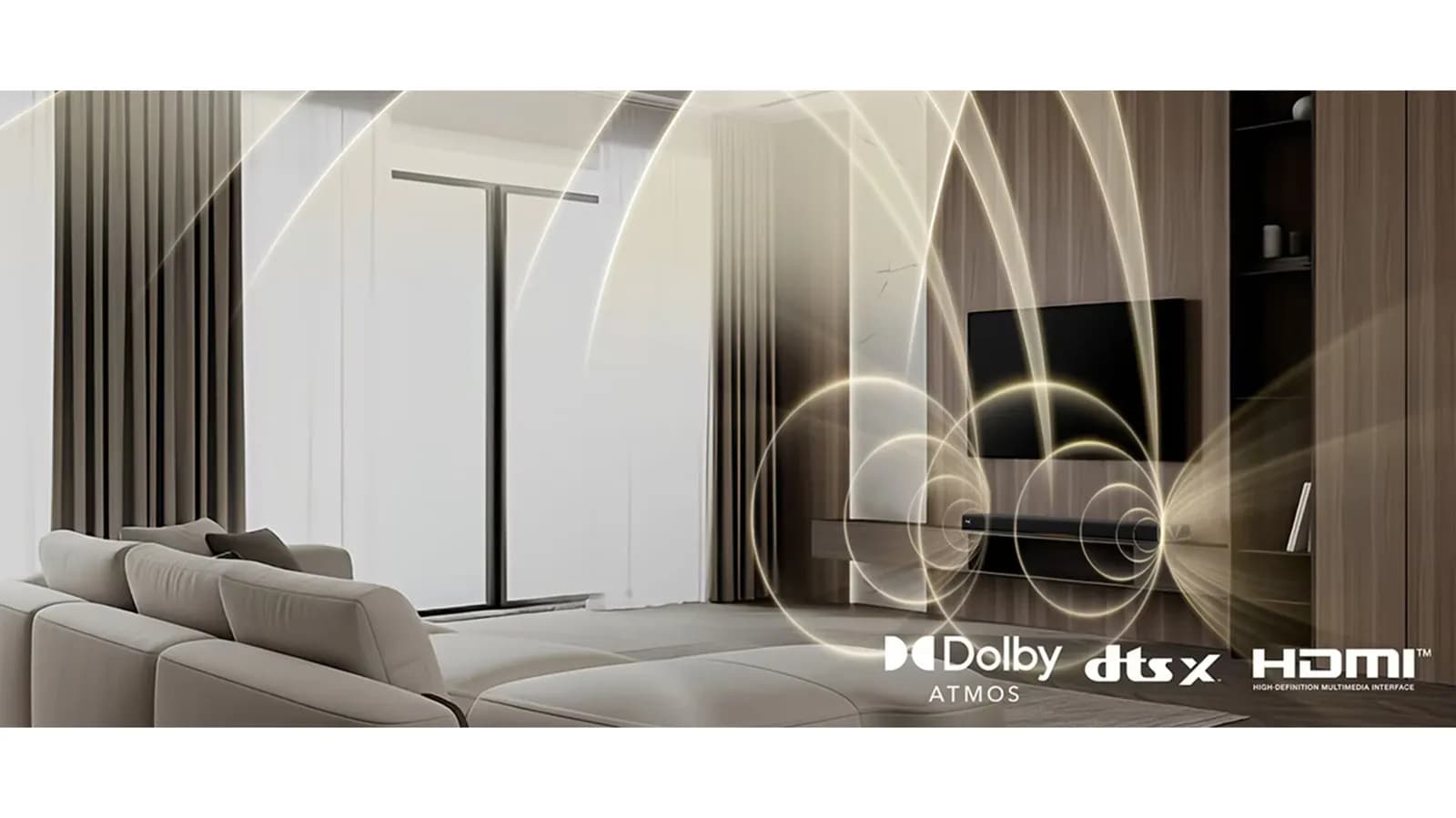
Among the most prominent additions in this latest release is the inclusion of DTS:X, an object-based immersive audio technology that has long been at the top of many home theater enthusiasts' wishlists. Unlike traditional channel-based surround sound formats that map audio strictly to specific physical speaker locations, object-based audio allows sound mixers to place and move individual sound elements freely through a three-dimensional virtual space. This means soundbars and multi-speaker configurations can deliver a much more convincing, realistic overhead and directional soundstage.
The absence of DTS:X on previous iterations of certain high-end audio suites had been a point of critique among cinephiles and tech enthusiasts who demanded format parity across competing streaming services and physical media. Integrating this codec requires significant computational overhead on the hardware's onboard digital signal processors to decode complex metadata streams in real time. Delivering this feature via a software update shows that LG's underlying silicon architecture was intentionally over-provisioned to handle future codec expansions, validating the initial hardware investment for early adopters.
Streamlining Casting With Google Cast Integration
Beyond cinematic audio codecs, the update addresses everyday usability by embedding Google Cast directly into the Sound Suite architecture. Streaming music, podcasts, and ambient audio from mobile devices, laptops, or smart home controllers has become a frictionless expectation for modern consumers. Google Cast provides a standardized, reliable protocol that bypasses the latency and pairing quirks often associated with traditional Bluetooth connections, enabling higher-fidelity audio streaming directly over Wi-Fi networks.
For developers and smart home architects, native Google Cast support means these audio systems can now be seamlessly integrated into multi-room audio groups and automated routines. Users are no longer restricted to proprietary manufacturer apps or cumbersome bridging solutions to cast their favorite media. By adopting open and widely supported streaming protocols, LG ensures that its audio ecosystem plays nicely with a broader range of third-party platforms, enhancing the overall utility of the devices in an increasingly fragmented smart home landscape.
The Software-Defined Consumer Electronics Model
The decision to roll out these advanced features via an over-the-air update highlights a broader industry trend toward software-defined consumer electronics. In the past, unlocking a new audio format or networking protocol usually meant purchasing an entirely new generation of hardware. Today, companies are realizing that customer loyalty and brand retention are heavily tied to post-purchase support and capability expansion. Keeping existing devices relevant for longer periods reduces electronic waste and builds stronger consumer trust in a brand's hardware-software integration.
However, managing this transition isn't trivial. Engineering teams must rigorously test complex firmware upgrades across a diverse installed base of hardware revisions to prevent regressions, audio dropouts, or compatibility issues with connected TVs and media players. The successful deployment of DTS:X and Google Cast speaks to mature QA pipelines and modular firmware design, where audio processing pipelines and network stacks can be safely updated without destabilizing core system performance.
Developer and Ecosystem Implications
For software engineers and product designers working in the consumer tech and audio space, updates like this illustrate the growing importance of extensible audio frameworks. Modern smart speakers and soundbars run sophisticated embedded operating systems—often based on lightweight Linux distributions or custom real-time operating systems—that manage network stacks, media decoders, and user interface layers simultaneously. As consumers demand more interoperability, the ability to rapidly integrate third-party SDKs and licensing packages becomes a critical competitive advantage.
Furthermore, the integration of standards like Google Cast opens up avenues for custom companion apps and developer integrations. While consumer-facing features take center stage in the release notes, the underlying architectural improvements pave the way for better diagnostic tooling, tighter integration with smart home automation hubs, and more responsive remote management protocols for enterprise or custom installation environments.
Closing Thoughts on the Future of Home Audio
LG's integration of DTS:X and Google Cast into the Sound Suite ecosystem represents a win-win for both consumers and the manufacturer. It remedies long-standing feature requests without requiring hardware replacements, reinforcing the value of ongoing software investment in consumer tech. As spatial audio and smart casting continue to dominate user expectations, the brands that succeed will be those that treat their hardware as a living platform capable of continuous growth.
Source: engadget.com