
Mirror-Image Chemistry and the Breakthrough of Asymmetric Synthesis

The Fundamental Asymmetry of Life
Life at a molecular level is profoundly left-handed. While many organic molecules can exist in two distinct structural configurations that are mirror images of one another—much like a pair of human hands—biological systems overwhelmingly favor just one of these forms. This property, known as chirality, dictates everything from how our taste buds perceive sweetness to how pharmaceutical drugs bind to cellular receptors. For decades, chemists understood that synthesizing molecules in a laboratory often yielded a fifty-fifty racemic mixture of both mirror-image isomers, a frustrating limitation that made isolating the biologically active form both expensive and difficult.
The challenge of breaking this symmetry has long been one of the ultimate quests in chemical research. Standard chemical reactions possess no intrinsic preference for producing a left-handed or a right-handed molecule, treating both pathways with equal probability. Consequently, creating pure substances required either exhausting separation techniques or starting from chiral materials already found in nature. The scientific community recognized that until artificial methods could efficiently direct a reaction to yield exclusively one handedness, the synthesis of complex biological molecules would remain an inefficient bottleneck.
Pioneering the Path to Chiral Control
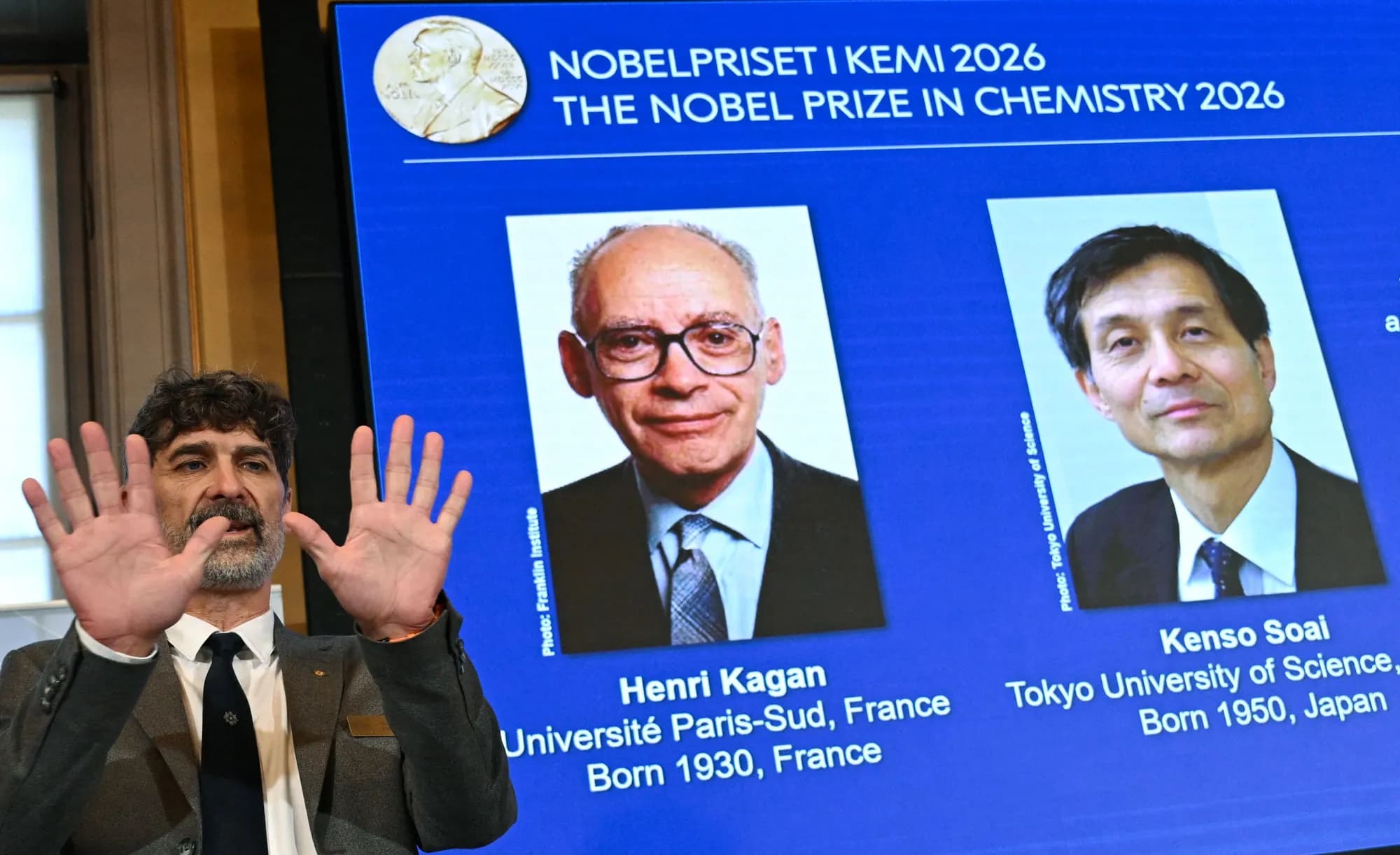
The breakthrough in overcoming this fundamental limitation came through the pioneering work of chemists who discovered how to engineer reactions capable of producing only a single mirror-image isomer. By designing specialized catalysts that tipped the thermodynamic and kinetic scales of a chemical process, these researchers demonstrated that microscopic asymmetry could be deliberately induced on a macroscopic scale. Instead of accepting a random statistical split of products, chemical synthesis could now be guided with absolute precision.
These foundational discoveries relied on the clever manipulation of spatial orientation within reaction environments. By introducing molecular scaffolds that blocked one pathway while favoring the other, the researchers effectively forced building blocks to assemble in a specific, predetermined configuration. This approach transformed how laboratories approached molecular construction, shifting the paradigm from trial-and-error purification to predictable, directional engineering. The ability to dictate molecular handedness opened up entirely new avenues for synthesizing complex organic compounds that were previously deemed practically impossible to manufacture.
The Pharmaceutical Imperative
Nowhere is the importance of molecular asymmetry more pronounced than in the pharmaceutical industry. Because biological targets like proteins and enzymes feature strict three-dimensional geometries, a drug's efficacy depends entirely on its structural fit. While one mirror-image form of a medication might successfully treat a medical condition, its chiral counterpart can sometimes be completely inert or, worse, trigger severe adverse side effects. Ensuring absolute purity in drug manufacturing is therefore not merely a matter of quality control; it is a critical requirement for patient safety.
The historical failure to control chirality has occasionally led to severe clinical consequences, making the transition to asymmetric synthesis a major turning point in drug discovery. Modern synthetic pipelines now rely heavily on these methodologies to produce single-enantiomer drugs with high yields and minimal waste. By eliminating the inactive or harmful mirror image at the point of creation, chemical manufacturers can reduce material costs, simplify regulatory approval processes, and deliver safer, more potent therapies to the market much faster.
Beyond medicine, the principles of asymmetric synthesis ripple across a wide array of technological applications, influencing materials science, agrochemicals, and advanced manufacturing. Liquid crystals used in modern display technologies, specialized polymers with unique optical properties, and complex fragrances all rely on precise chiral structures. As chemical engineering continues to advance, the ability to manipulate matter at this level of spatial specificity remains an indispensable tool for innovators across industries.
Broader Implications for Molecular Engineering
The mastery of asymmetric reactions represents a profound leap in humanity's ability to manipulate matter. By learning to direct chemical outcomes with such high fidelity, researchers have moved closer to mimicking the sophisticated synthetic efficiency found in living organisms. Nature builds complex structures with near-perfect stereochemical control, and replicating this capability in an artificial laboratory setting has been a longstanding goal for physical scientists.
This level of control also bridges classical chemistry with modern computational design. As computational power and artificial intelligence begin to permeate molecular research, algorithms are increasingly used to predict and optimize chiral catalysts. Understanding the foundational mechanics of asymmetric induction provides the high-quality training data and theoretical frameworks necessary for predictive chemistry models to design entirely new synthetic pathways autonomously.
The Road Ahead for Chemical Innovation
Looking forward, the techniques established by early pioneers in asymmetric synthesis continue to evolve in response to sustainability and green chemistry demands. Modern researchers are actively working to make these reactions even more efficient, exploring earth-abundant metal catalysts, biocatalysis, and continuous-flow manufacturing systems that minimize environmental impact. The integration of artificial intelligence into catalyst discovery promises to accelerate the identification of novel stereoselective pathways even further.
As these technologies mature, the gap between biological complexity and human manufacturing will continue to narrow. The ability to program molecular handedness at will ensures that synthetic chemistry remains a vital engine for technological progress, underpinning innovations in medicine, materials, and beyond for generations to come.
Closing Takeaway
The ability to control molecular asymmetry is a testament to the power of fundamental scientific inquiry. By solving a problem rooted in the basic physics of molecular geometry, researchers unlocked new horizons for medicine and manufacturing, proving that mastering the smallest details of the physical world can yield monumental benefits for society.
Source: wired.com