
NASA Opens Bidding for Commercial Low Earth Orbit Destinations

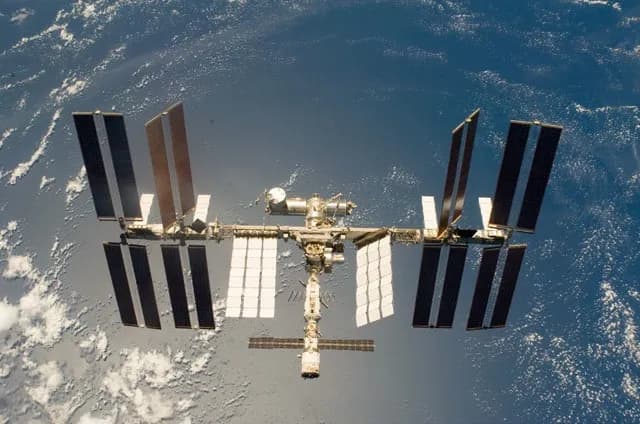
The Twilight of the International Space Station
For over twenty years, the International Space Station has served as humanity's primary scientific outpost in low Earth orbit. This orbiting laboratory has hosted countless microgravity experiments, facilitated unprecedented international cooperation, and given researchers a unique vantage point to study our planet. However, aerospace hardware inevitably ages, and the structural lifespan of the ISS is finite. With decommissioning dates firmly on the horizon, space agencies face a ticking clock to ensure continuous human presence and operational continuity in Earth's orbit.
The transition from a government-managed monopoly in orbit to a commercially driven ecosystem represents a massive paradigm shift. Rather than designing and building a direct successor entirely in-house, the space agency is pivoting to a service-acquisition model. This approach aims to foster a sustainable marketplace where multiple private entities own and operate orbital infrastructure, leasing space and resources back to government researchers and commercial clients alike. It mirrors the successful evolution witnessed in the commercial launch sector over the past decade.
The Official Call to Industry
By officially opening the procurement pipeline, space agency leaders have invited aerospace contractors, startups, and consortiums to submit concrete proposals for commercial space stations. This long-awaited directive provides the formal framework and technical requirements needed for private entities to transition from conceptual designs to active engineering and manufacturing. The agency is looking for habitats that can accommodate both professional astronauts and commercial payloads seamlessly.
These upcoming platforms must meet rigorous safety, life-support, and operational standards while offering the flexibility required for diverse commercial applications. From advanced pharmaceutical manufacturing in microgravity to fiber-optics production and fundamental physics research, the winning designs will need to act as versatile, programmable facilities in the sky. The call to industry sets the rules of engagement for how funding, safety certifications, and milestone tracking will be managed moving forward.
Why It Matters for the Tech and Aerospace Ecosystem
The shift toward commercial space stations holds profound implications for the broader technology sector, particularly for software engineers, embedded systems developers, and hardware architects. Operating a private outpost in orbit requires an unprecedented level of automation, robust edge-computing capabilities, and highly resilient software systems. Unlike traditional terrestrial data centers, orbital facilities demand specialized telemetry, ultra-low-latency monitoring, and fault-tolerant architectures capable of surviving cosmic radiation and extreme thermal fluctuations.
Furthermore, opening low Earth orbit to competitive market forces drives down the cost of access and operations. As private operators look to monetize their stations, they will likely adopt modern cloud-native principles, containerized edge workloads, and automated telemetry ingestion pipelines to optimize resource management. This commercial imperative turns space stations into active enterprise testbeds, creating downstream opportunities for software firms specializing in remote operations, IoT telemetry, and secure satellite communications.
Overcoming Engineering and Financial Hurdles
Despite the immense potential, building and maintaining a commercial space station remains an extraordinarily complex engineering challenge. Private enterprises must balance high initial capital expenditures with uncertain revenue streams, relying on a mix of government anchor tenancy and private commercial customers such as space tourists, media companies, and research institutions. Ensuring profitability while adhering to uncompromising safety parameters requires meticulous financial planning and flawless project execution.
On the technical front, developers and engineers must tackle formidable constraints regarding power management, thermal control, and radiation hardening. Software deployed on these platforms cannot afford catastrophic bugs or unexpected downtime, as on-site maintenance is severely limited and physically hazardous. The industry must develop advanced diagnostic tools, autonomous failure-recovery systems, and secure over-the-air update mechanisms to maintain these remote nodes efficiently.
The Road Ahead for Orbital Infrastructure
As proposals are evaluated and development contracts are awarded, the next few years will determine which architectural visions successfully transition from blueprints to reality. We are likely to see modular station designs that can expand incrementally, minimizing upfront financial risk while maximizing scalability. These platforms will serve as stepping stones not only for ongoing scientific discovery but eventually for deep-space exploration initiatives targeting the Moon and Mars.
For software developers and tech innovators, keeping an eye on the aerospace sector is no longer optional. The intersection of cloud computing, edge analytics, and commercial space operations is generating a rich frontier of technical challenges. Whether you are building telemetry dashboards, optimizing network protocols for high-latency connections, or designing fault-tolerant distributed systems, the emerging commercial space economy offers a compelling domain to apply cutting-edge software engineering principles.
Closing Takeaway
NASA's formal invitation to industry for private space stations marks a defining moment in the commercialization of low Earth orbit. By leveraging private sector ingenuity and market competition, the aerospace industry is laying the groundwork for a sustainable, multi-station future. For software developers and technology professionals, this transition opens up exciting new avenues to contribute to the next generation of orbital infrastructure and scientific exploration.
Source: arstechnica.com