
NASA's PRIMA Mission Aims to Build a Billion-Dollar Space Telescope on a Budget and in Record Time

The Paradigm Shift in Space Science
For decades, flagship space telescopes have been synonymous with staggering budgets, multi-decade development cycles, and an anxiety-inducing litany of single-point-of-failure risks. As major observatories grew increasingly ambitious, their price tags soared into the tens of billions, and launch dates routinely slipped by years or even decades. This dynamic created a severe bottleneck in astrophysical research, leaving generations of scientists waiting anxiously for access to cutting-edge observational instruments.
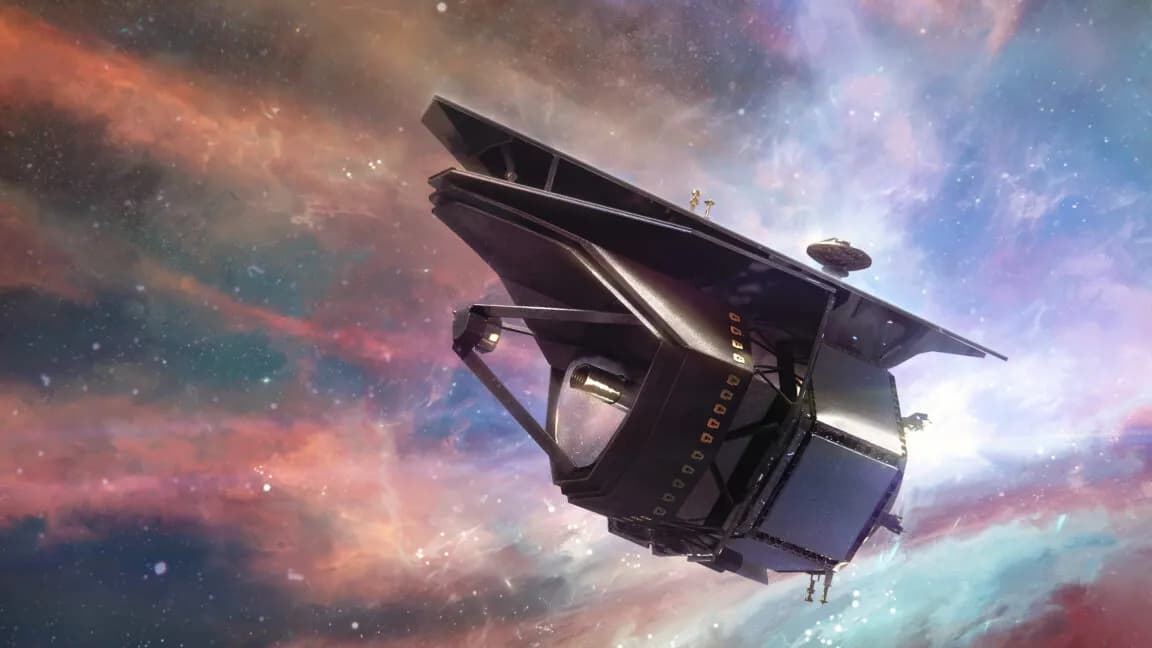
Enter NASA's PRIMA (Pioneering Infrared Observatory for NASA Astrophysics) mission, an ambitious endeavor that attempts to rewrite the playbook for deep-space exploration. By prioritizing fiscal discipline, aggressive timelines, and reuse over custom fabrication, space agencies are signaling a potential shift toward agile aerospace engineering. If successful, PRIMA could prove that groundbreaking science does not always require an open-ended checkbook or a generation-long wait.
Recycling the Legacy of the James Webb Space Telescope
The cornerstone of the PRIMA mission's cost-saving and risk-reduction strategy is hardware heritage. Rather than engineering every component from scratch, the mission plans to repurpose spare parts left over from the construction of the James Webb Space Telescope (JWST). Utilizing qualified, flight-ready spare hardware dramatically shrinks the R&D timeline and mitigates the uncertainty inherent in prototyping brand-new space optics and structural systems.
This approach mirrors a philosophy well-known in software engineering and hardware manufacturing: don't reinvent the wheel when a tested, reliable module already sits on the shelf. By building upon the engineering breakthroughs achieved during the Webb program, the PRIMA team inherits a wealth of thermal management, cryogenics, and mirror-alignment expertise without having to pay the steep tuition of learning those lessons firsthand.
Fast-Tracking Astrophysics on a Strict Budget
Operating under a strict billion-dollar ceiling—which is considered rapid and lean for a major space telescope—PRIMA must adhere to rigid project management constraints. Traditional aerospace programs often suffer from scope creep, where stakeholders continually add requirements mid-cycle, bloating budgets and pushing out deadlines. PRIMA's mandate relies on a fixed-scope architecture, locking down mission parameters early to prevent the dreaded spiral of technical debt and schedule delays.
This rapid development cadence requires engineers and project managers to make pragmatic trade-offs, leaning heavily on commercial-off-the-shelf components where appropriate and avoiding bespoke solutions unless absolutely necessary. For a scientific community accustomed to fifteen-year development loops, a compressed timeline represents both a cultural shock and an exhilarating return to the fast-paced spirit of early space exploration.
Unlocking the Far-Infrared Universe
Beyond its engineering marvels, PRIMA is designed to perform heavy-duty science, focusing primarily on the far-infrared spectrum. This region of the electromagnetic spectrum is notoriously difficult to observe from the ground due to atmospheric water vapor absorption, making space-based platforms essential for unlocking the secrets of star formation, planetary system evolution, and distant galaxies.
Observing in the far-infrared allows astronomers to peer through thick cosmic dust clouds that obscure visible light, revealing the hidden nurseries where stars and planets are born. By pairing this powerful observational capability with a streamlined spacecraft bus, the mission aims to answer fundamental questions about the lifecycle of matter in the universe while keeping the operational overhead surprisingly low.
The Software and Systems Engineering Challenge
For software developers and systems architects, a compressed mission timeline places an immense emphasis on robust simulation, automated testing, and reliable flight software. When hardware development moves at an accelerated pace, software teams cannot afford to wait for physical prototypes to begin integration testing. Digital twins, hardware-in-the-loop simulations, and rigorous continuous integration pipelines become the primary battlegrounds where mission success is forged.
Furthermore, managing autonomous operations, data pipelines, and telemetry for a deep-space observatory within a tight budget demands highly efficient code architectures. The team must optimize data compression, onboard processing, and ground-station communication protocols to handle the heavy influx of infrared data without ballooning operational costs on the ground.
Implications for Future Space Exploration
The success or failure of PRIMA will likely serve as a litmus test for future medium-class and flagship missions across international space agencies. If NASA can demonstrate that a billion-dollar observatory can be built quickly and reliably using heritage hardware, it will validate a new tier of space missions that bridge the gap between low-cost CubeSats and mega-flagships.
This modular, pragmatic mindset could democratize access to space science, allowing for more frequent missions that target specific astrophysical questions rather than attempting to build all-encompassing observatories that take a generation to materialize. For the aerospace sector, it represents a healthy recalibration toward efficiency and agility.
Looking Ahead
As PRIMA moves through its preliminary design phases toward eventual assembly and launch, the broader tech and science communities will be watching closely. The project offers a masterclass in constraints-driven innovation, proving that ambitious goals can be achieved when engineering teams embrace reuse and operational discipline.
Ultimately, PRIMA represents more than just another telescope in orbit; it stands as a potential blueprint for how humanity explores the cosmos in the twenty-first century—faster, smarter, and with a keen eye on sustainability both on the ground and in the stars.
Source: arstechnica.com