
No Man's Sky Brings Procedural Universes to iOS: A Technical Triumph

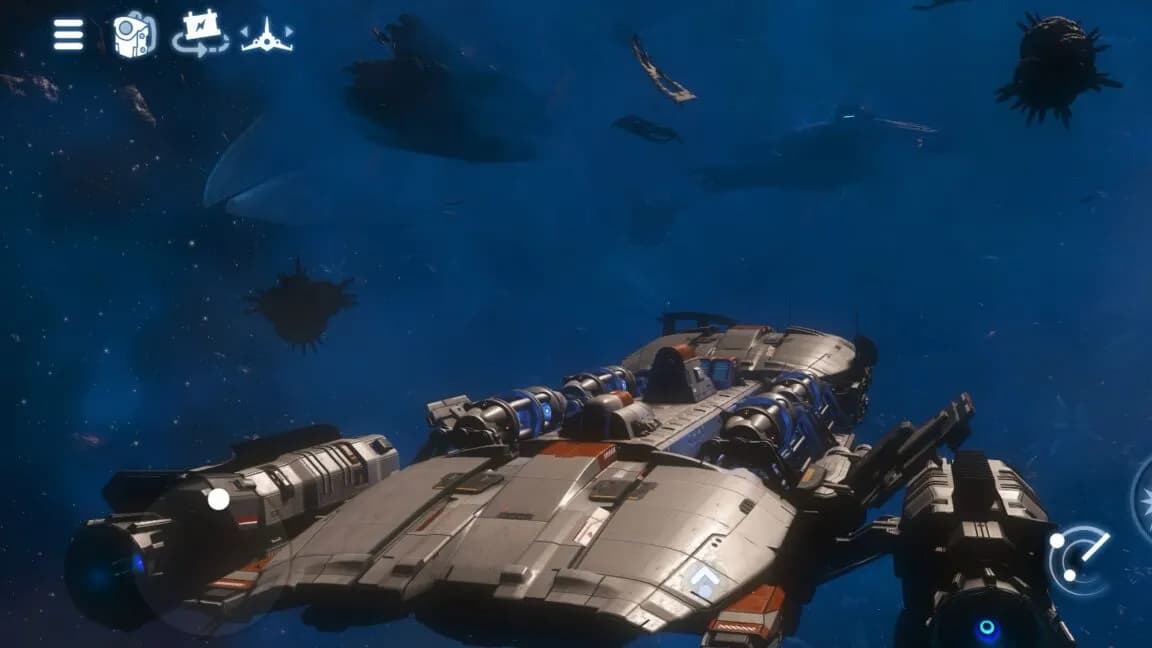
A Monumental Port for Apple Silicon
The journey of No Man's Sky remains one of the most remarkable narratives in modern software development. From a rocky, controversial launch plagued by unfulfilled expectations, Hello Games steadily rebuilt the title over a decade through continuous, ambitious architectural updates. Now, the sprawling space exploration sandbox is conquering a brand-new frontier: iOS. Bringing a game of this scale to mobile devices is no minor feat; it represents a major technical milestone for Apple’s hardware ecosystem and the Metal graphics API.
Historically, titles of this magnitude—featuring seamless planetary landings, complex procedural generation, and vast multiplayer simulations—were strictly reserved for high-end consoles and powerful gaming rigs. By optimizing their custom engine to run natively on mobile ARM processors, the developers are proving that contemporary iOS devices, particularly those powered by modern Apple Silicon chips, possess the computational horsepower required to handle demanding, uncompromised PC-grade gaming experiences.
The Engineering Behind Procedural Generation on Mobile
At the heart of No Man's Sky lies its signature feature: infinite procedural generation. Every star system, planet, flora, fauna, and mineral deposit is calculated mathematically on the fly rather than manually loaded from massive static asset files. Implementing this on mobile devices introduces unique engineering hurdles, especially regarding memory management, thermal throttling, and battery preservation. The development team had to heavily optimize their memory footprints and CPU-GPU synchronization to keep frame rates stable during intense planetary transitions.
Fortunately, modern iOS hardware features unified memory architectures and advanced GPU features like hardware-accelerated ray tracing and MetalFX upscaling. These capabilities allow the engine to deliver crisp visuals while dynamically managing power consumption. Developers working in mobile ecosystems are watching closely, as this port demonstrates how sophisticated algorithms and modern graphics APIs can bridge the performance gap between traditional desktop platforms and mobile form factors.
Hardware Requirements and Compatibility Boundaries
While the technical achievement is impressive, bringing such a resource-heavy title to mobile naturally comes with hardware limitations. The game requires relatively recent devices, specifically targeting iPhones and iPads equipped with Apple Silicon starting from the A13 Bionic chip found in the iPhone 11 and later, or iPads featuring M-series processors. This ensures that the device has the necessary neural engine and GPU compute units to process the game's heavy mathematical workloads without catastrophic performance degradation.
For users on older hardware, the software simply will not run, highlighting the strict hardware baseline required for modern advanced mobile gaming. However, for owners of compatible devices—particularly iPad Pros and newer iPhone Pro models—the experience is remarkably faithful to its console and PC counterparts. It includes cross-save functionality in many instances, allowing players to seamlessly transition their progress between their desktop setups and mobile devices on the go.
- Requires iPhone 11 or newer, or compatible M-series iPads.
- Leverages Apple's Metal graphics API for optimal rendering efficiency.
- Utilizes MetalFX upscaling to maintain high performance and resolution.
- Maintains procedural generation systems identical to desktop versions.
What This Means for the Future of Mobile Gaming
For years, mobile gaming has been heavily dominated by freemium titles, microtransaction-driven loops, and simplified mechanics designed for touch screens and casual sessions. The arrival of massive, premium, single-purchase sandbox games like No Man's Sky signals a shifting paradigm. Apple has made a concerted push to attract core gamers and triple-A developers to iOS, introducing developer toolkits designed to simplify the porting process from Windows and console environments.
When major studios successfully bring complex titles to the App Store, it validates mobile devices as legitimate gaming platforms for hardcore enthusiasts. It also encourages independent and mid-tier developers to push the envelope of what is possible on mobile hardware, moving away from constrained design paradigms and embracing full-featured, immersive gameplay mechanics that respect the player's time and intelligence.
Developer Takeaways and Architectural Lessons
Software engineers and game developers watching this release can learn valuable lessons about engine flexibility and cross-platform optimization. Hello Games has consistently proven its mastery over proprietary engine architecture, previously scaling the game down to run smoothly on the Nintendo Switch—a console with vastly different performance characteristics than a high-end PC. Porting next to iOS is a logical extension of this engineering philosophy.
The key takeaway for the developer community is the importance of decoupling game logic from hardware-specific APIs early in a project's lifecycle. By building robust, scalable procedural generation systems and utilizing modern graphics abstractions like Metal, Vulkan, or DirectX 12, studios can future-proof their software and expand their addressable markets to emerging platforms with significantly less friction than would have been possible a decade ago.
Conclusion: A New Chapter for a Resilient Title
The transition of No Man's Sky to iOS is far more than just a novelty or a convenient way to play on a commute. It is a testament to persistent software engineering, the maturation of mobile hardware, and the blurring lines between traditional and mobile gaming platforms. As Apple Silicon continues to evolve and developer toolkits improve, we are likely to see many more ambitious console and PC titles make the leap, permanently altering our expectations of what a pocket-sized device can achieve.
Source: arstechnica.com