
Rethinking Vehicle Firmware: How Screenless Trucks Challenge the Connected Car Paradigm

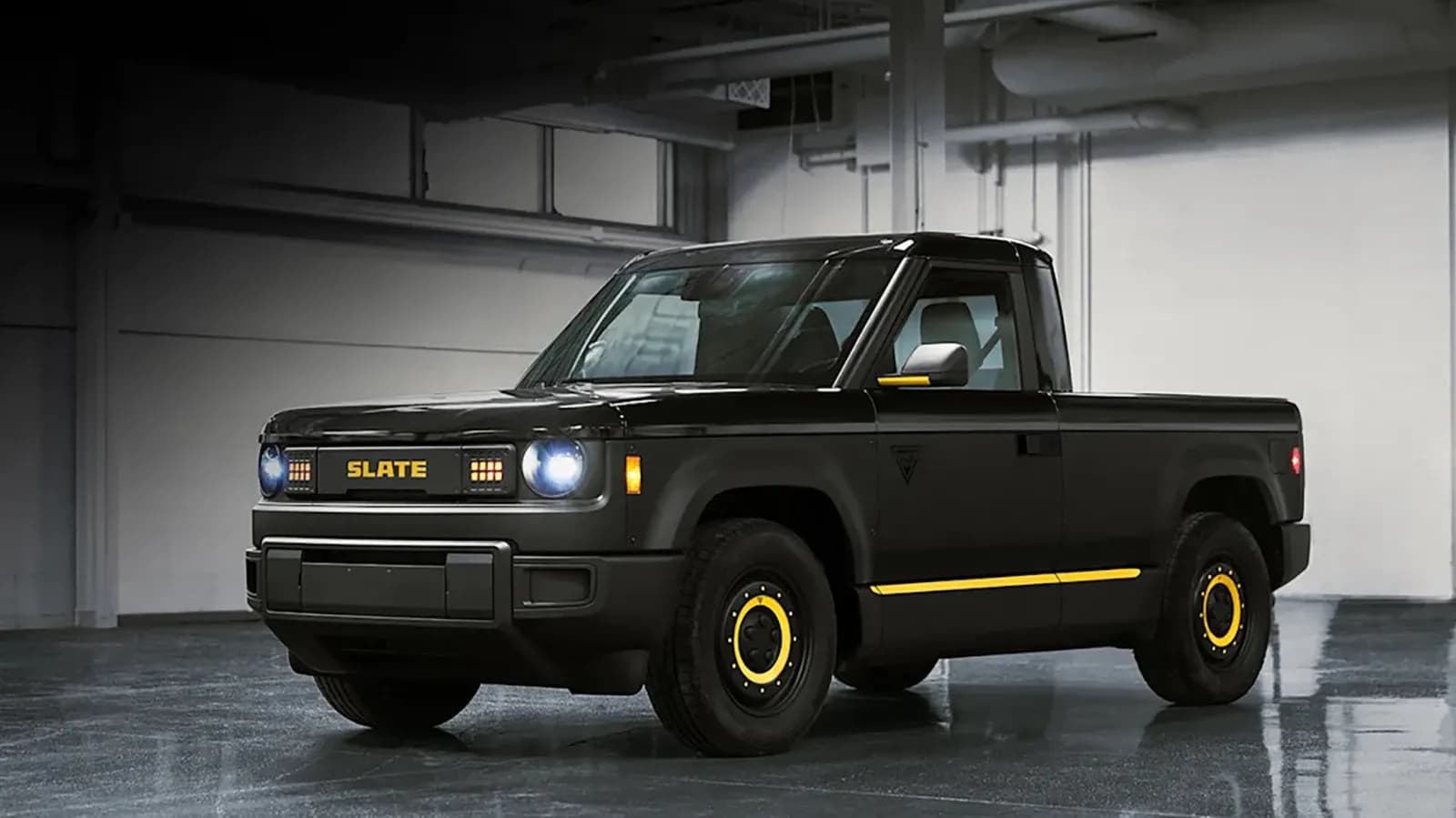
In an automotive era defined by the term "software-defined vehicle," nearly every modern automobile is designed to mimic a rolling smartphone. Dashboard real estate has been thoroughly dominated by expansive glass touchscreens, proprietary operating systems, and persistent cellular modems that beam over-the-air (OTA) updates straight from automaker servers. Yet this trend toward high-complexity, screen-centric cockpits has introduced a host of well-documented grievances: distracted driving, planned obsolescence, subscription-gated features, and software bugs that can temporarily brick an essential machine. In stark contrast to this prevailing digital bloat, minimalist vehicle designs like the Slate utility truck are proposing an unconventional alternative: eliminating the built-in infotainment unit altogether and handing software maintenance back to the driver.
The Software-Defined Vehicle and the Rise of Screen Fatigue
Over the last decade, automotive engineering priorities underwent a massive pivot. Mechanical components, once the primary differentiator between vehicle makes and models, began taking a backseat to compute clusters, centralized electronic control units (ECUs), and sprawling graphical user interfaces. Automakers invested billions into running custom branches of Android Automotive, Linux-based stacks, or proprietary operating systems capable of managing everything from battery thermals to digital radio streaming. For drivers, however, the digital revolution has frequently brought frustration, characterized by laggy interfaces, menu-diving to adjust climate controls, and sudden software deprecation when cellular carrier networks shut down older modems.
This aggressive digitisation has also created an unsettling dynamic regarding ownership. Modern connected vehicles often function as continuous telemetry collection platforms, siphoning telemetry and driving habits back to original equipment manufacturers (OEMs). When an infotainment unit fails or its underlying compute hardware ages out after five to seven years, vehicle owners face repair bills that can easily reach thousands of dollars simply to restore essential operational controls. A growing segment of engineers and vehicle enthusiasts has therefore begun asking a critical question: what happens when we decouple primary vehicle functions from fragile, fast-depreciating consumer electronics?
Decoding the No-Screen Architecture
The core philosophy behind removing integrated infotainment is radically pragmatic. Instead of equipping a truck with dedicated dashboard computers, cellular transceivers, and complex display glass, the vehicle is stripped down to foundational, robust microcontrollers running deterministic embedded code. The dashboard provides physical switches, analog or simple segmented digital gauges for critical safety telematics, and a sturdy mounting dock for the driver's own mobile device or tablet. By embracing a "Bring Your Own Device" (BYOD) paradigm, the truck avoids carrying redundant compute hardware that will inevitably feel dated within a few years of rolling off the factory floor.
Under this architectural model, the human-machine interface (HMI) for navigation, media playback, and communication lives entirely on the driver's phone or tablet, utilizing standard ecosystems like Apple CarPlay, Android Auto, or dedicated standalone apps. Because consumers upgrade their mobile devices on far shorter cycles than their vehicles, the infotainment experience remains fast, modern, and customizable without requiring the vehicle manufacturer to maintain a dedicated software engineering team for consumer-facing media stacks. The vehicle itself remains focused on what it was built to do: haul cargo, manage powertrain performance, and survive punishing physical conditions.
How Manual and Local Firmware Maintenance Works
Without an always-on 4G or 5G telematics module and a massive touchscreen to prompt users to "Install Update Tonight at 2:00 AM," updating vehicle firmware takes on a distinctly different character. The vehicle relies on traditional, verified local delivery mechanisms rather than background cloud polling. When core powertrain software, thermal management algorithms, or battery management systems require an enhancement or patch, the responsibility falls squarely on the owner or fleet operator to initiate the process via physical connections or short-range wireless handshakes.
In practice, this deployment workflow typically mirrors industrial embedded hardware paradigms. Owners download digitally signed firmware binaries from a secure portal onto a standard USB flash drive or a diagnostic handheld tool. Plugging the drive into a designated maintenance port—or interfacing directly with the vehicle's OBD-II or dedicated diagnostic port—triggers an internal bootloader check. The vehicle verifies cryptographic checksums and digital signatures to confirm authenticity before flashing the microcontrollers. Alternatively, dedicated companion applications on the owner's docked smartphone can stage updates locally over Wi-Fi Direct or Bluetooth, serving as a transient data conduit while the vehicle remains safely parked and powered off.
Security and Reliability: Cloud OTA Versus Physical Delivery
The shift away from continuous over-the-air updating sparks a fascinating engineering debate regarding cybersecurity and reliability. Cloud-tethered OTA updates have become the darling of modern automakers because they allow rapid deployment of security patches, zero-day fixes, and feature enhancements across thousands of distributed endpoints simultaneously. However, this convenience introduces a non-trivial attack surface. Persistent cellular modems, open telemetry sockets, and remote execution bridges create attack vectors that malicious actors can exploit to gain unauthorized access to vehicle Controller Area Networks (CAN buses).
By contrast, an air-gapped or physically mediated update architecture inherently minimizes remote compromise risks. If a vehicle lacks an embedded cellular modem, it cannot be targeted remotely across public cellular infrastructure. The attack vector is restricted primarily to physical access or the integrity of the cryptographic keys used to sign update binaries. Furthermore, physical update processes diminish the risk of unexpected partial installations over erratic mobile connections. For enterprise fleet operators and utilitarian users who prioritize absolute uptime over frivolous feature rollouts, trade-offs that sacrifice automatic updates in exchange for ironclad operational stability are often entirely welcome.
Implications for Embedded Developers and Automotive Engineering
For systems engineers and embedded developers, designing software for a screenless, non-telematics vehicle represents a refreshing return to fundamentals. In a typical modern vehicle, software architectures are weighed down by hypervisors running real-time operating systems (RTOS) alongside resource-heavy general-purpose operating systems like Linux or Android. Developers must manage inter-process communication layers, virtualization security boundaries, and massive codebases comprising tens of millions of lines of code. This complexity makes deterministic testing notoriously difficult and inflates validation timelines.
In a stripped-back model, embedded developers can refocus on high-integrity, safety-critical C/C++ or Rust codebases that execute directly on bare metal or lightweight RTOS platforms like FreeRTOS or Zephyr. Code footprints shrink by orders of magnitude, memory consumption is strictly bounded, and boot times drop from thirty seconds down to sub-second intervals. Bugs are easier to isolate, test coverage can approach exhaustive levels, and the computational hardware required to run the vehicle can be built with ultra-ruggedized, automotive-grade microcontrollers that endure decades of extreme temperature swings and vibration.
The Right-to-Repair and Long-Term Ownership Advantage
Beyond the technical architecture lies a profound philosophical alignment with the right-to-repair movement. Many contemporary vehicles effectively lock out independent mechanics and do-it-yourself owners because diagnostics and component pairing are locked behind cloud authentication servers and proprietary OEM dealer software. If a minor sensor or display fails out of warranty, the vehicle owner is held hostage by closed ecosystems. A vehicle that prioritizes manual, standardized update mechanisms fundamentally rebalances power back to the user.
When firmware updates are distributed as verifiable offline packages and vehicle telematics are decoupled from proprietary cloud platforms, vehicles gain a clear path toward generational longevity. A truck built today can feasibly operate three or four decades from now without turning into electronic scrap simply because an OEM shut down a central API server or an obsolete telematics chip lost carrier compatibility. Independent repair shops can service, calibrate, and flash modules using universal tools, creating a resilient secondary maintenance ecosystem that keeps utility vehicles functioning affordably over their entire mechanical lifespan.
A Deliberate Counter-Trend in Automotive Evolution
The decision to build utility-focused vehicles without pervasive screens and automatic cloud updates is not a technological regression; it is a calculated design choice. While luxury sedans and family haulers will undoubtedly continue their march toward immersive digital displays, autonomous driving features, and software subscription models, utility workhorses demand durability, predictability, and total user agency above all else. Shifting software updates back to physical media and personal devices strips away layers of digital overhead that add cost without adding real-world utility.
As consumer fatigue with rolling subscription fees, privacy-invasive data tracking, and glitch-prone dashboards reaches a boiling point, the minimalist approach provides a viable roadmap for the industry. By separating mission-critical mechanical systems from rapidly evolving consumer computing devices, screenless automotive platforms demonstrate that sometimes the most sophisticated engineering decision is knowing precisely which technologies to leave out.
Source: engadget.com