
Securing the Pocket Fortress: Evaluating Apple's Lockdown Mode for Developers and High-Risk Users

The Evolution of Mobile Security Hardening
As smartphones have evolved into the primary computing devices for the global population, they have simultaneously become the most lucrative targets for sophisticated cyberespionage. Operating systems like iOS employ a dense labyrinth of sandboxing, memory safety mitigations, and code-signing requirements to keep malicious actors at bay. Yet, nation-state actors and advanced persistent threat (APT) groups routinely discover zero-day vulnerabilities in remote attack surfaces, bypassing standard defensive layers to compromise journalist, dissident, and diplomat devices.
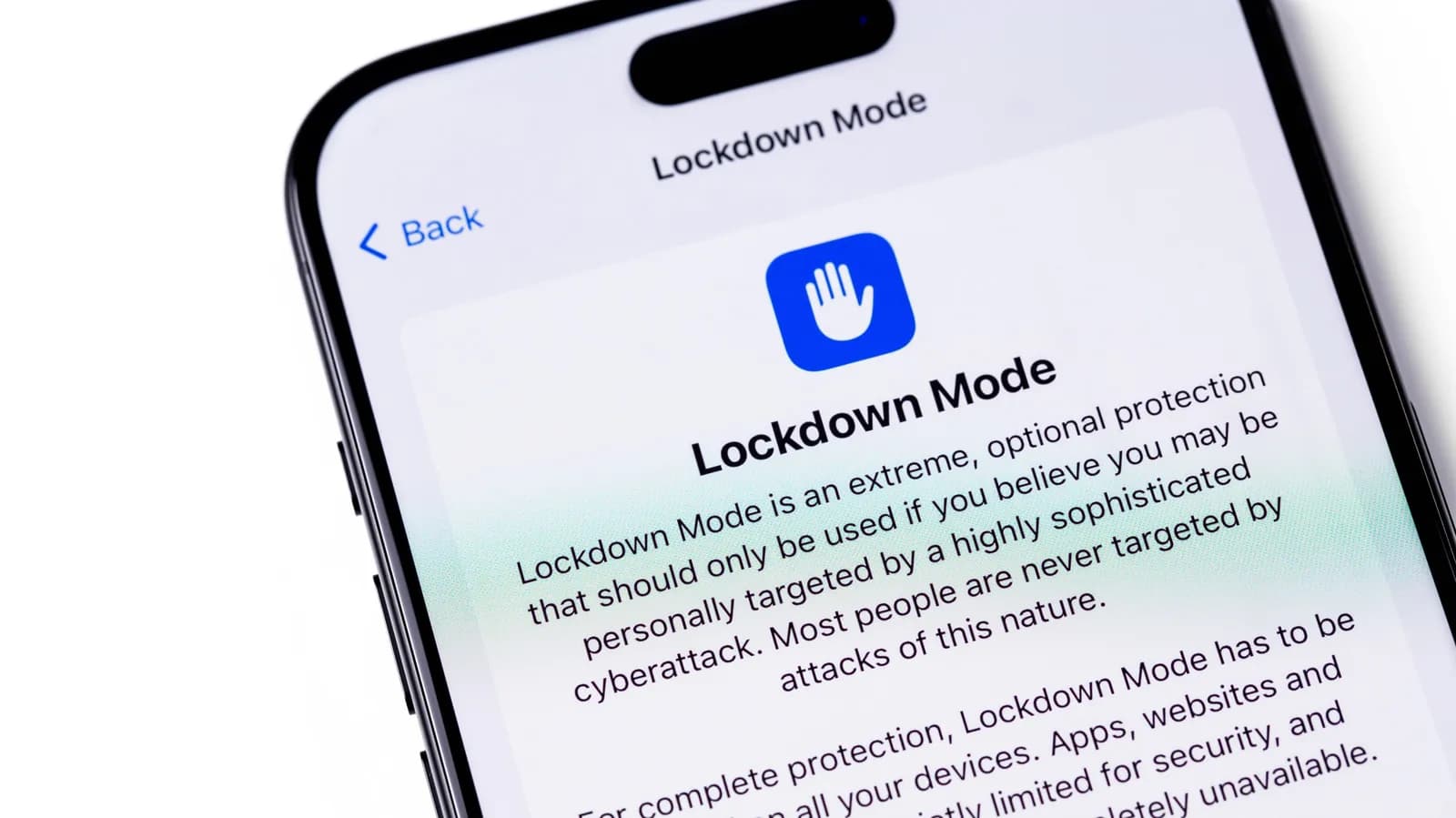
To counter these highly targeted attacks, Apple introduced Lockdown Mode, a specialized, opt-in security toggle designed to drastically reduce the potential attack surface of an iPhone or iPad. Rather than patching individual bugs after the fact, Lockdown Mode proactively disables or heavily restricts specific device features known to be frequent vectors for zero-click and one-click exploits. While it represents a monumental achievement in defensive engineering, it fundamentally alters the user experience, raising critical questions about usability versus absolute security.
Anatomical Breakdown of Lockdown Protections
Enabling Lockdown Mode triggers a systemic lockdown across multiple layers of the iOS software stack. In the messaging domain, standard attachments are largely blocked, and link previews are disabled to thwart malicious parsing engines that often serve as the initial entry point for zero-day exploits. Web browsing undergoes severe degradation as complex JavaScript optimizations and certain web technologies are turned off, blunting the efficacy of browser-based exploitation frameworks.
Beyond communication and browsing, the operating system changes how it interacts with the physical world and local networks. Wired accessories and computer connections are restricted when the device is locked, preventing unauthorized data extraction tools from interfacing with the Lightning or USB-C port. Furthermore, incoming FaceTime calls from unknown contacts are automatically rejected, configuration profiles cannot be installed, and invitation-based services like HomeKit may experience functional limits. Each of these mitigations closes a specific door that attackers frequently pick.
The Developer Perspective: Testing and API Constraints
For software engineers and security researchers, Lockdown Mode offers a fascinating glimpse into how modern operating systems can be systematically stripped down for maximum resilience. However, developing applications or testing web platforms while Lockdown Mode is active introduces unique friction. Because Just-In-Time (JIT) compilation for JavaScript is restricted by default in Safari and web views, web applications relying on heavy client-side execution may break or behave unpredictably.
Developers must weigh the necessity of testing against these extreme restrictions, often maintaining secondary devices that run standard configurations for day-to-day work. The feature also serves as a stark reminder of the delicate balance between feature richness and attack surface minimization. Every line of code, parsing library, and optimization flag represents potential risk, prompting the engineering community to rethink how software complexity contributes to vulnerability proliferation.
Usability Versus Security: The High Cost of Extreme Defense
The primary trade-off of Lockdown Mode is the deliberate sacrifice of user convenience in exchange for heightened confidentiality and integrity. For the vast majority of consumers and developers, enabling these extreme protections results in a frustratingly constrained mobile experience. Everyday features that rely on seamless cloud integration, rich media rendering, and ambient connectivity either cease to function entirely or require manual workarounds.
Because the feature is engineered specifically for individuals who face personalized digital threats due to their profession or public profile—such as investigative journalists, political activists, and human rights defenders—it is intentionally over-calibrated. For a typical software developer or enterprise worker, standard security hygiene, routine updates, and strong authentication protocols remain more than adequate without requiring the draconian lockdowns imposed by this specialized mode.
The Arms Race of Zero-Day Exploitation
The introduction of Lockdown Mode has fundamentally shifted the economics of mobile exploitation. By neutralizing many of the most reliable attack vectors, Apple has forced sophisticated threat actors to invest significantly more resources into discovering alternative, rarer vulnerabilities. This defensive posture acts as a deterrent, raising the cost and complexity of launching targeted cyberattacks against high-risk individuals.
Nevertheless, the cybersecurity landscape is defined by continuous adaptation. As traditional exploitation paths are sealed by modes like this, attackers invariably pivot toward cloud infrastructure, supply chain vectors, or social engineering. Lockdown Mode is not a silver bullet that achieves invulnerability; rather, it is a high-water mark in a perpetual arms race between platform architects and offensive security researchers.
Closing Thoughts on Specialized Mobile Hardening
Apple's Lockdown Mode demonstrates a maturing philosophy in operating system design: acknowledging that a one-size-fits-all security model is no longer viable in an era of targeted state-sponsored espionage. By giving high-risk users the ability to ruthlessly prune their device capabilities, Apple has set a new benchmark for proactive mobile defense. While it remains far too restrictive for the average developer or everyday consumer, its existence underscores the critical importance of customizable security postures in an increasingly hostile digital world.
Source: engadget.com