
Shadows Over Iberia: How Modern Technology Captured a Century-Rare Solar Eclipse

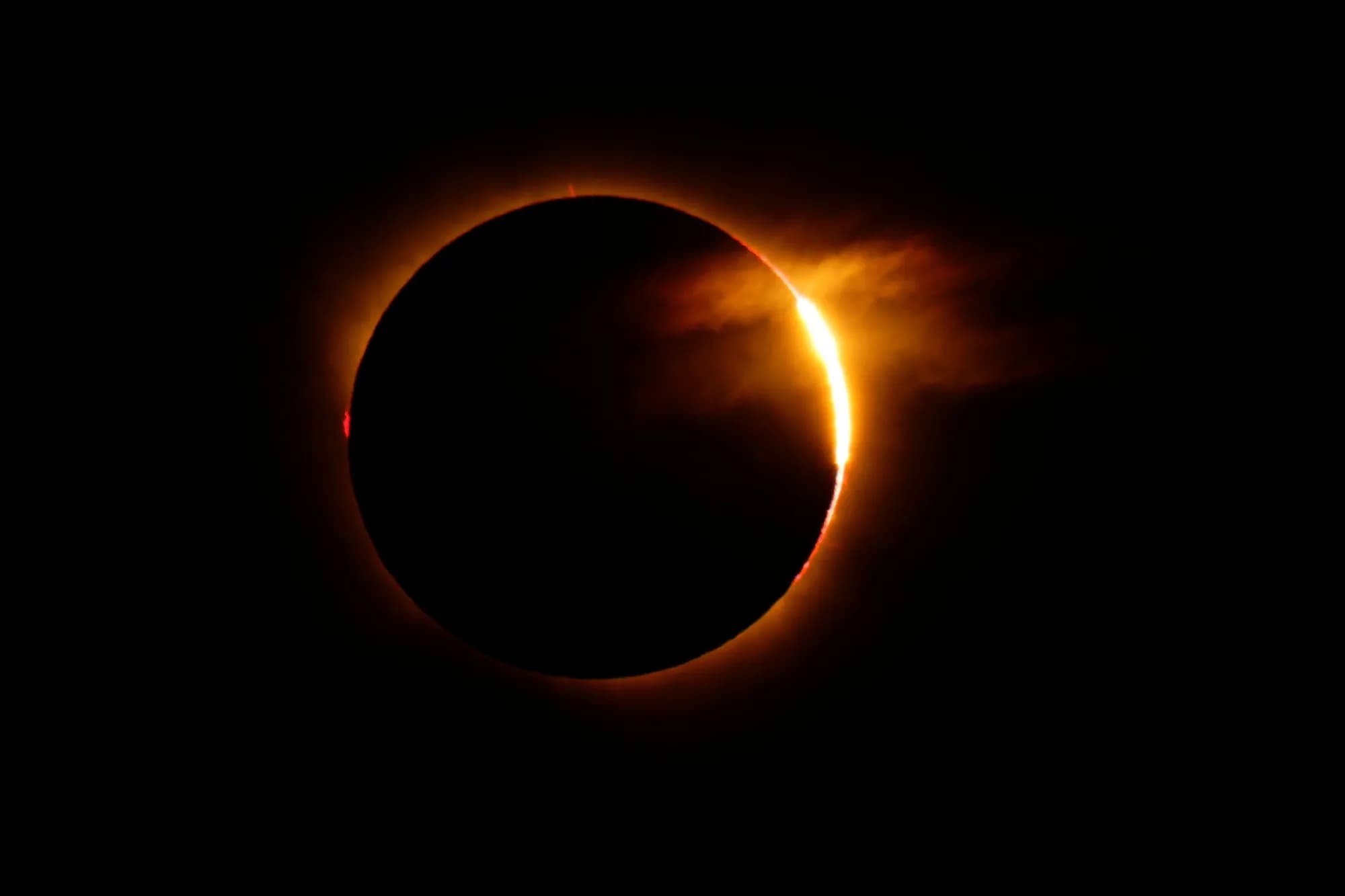
When the Moon's shadow swept across the Iberian Peninsula during the August total solar eclipse, it brought an end to a century-long celestial drought for the region. For millions of onlookers, researchers, and astrophotographers stationed along the path of totality, the event provided a brief, breathtaking window where day turned to night. Beyond the immediate sensory awe of the phenomenon lies a compelling story of technological precision, scientific inquiry, and the art of digital imaging.
A Century in the Making: The Rare Iberian Totality
Total solar eclipses are not inherently rare on a global scale; one occurs somewhere on Earth roughly every 18 months. However, because the path of totality is an extremely narrow corridor—often less than a couple hundred kilometers wide—the likelihood of a specific geographic location experiencing a total solar eclipse can be a matter of centuries. For Southwestern Europe, particularly the Iberian Peninsula, it had been a full hundred years since the region last sat directly beneath the Moon's umbral shadow.
The path of this August eclipse presented a unique set of geographic and atmospheric conditions. Crossing diverse landscapes ranging from coastal coastlines to high-altitude peninsular plateaus, the event offered observers exceptional atmospheric clarity. The historical significance of the moment was amplified by the region's rich astronomical heritage, drawing international teams of professional astronomers alongside vast crowds of skywatchers equipped with the latest photography technology.
Understanding the mechanics of such an eclipse highlights the astronomical precision required to predict and observe them. As the Moon moves precisely between the Earth and the Sun, its angular diameter matches that of the solar disk almost exactly. This cosmic coincidence allows observers within the narrow umbral corridor to view the solar atmosphere without the overwhelming brilliance of the photosphere, revealing solar dynamics that are otherwise completely invisible from the Earth's surface.
Chasing the Shadow: Precision Planning and Astrophotography Hardware
Capturing a total solar eclipse demands far more than pointing a camera at the sky. Photographers along the Iberian corridor spent months preparing for the fleeting minutes of totality, leveraging sophisticated orbital simulation software, terrain mapping applications, and real-time satellite weather tracking. Because totality lasts only a short duration, every second of exposure must be meticulously calculated ahead of time.
Modern astrophotographers arrived at the scene with complex hardware setups engineered to overcome severe optical challenges. Equatorial mounts equipped with automated tracking motors were deployed to compensate for the Earth's rotation, ensuring that the solar disk remained perfectly centered across long optical trains. High-resolution telephoto lenses and specialized solar telescopes were fitted with dedicated solar filters, designed to attenuate light by a factor of 100,000 or more during the partial phases, only to be removed seconds before totality began.
The technical execution during totality is notoriously demanding due to the extreme dynamic range of the scene. The inner solar corona is hundreds of times brighter than the faint outer coronal streamers, which stretch millions of kilometers into space. To capture this vast spectrum of light without blowing out high-contrast regions or losing delicate details in the dark sky background, photographers utilized automated exposure bracketing, taking dozens of rapid shots across different shutter speeds.
Inside the Corona: What High-Definition Images Reveal
The resulting high-definition imagery from the August eclipse offers far more than aesthetic beauty; it serves as a critical diagnostic tool for solar physicists. The solar corona—the sun's outer atmosphere—is a complex, superheated plasma environment governed by intense magnetic fields. Because the Moon completely blocks the dazzling glare of the photosphere, eclipse imagery reveals intricate structures such as magnetic loops, coronal loops, and solar prominences rising from the chromosphere.
Through advanced computational processing and multi-exposure stacking, image processing engineers and astrophotographers revealed the fine structure of the sun's magnetic field lines extending into interplanetary space. These images showcase coronal mass ejections and localized solar activity with staggering clarity, allowing researchers to study the topology of the corona during periods of active solar behavior. The visual data captured across Iberia contributes directly to ongoing studies examining coronal heating—a long-standing solar physics mystery regarding why the outer atmosphere is millions of degrees hotter than the surface below.
Furthermore, multispectral photography captured during the eclipse recorded precise light emissions from ionized elements such as iron and helium. By analyzing the color spectra contained within high-bit-depth raw camera files, scientists can map thermal distribution and plasma density throughout the solar atmosphere. What appears to the naked eye as a ghostly white halo becomes, under technical examination, a dynamic laboratory of high-energy physics.
The Century Leap: From Film Plates to AI-Enhanced Imaging
Comparing the visual records of this August eclipse to those taken a century ago reveals a staggering leap in human imaging capability. During the early 20th century, astronomers relied on glass plate photography and early black-and-white film negatives, requiring massive custom-built camera structures and lengthy physical exposures that were prone to mechanical vibration and atmospheric distortion. While historically significant, those early images captured only a small fraction of the corona's subtle details.
Today, the transition to high-speed complementary metal-oxide-semiconductor (CMOS) sensors has transformed the discipline. Modern sensors offer extraordinary dynamic range, exceptionally low read noise, and high quantum efficiency, allowing photographers to capture sub-second exposures across multiple spectrums. Modern cameras paired with onboard microprocessors can analyze light levels in real time, automatically adjusting parameters during the rapid transition into and out of totality.
Equally transformative is the role of post-processing software and computational photography. Advanced image processing algorithms enable the alignment and registration of dozens of individual raw frames to eliminate atmospheric turbulence and sensor noise. Algorithms like radial gradient filters and wavelet decomposition can enhance subtle coronal wisps without introducing artificial artifacts, yielding images that rival the clarity of space-based observatories.
Citizen Science and Distributed Data Collection
One of the most notable features of the August eclipse across the Iberian Peninsula was the massive mobilization of citizen scientists. Rather than relying solely on a handful of major observatories, the scientific community benefited from thousands of distributed data points captured by photography enthusiasts, educators, and amateur astronomers spread across the entire path of totality.
Initiatives encouraging standardized photography protocols allowed volunteer contributors to upload raw, geotagged files to central repositories. This crowdsourced dataset provides continuous temporal coverage of the eclipse as the Moon's shadow swept across the landscape. By stringing together aligned imagery taken from the western coast of the peninsula to inland regions, researchers can construct time-lapse sequences of the corona evolving over time, catching transient solar phenomena that single-location observatories might miss.
In addition to visible light photography, citizen science efforts utilized radio receivers, environmental sensors, and smartphone magnetometers to document the sudden drop in solar radiation. These coordinated observations recorded localized atmospheric cooling, shifts in ionospheric density, and subtle microclimate variations caused by the sudden shadow. The resulting multi-modal dataset demonstrates how public engagement combined with modern digital devices can augment traditional scientific research.
Ground Observations in the Space Age
In an era dominated by advanced space telescopes such as the Parker Solar Probe and the Solar Orbiter, some might question the necessity of ground-based eclipse observation. However, ground-based imaging during a total solar eclipse fills a crucial observational gap that satellite instruments struggle to duplicate. Space-based coronagraphs use artificial occulting disks to block the Sun, but light diffracted around the edge of these internal disks obscures the inner corona—the region closest to the solar surface.
Because the Moon acts as a natural occulting disk located far outside the telescope optical tube, total solar eclipses allow ground-based optics to image the inner and middle corona with unmatched spatial resolution and zero diffracted background light. Ground setups can view the seamless transition from the solar limb out into interplanetary space, providing crucial context for the data collected by space probes operating in deep space.
The synergies between ground observations and space missions are particularly valuable during major solar events. Photographers and researchers on the ground provide wide-field visual context that helps calibrate space instruments and validate theoretical solar atmospheric models. As space weather forecasting becomes increasingly critical for modern technology infrastructure, ground-based eclipse data remains an irreplaceable asset.
Looking Ahead to the Next Eclipse Frontier
As the excitement surrounding the Iberian totality settles, attention naturally turns toward future celestial opportunities and the evolution of observational technology. The success of the imaging efforts during this August event sets a new benchmark for how upcoming solar eclipses will be recorded, analyzed, and shared across global digital networks.
The rapid evolution of optical hardware, autonomous tracking systems, and distributed processing tools suggests that future eclipse photography will become even more integrated with automated data pipelines. As machine learning algorithms become standard in astronomical image processing, real-time feature extraction and dynamic range optimization will likely occur directly inside camera hardware during the brief window of totality.
Ultimately, the photos captured along the path of totality across Spain and Portugal represent more than a visual spectacle; they embody the intersection of celestial mechanics, human curiosity, and technological progress. A century after darkness last enveloped the peninsula, modern technology allowed humanity to capture the Sun's elusive atmosphere with unprecedented clarity, leaving behind a rich scientific and artistic legacy for generations to come.
Source: wired.com