
Sony Brings AI Upscaling to the Base PlayStation 5 with Quick Spectral Super Resolution

Introduction to AI-Driven Hardware Scaling
The intersection of artificial intelligence and real-time graphics rendering has reached a fascinating new milestone in the console ecosystem. Sony's recent move to introduce its proprietary AI upscaling technology to the base PlayStation 5 hardware signifies a major shift in how developers can approach performance and visual fidelity on fixed console specifications. Historically, advanced machine learning techniques for image reconstruction—such as NVIDIA's DLSS or AMD's FSR utilizing machine learning pathways—were primarily associated with high-end PC hardware or heavily specialized mid-generation console refreshes. By bringing these capabilities down to the standard, widely adopted base PS5 console, Sony is opening up new avenues for optimization.
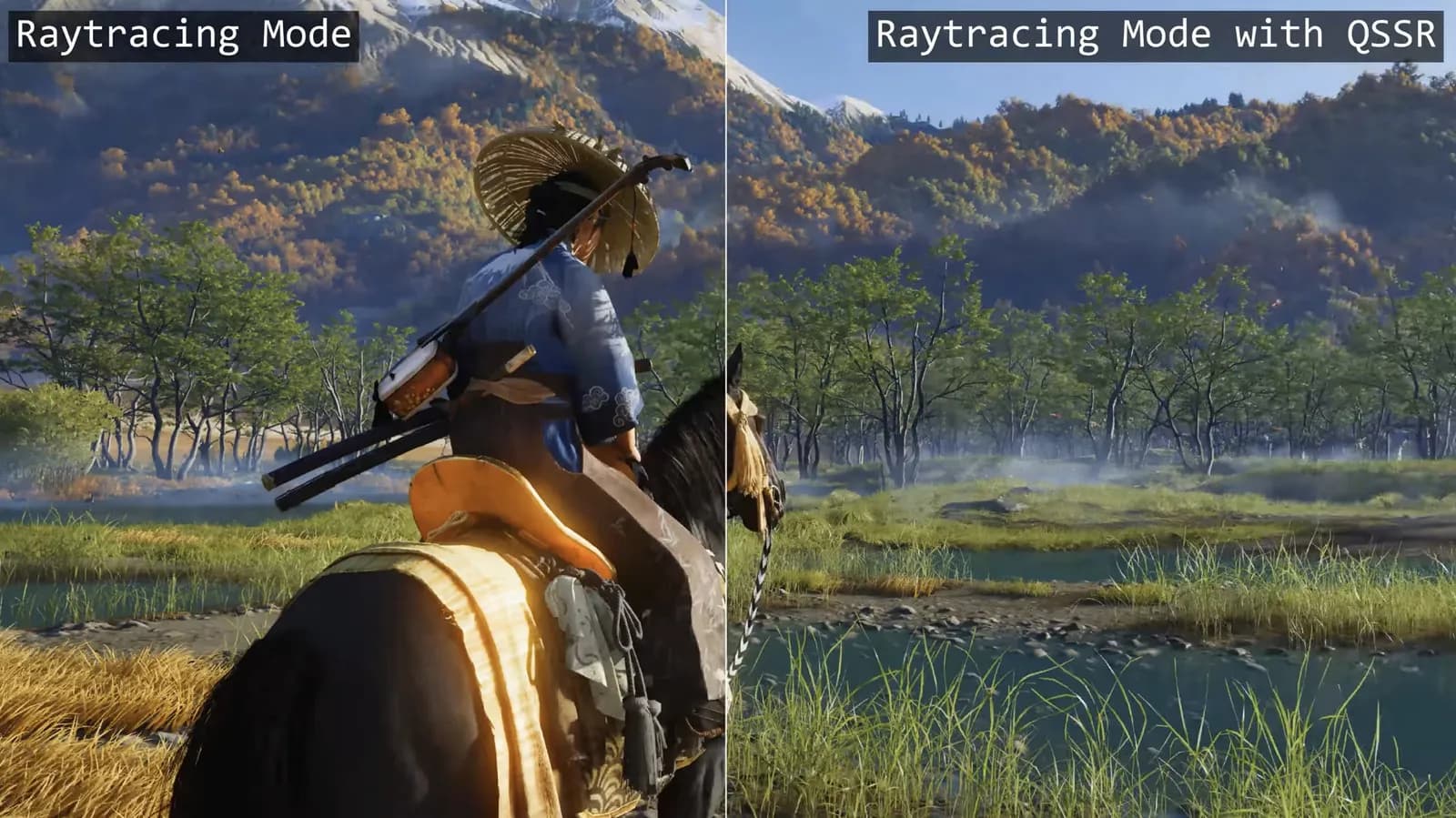
This initiative, spearheaded by the introduction of Quick Spectral Super Resolution (QSSR), alters the calculus for game developers targeting current-generation hardware. Instead of forcing studios to choose between native high-resolution rendering at lower frame rates or heavily compromised dynamic resolution scaling to maintain fluid motion, QSSR offers a middle ground. Machine learning models deployed directly on the console's custom silicon can reconstruct high-resolution frames from lower internal render targets with minimal visual artifacts. As major upcoming titles like Marvel's Wolverine and Ghost of Yōtei line up to support this technology, the industry is watching closely to see how effectively current-generation hardware can leverage neural upscaling techniques.
Understanding Quick Spectral Super Resolution
At its technical core, Quick Spectral Super Resolution is Sony's tailored answer to the growing demand for hardware-accelerated image reconstruction. While traditional upscaling methods rely on spatial and temporal filters that use algebraic algorithms to guess missing pixel data, AI-based upscaling trains neural networks on vast datasets of high-fidelity images. These models learn to recognize edges, textures, and motion vectors much more accurately than conventional heuristic filters, translating to sharper details and significantly reduced ghosting or shimmering artifacts in motion.
What makes QSSR particularly notable for the base PlayStation 5 is its hardware integration. The standard PS5 features a custom AMD RDNA 2-based GPU with ray tracing acceleration, but it lacks the dedicated tensor cores found in modern PC graphics cards designed specifically for matrix multiplication. Implementing efficient AI upscaling on this architecture requires clever utilization of existing compute units or custom-built acceleration pathways within the silicon. By optimizing QSSR to run smoothly within these hardware constraints, Sony has ensured that developers do not need a hypothetical "Pro" console to take advantage of intelligent frame reconstruction.
The Impact on Game Development and Performance
For game developers, the integration of QSSR into the base PS5 SDK represents a powerful new tool in the ongoing battle for optimization. Modern AAA games push graphical fidelity to extremes, incorporating complex global illumination, dense particle systems, and massive open worlds. Achieving a stable 60 frames per second at a crisp resolution in these environments often forces engineering teams to make painful compromises. With QSSR, a game can render internally at a much lower resolution—say, 1080p or 1440p—and have the AI reconstruction pipeline upscale the output to a sharp 4K presentation with a fraction of the computational cost.
This frees up valuable GPU headroom that developers can reinvest elsewhere, such as pushing higher shadow map resolutions, increasing asset density, or enabling more sophisticated ray-traced reflections. Furthermore, because QSSR is being integrated natively into Sony's development environment, the implementation overhead is significantly lower than trying to integrate disparate third-party upscaling solutions. Studios working on titles like Marvel's Wolverine and Ghost of Yōtei can rely on a standardized, well-supported pipeline that ensures consistent visual standards across the entire installed base of PlayStation 5 consoles.
Pioneering Titles: Wolverine and Ghost of Yōtei
The true test of any new graphics technology lies in its adoption by flagship software, and Sony is wasting no time putting QSSR to the test in some of its most anticipated upcoming releases. Marvel's Wolverine, developed by Insomniac Games, promises fast-paced, action-heavy combat combined with detailed character models and dense urban environments. Maintaining fluid responsiveness while rendering cinematic-quality action is notoriously difficult, making it an ideal candidate for AI-driven reconstruction where keeping frame rates high is paramount.
Similarly, Ghost of Yōtei from Sucker Punch Productions will rely on QSSR to bring its sweeping, visually striking open-world vistas to life. Titles with vast draw distances, intricate foliage, and dynamic weather systems traditionally suffer from temporal aliasing and shimmering on high-frequency details like grass and tree branches. Intelligent upscaling excels at stabilizing these tricky elements, smoothing out temporal instability and delivering a much cleaner, more filmic image. The performance headroom unlocked by QSSR in these games could mean the difference between a sluggish quality mode and a high-framerate mode that sacrifices none of the artistic vision.
Broader Implications for the Console Lifecycle
The introduction of advanced AI upscaling to the base PlayStation 5 marks an intriguing evolution in how hardware longevity is managed in the console space. Traditionally, as console generations age, developers struggle to keep up with rising visual expectations, leading to a late-gen era characterized by sub-1080p resolutions and aggressive dynamic scaling. By retrofitting machine learning upscaling tools into older hardware, manufacturers can effectively extend the useful lifespan of a console generation, allowing base hardware to punch well above its weight class deep into its lifecycle.
This strategy also bridges the gap between base hardware and premium iterations like the PS5 Pro. While mid-generation refreshes offer brute-force hardware upgrades and dedicated neural processing units, software-level optimizations running on base consoles ensure that the massive existing player base isn't left behind. It establishes a baseline where advanced rendering techniques become democratized across all tiers of the platform, ensuring that software experiences remain visually cohesive regardless of which specific console model a player owns.
Challenges and Open Technical Questions
Despite the excitement surrounding QSSR, integrating deep-learning upscaling into a fixed-spec console ecosystem is not without its technical hurdles. One of the primary concerns for engineers is frame time overhead. Neural network inference, even when heavily optimized, consumes precious milliseconds of GPU or compute time. If the cost of running the upscaling algorithm outweighs the savings gained by rendering at a lower native resolution, the net benefit diminishes. Balancing inference time with visual gain requires rigorous optimization from both hardware designers and game engine programmers.
Additionally, developers must carefully tune their content pipelines to feed the upscaling network properly. AI upscalers rely heavily on clean motion vectors, depth buffers, and jitter sequences to reconstruct missing details accurately. If a game engine produces noisy data or struggles with complex alpha transparency layers, the AI model can hallucinate artifacts or introduce smearing. As studios begin deploying QSSR in complex titles like Ghost of Yōtei, we will likely see a period of refinement as engineers learn the specific quirks and optimal parameters for Sony's new neural reconstruction pipelines.
Conclusion
Sony's decision to bring AI upscaling via Quick Spectral Super Resolution to the base PlayStation 5 is a landmark moment for console gaming technology. By leveraging intelligent image reconstruction, Sony is helping developers extract unprecedented visual performance from standard hardware, ensuring that upcoming blockbusters like Marvel's Wolverine and Ghost of Yōtei can achieve both high fidelity and smooth frame rates. As software-driven optimization continues to take center stage in hardware longevity, QSSR proves that smart engineering and machine learning can breathe new life into existing silicon.
Source: engadget.com