
The Billion-Dollar Hardware Shadow Market: How Smugglers Move AI Silicon Past Global Sanctions

The Escalating Underground Trade in High-Performance Silicon
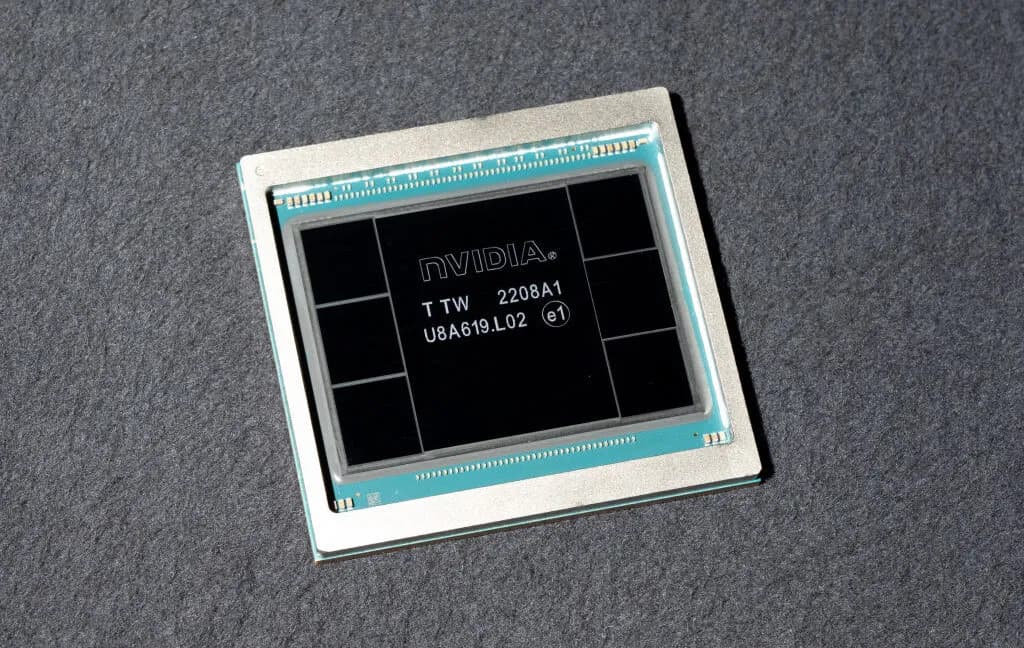
In an era where state-of-the-art compute dictates geopolitical leverage, high-end artificial intelligence silicon has become one of the most tightly controlled commodities on Earth. The recent arrest of a technology company executive accused of orchestrating a clandestine supply route valued at over $300 million in Nvidia graphics processors marks a dramatic escalation in international enforcement efforts. What was once seen as small-scale gray-market trading has transformed into highly organized, nine-figure logistical conduits designed specifically to bypass export restrictions.
As artificial intelligence research drives unprecedented demand for training clusters, nations cut off from frontier accelerators face severe computational bottlenecks. The sheer financial scale of this alleged smuggling network underscores both the desperate thirst for advanced microchips and the staggering profits available to those willing to construct labyrinthine shell companies, falsified manifests, and multi-hop transit hubs to move forbidden silicon across borders.
The Anatomy of Modern Chip Smuggling
Smuggling modern enterprise hardware is fundamentally different from moving contraband goods of the past. High-end server racks containing cutting-edge graphics processing units are heavy, delicate, highly identifiable, and require specialized thermal dissipation and power infrastructure to operate. Yet, orchestrating their illicit diversion relies heavily on exploiting structural blind spots in global enterprise supply chains.
Typically, these networks operate through several common vectors:
- Front Organizations and Third-Party Resellers: Intermediaries establish legitimate-appearing entities in neutral jurisdictions that are permitted to buy enterprise servers directly from original equipment manufacturers (OEMs).
- Misdeclared Logistics and Transshipment Hubs: Shipments are routed through intermediary transportation hubs in regions with relaxed cargo inspections, where paperwork is altered, serial manifests are scrubbed, and destinations are rerouted.
- Disassembled Components and Gray Cloud Clusters: In some cases, server enclosures are stripped down to modular cards to blend into standard consumer electronics freight, only to be reassembled into functional enterprise clusters upon arrival.
By obfuscating the ultimate end-user through cascades of shell entities, illicit operators manage to siphon hundreds of millions of dollars' worth of silicon away from legitimate enterprise allocations before compliance divisions or customs investigators notice discrepancies in warranty activations and network pings.
Why Modern AI Accelerators Are So Difficult to Replace
The core motivation driving this massive underground market lies in the technical moat established by modern GPU architectures. While domestic semiconductor initiatives in restricted jurisdictions continue to progress, fabricating high-yield, densely packaged enterprise chips with high-bandwidth memory (HBM) remains an extraordinary engineering hurdle. Advanced machine learning models require hundreds or thousands of interconnected nodes working with low latency and massive memory bandwidth—specifications that only a small handful of foundries and fabless designers globally can fulfill.
Beyond physical hardware specifications, the true barrier to entry is the established software ecosystem. Nvidia's proprietary CUDA runtime, alongside comprehensive distributed training frameworks and optimized communication libraries like NCCL, represents more than a decade and a half of platform lock-in. Engineering teams building frontier-grade language models and multimodal systems depend heavily on software environments optimized specifically for these microarchitectures. Rebuilding an entire software stack on unproven, alternative hardware architectures introduces immense friction, making the acquisition of genuine, cutting-edge Western GPUs worth almost any operational risk or financial markup.
Implications for Global Developers and the Cloud Ecosystem
While high-profile enforcement operations focus on the executive actors orchestrating these schemes, the downstream ramifications reverberate across the entire software development industry. As regulators scramble to close loopholes, compliance burdens are increasingly passed down to cloud providers, hosting companies, and enterprise software platforms. Developers may soon experience tighter identity verification, geographic IP fencing, and intrusive behavioral analytics when provisioning bare-metal GPU instances or distributed clusters.
Moreover, the illicit diversion of massive batches of enterprise hardware worsens the preexisting compute drought for legitimate organizations. Independent research labs, mid-sized startups, and university engineering departments already struggle to secure allocations of premium accelerators due to supply constraints and inflated cloud rental rates. When hundreds of millions of dollars in compute capacity vanish into untracked private data centers, it further strains the global availability pool, reinforcing the dominance of well-capitalized tech conglomerates that possess direct foundry agreements.
The Technical Challenges of Hardware Fingerprinting and Telemetry
The continuation of these unauthorized pipelines exposes deep technical challenges in tracking modern electronic devices. While consumer electronics like smartphones can be remotely locked or tracked via persistent cellular signals and centralized activation servers, enterprise enterprise infrastructure is frequently designed for isolated, air-gapped environments. Highly sensitive defense contractors, national research laboratories, and financial institutions demand that their on-premise compute clusters operate entirely offline, without outbound telemetry communicating back to the manufacturer.
This architectural requirement creates an inherent enforcement dilemma. A hardware designer cannot easily introduce intrusive, mandatory 'phone-home' routines without alienating their most lucrative, privacy-conscious enterprise clients. While modern chips feature secure enclaves, cryptographic root-of-trust modules, and tamper-resistant firmware, these mechanisms are primarily built to prevent unauthorized code execution and reverse engineering rather than geolocation tracking. As a result, once physical possession of an enterprise accelerator passes customs barriers, detecting its exact geographical deployment remains exceptionally difficult through software means alone.
What Lies Ahead for Chip Policy and Tech Supply Chains
The recent arrests signal that government oversight of the microelectronics sector is shifting from passive trade policy to aggressive criminal enforcement. In response, enterprise hardware vendors will inevitably face mounting pressure from trade regulators to overhaul end-user verification procedures, implement strict downstream distributor audits, and potentially explore hardware-level attestation technologies that verify physical deployment environments.
However, as long as an overwhelming computational disparity persists between market leaders and sanctioned actors, the economic incentives driving the gray market will remain astronomical. The multi-hundred-million-dollar illicit pipeline uncovered by investigators is unlikely to be an isolated incident; rather, it highlights a structural reality of the modern technological landscape. Compute power has emerged as the definitive strategic resource of the twenty-first century, and as borders tighten, the battle over who controls the silicon powering artificial intelligence will only intensify.
Source: arstechnica.com