
The Science of Mishearing: Why Voice Assistants Fail and How Modern Speech Systems Are Adapting

The Frustration of the Unresponsive Smart Assistant
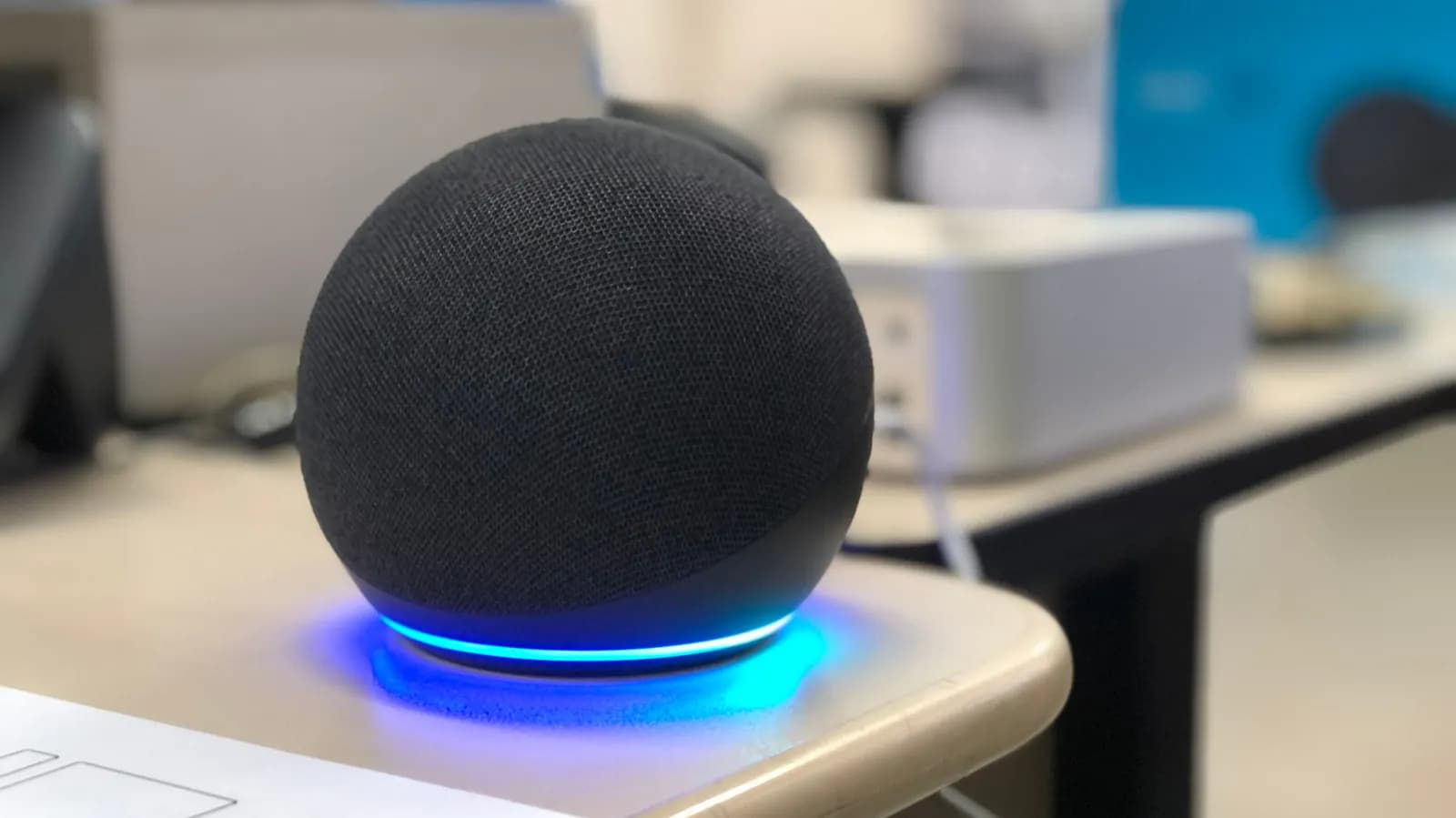
For more than a decade, smart speakers have occupied prime real estate on kitchen counters, nightstands, and living room shelves. Promising frictionless computing through natural speech, these ambient devices were heralded as the future of ambient computing. Yet almost every user shares a familiar, exasperating experience: repeating a simple command three times, each iteration spoken louder and with exaggerated enunciation, only for the speaker to play an unrelated track or announce that it cannot help with that request right now.
While marketing materials portray voice recognition as effortless intuition, the reality beneath the surface is a precarious multi-stage pipeline of signal processing, acoustic modeling, automatic speech recognition (ASR), and natural language understanding (NLU). When any single node in this chain encounters edge conditions—such as room reverberation, conflicting background audio, or ambiguous phrasing—the entire interaction breaks down. Understanding why smart speakers fail requires unpacking the physical and algorithmic hurdles that engineers must navigate, alongside the practical adjustments users can make to bridge the gap.
The Acoustic Reality: Physics Before Algorithms
Before any artificial intelligence model attempts to decode human language, the hardware must capture a legible waveform. This is an immense challenge for a device the size of a coffee mug. In a typical home environment, sound waves do not travel in a vacuum; they bounce off drywall, hardwood floors, and glass windows, creating complex acoustic reflections and phase shifts known as reverberation. Compounding this, smart speakers frequently emit loud audio from their own integrated drivers while simultaneously listening for a faint whisper across the room.
Hardware engineers mitigate this through microphone arrays and digital signal processing (DSP) techniques, chief among them Acoustic Echo Cancellation (AEC) and adaptive beamforming. AEC subtracts the device’s own outgoing audio signal from the incoming microphone feed so the speaker does not listen to itself. Meanwhile, beamforming calculates the minute microsecond differences between when a sound wave hits microphone A versus microphone B, effectively shaping an electronic 'listening cone' focused on the speaker’s spatial position. If the speaker is placed too close to a wall, tucked inside a crowded bookshelf, or placed right beside a hum of an appliance, these spatial algorithms degrade rapidly, passing corrupted audio downstream into the recognition pipeline.
The Wake-Word Trap: Ultra-Low-Power Edge Detection
One of the most frequent points of failure occurs before the cloud even knows an interaction has begun. Because transmitting continuous 24/7 audio to remote servers would be a privacy catastrophe and an impossible bandwidth burden, smart devices rely on lightweight, on-device wake-word engines. These tiny neural networks run continuously on ultra-low-power microcontrollers, scanning solely for a specific acoustic signature such as 'Hey Google' or 'Alexa'.
To maintain device efficiency and protect battery or thermal limits, these localized models must operate with minimal parameter counts. This computational constraint forces a delicate trade-off between false acceptance (triggering accidentally from television dialogue) and false rejection (ignoring a genuine user). When a user speaks with a novel inflection, speaks too quickly, or catches the model during a momentary DSP buffer flush, the wake-word engine drops the trigger entirely. From the user perspective, the device appears broken or deaf, when in fact it was merely guarding against false positive activations within severe resource constraints.
From Soundwaves to Tokens: The Pitfalls of ASR and NLU
Once the wake word triggers the capture of a voice payload, the digitized audio is processed by Automatic Speech Recognition (ASR) to convert phonetic waveforms into text. This transcription is then fed into a Natural Language Understanding (NLU) engine, which classifies the intent and extracts relevant slot parameters (for instance, intent: 'SetTimer', slot: 'Duration=10min'). Despite monumental strides in deep learning, speech-to-text models still struggle immensely with phonetic ambiguity, co-articulation, and diverse regional dialects.
Traditional cloud-based voice assistants were built on relatively rigid intent classification architectures. Unlike modern large language models (LLMs) that generalize contextual meaning across broad conversational threads, classical smart assistant NLU models match utterances against predefined semantic templates. If a command diverges even slightly from the training distribution—such as saying 'kill the living room lamp' instead of 'turn off the living room light'—the classifier can either fail silently or select a catastrophic misinterpretation. The illusion of intelligence shatters because the system operates on narrow pattern matching rather than cognitive reasoning.
Practical Mitigations: How Users Can Optimize Voice Pick-Up
While voice interface architectures continue to evolve, users can dramatically increase their smart speaker success rate by understanding the physical constraints of the device. The most impactful adjustment involves strategic physical placement. Elevating the speaker away from reflective corners, keeping it at least a few feet away from high-noise appliances, and ensuring unobstructed line-of-sight to the primary seating areas prevents beamforming distortion and drastically cleans up the incoming acoustic signal.
In addition to hardware placement, users can optimize the software profiles offered by modern platforms:
- Voice Profile Retraining: Most ecosystem platforms allow users to train a personalized voice profile. Re-recording voice samples in the actual room where the speaker lives—rather than in a silent office—provides the model with realistic ambient baseline characteristics.
- Device Naming Disambiguation: NLU pipelines choke on phonetic collisions. Giving smart home devices distinct, phonetically divergent names (e.g., 'Reading Lamp' instead of having 'Light 1' and 'Light 2') dramatically reduces slot-filling classification errors.
- Pacing and Intonation: Speaking at a natural conversational cadence rather than unnaturally slow, robotic cadences produces audio that aligns closer with the training datasets of commercial ASR engines.
The Developer Horizon: Local LLMs and Multimodal Edge Intelligence
For software engineers and embedded systems developers, the era of fragile, keyword-driven voice architecture is nearing its end. The industry is currently executing a major transition toward on-device small language models (SLMs) and generative speech processing. By moving away from brittle, two-step ASR-plus-intent-matcher pipelines and toward end-to-end speech-to-speech foundation models, future assistants will parse conversational intent fluidly, accommodating hesitations, corrections, and complex, multi-clause instructions without resetting context.
Simultaneously, the adoption of cross-platform standards like Matter and local execution frameworks is decoupling smart home reliability from cloud latency. When voice processing runs locally on dedicated Neural Processing Units (NPUs) built into newer silicon, response times drop from seconds to milliseconds, and the failure rates associated with intermittent network packets are eliminated. Developers building for the next generation of voice interfaces will no longer be trapped designing rigid voice command trees; instead, they will design context-aware, multimodal agents capable of understanding user intent even through imperfect phrasing and imperfect acoustic conditions.
Bridging the Voice Usability Gap
Smart speaker failures are rarely random; they are the direct consequence of physical acoustic barriers, hardware constraints, and legacy language understanding architectures clashing with the chaotic acoustic environments of human households. By positioning devices thoughtfully and establishing clear, distinctive configurations, users can bypass many of today's technical pitfalls. Meanwhile, the convergence of edge hardware acceleration and advanced language models promises to finally elevate voice assistants from temperamental command parsers into truly intuitive ambient computing companions.
Source: engadget.com