
The Silicon Compromise: How Architectural Design Keeps the Xbox Series S Affordable

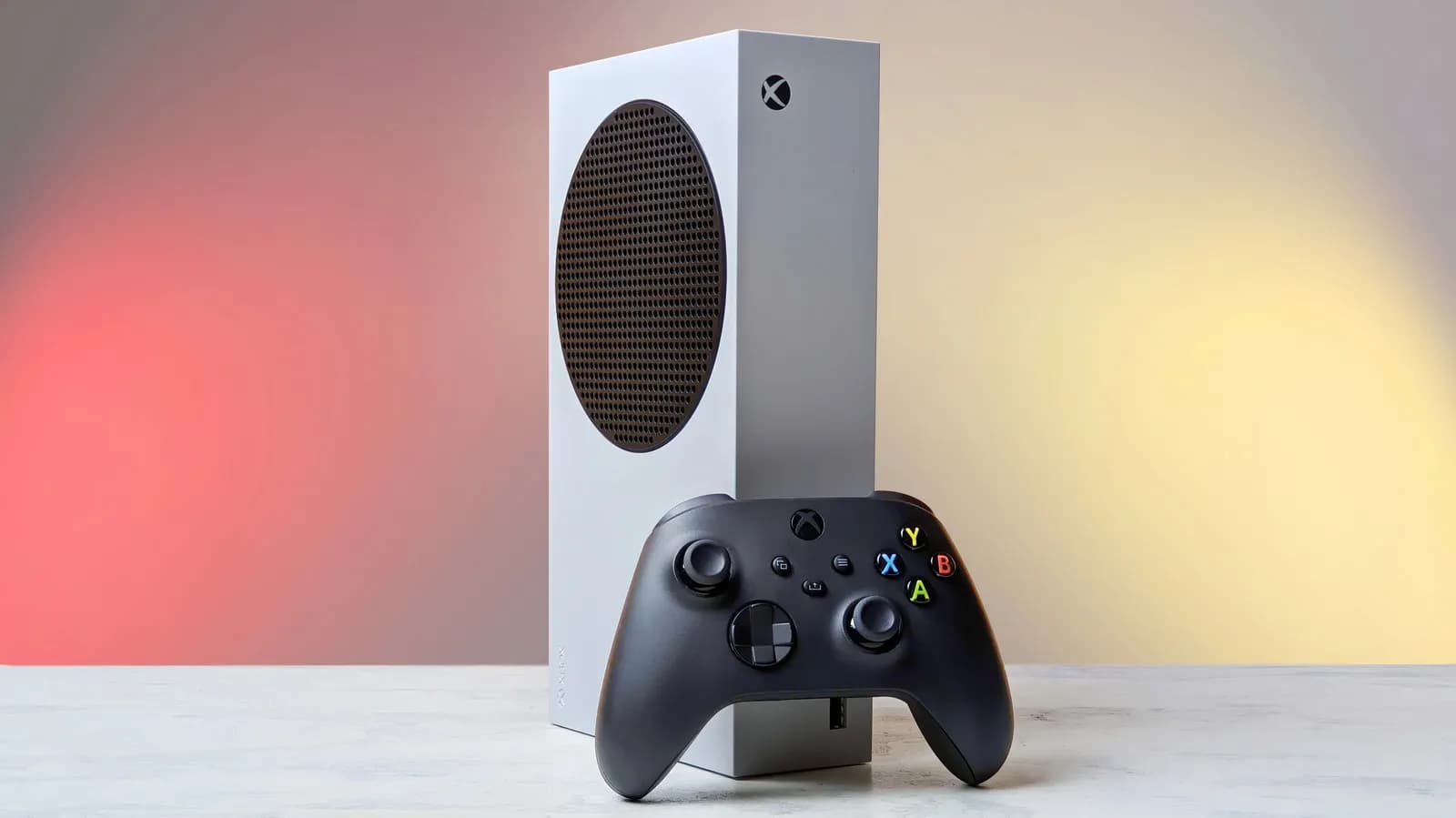
In an era defined by semiconductor supply chain adjustments, manufacturing inflation, and escalating retail prices across consumer electronics, modern gaming hardware has not been immune to rising costs. Both flagship and mid-range consoles have experienced fluctuating regional pricing and tighter production margins. Yet, throughout this generation, Microsoft's dual-console strategy has preserved a significant price gulf between the high-end Xbox Series X and the budget-oriented Xbox Series S. While both machines technically belong to the same generational cohort, running the same core operating system and targeting the same ecosystem of next-generation titles, their financial separation is not arbitrary marketing math. It is the direct consequence of intentional silicon architecture, memory hierarchy decisions, and structural hardware compromises.
Architecture at a Glance: Two Tiers of the Same Generation
When Microsoft unveiled its ninth-generation console lineup, it introduced an unconventional strategy for the home console market: launching two structurally distinct hardware profiles on the exact same day. Historically, console cycles began with a single high-performance specification designed to establish a baseline for roughly six to eight years, with slim and cost-reduced revisions arriving later in the cycle once silicon fabrication processes matured. With the Series X and Series S, the differentiation was baked into day one.
The goal was to lower the financial barrier to entry for the newest generation of games without sacrificing the fundamental user experience. Both machines share identical input/output architectures, custom solid-state drive pipelines, and Zen 2 CPU microarchitectures operating at remarkably close clock frequencies. However, the graphics pipeline and memory subsystems diverged dramatically, creating a lower-cost machine that targets lower display resolutions rather than entirely different software libraries.
The Silicon Footprint: Die Size, GPU Compute, and Yields
The single largest driver of the manufacturing cost difference between the two systems lies in the size and complexity of the monolithic system-on-chip (SoC) powering each machine. In semiconductor manufacturing, silicon wafers are expensive to process, and the cost per functional chip is determined directly by die area and wafer yields. A smaller physical die area means a manufacturer can cut significantly more chips from a single silicon wafer, which immediately drops the per-unit raw component cost.
Furthermore, chip fabrication is subject to microscopic defects. On larger dies—such as the massive processor engineered for the Series X—a random silicon flaw has a higher probability of ruining a chip or requiring aggressive core disabling. By contrast, the Series S processor features a significantly smaller die footprint with substantially fewer compute units on the graphics processor. This reduced physical size dramatically increases wafer yield rates, meaning fewer chips are discarded during the testing phase. The result is an exponential decrease in the net manufacturing cost per functional processor unit.
The Memory Dilemma: Bandwidth, Capacity, and Bottlenecks
Beyond raw compute power on the chip, memory architectures represent another major cost driver in modern computing hardware. High-speed unified memory is expensive, both in terms of component procurement and the physical board routing required to handle high-frequency data transmission across wide memory buses.
The Series X is equipped with a generous pool of high-speed GDDR6 memory distributed across a wide bus interface, delivering the massive bandwidth necessary to handle native 4K textures, high-resolution framebuffers, and sophisticated post-processing pipelines. The Series S drastically reduces this overhead by incorporating less total physical RAM and narrowing the memory bus considerably. Because the Series S targets resolutions around 1080p to 1440p rather than 4K, its asset footprint can be smaller in theory. However, this cut in memory capacity and bandwidth produces immediate hardware bill-of-materials savings, allowing the manufacturer to sell the machine at a drastically reduced retail figure.
Digital-Only Strategy and Form Factor Efficiency
Silicon is not the only place where costs were trimmed; structural and mechanical components play an equally pivotal role in lowering the price tag. The most obvious visual distinction is the complete omission of an optical Blu-ray drive on the Series S. Mechanical disc drives add notable mechanical cost, require dedicated controller logic, demand specialized assembly steps, and increase failure rates over time. Removing the drive entirely yields instant savings on parts and assembly.
More subtly, eliminating the disc drive and lowering total thermal dissipation allows for a significantly smaller enclosure, a less complex cooling apparatus, and a smaller internal power supply. The Series X requires a heavy internal vapor chamber, large heatsinks, and a sophisticated negative-pressure chassis design to dissipate over 200 watts of power. The Series S operates at a fraction of that thermal threshold, relying on a simple fan, standard heatsink array, and compact chassis. Smaller dimensions also translate directly to lower shipping and freight expenses per unit, compounding logistics savings across millions of shipped consoles.
The Software Engineering Burden: Developing for Divergent Hardware
While the hardware design succeeds in driving down retail prices for consumers, the architectural divergence creates notable challenges for software engineers and game studios. Optimizing software across two disparate hardware profiles within a closed platform environment requires careful memory management, custom asset scaling, and dedicated quality assurance cycles.
- Memory Constraints: The most significant developer hurdle is navigating the reduced RAM footprint, which demands strict budget allocations for game states, asset streaming, and runtime logic.
- Dynamic Scaling: Studios must rely heavily on aggressive dynamic resolution scaling, variable rate shading, and temporal upscaling technologies to preserve target frame rates on less powerful compute hardware.
- Feature Parity: Platform requirements often mandate technical parity between the consoles, sometimes forcing studios to delay or re-engineer complex features—such as local split-screen or complex physics simulations—to fit within smaller memory constraints.
Broader Industry Implications and the Future of Tiered Consoles
The existence of a budget-tier machine in the current generation illustrates a broader trend in consumer computing: balancing bleeding-edge hardware capabilities against economic realities. With consumer budgets squeezed by global economic factors, a sub-$300 entry point keeps platform ecosystems healthy by expanding the total addressable audience for digital services, subscriptions, and digital storefront sales.
However, the trade-off remains an active debate among hardware architects and software developers alike. As game engines transition to increasingly demanding rendering techniques like comprehensive hardware ray tracing and geometry virtualization, maintaining performance on lower-tier hardware requires increasing ingenuity from engineering teams. The Series S demonstrates that affordability in modern computing is entirely achievable, but it requires calculating costs down to the individual millimeter of silicon and passing the balancing act on to software optimization.
Source: engadget.com