
The Slate Electric Truck Bets Everything on Affordability Over Range

Introduction to the Affordable EV Dilemma
The electric vehicle market has spent the better part of a decade chasing ever-larger numbers. Automakers routinely boast about massive battery packs, sprawling driving ranges exceeding four or five hundred miles, and colossal power outputs capable of towing heavy machinery. Yet, this relentless pursuit of maximum specification has created a persistent paradox: electric vehicles remain fundamentally out of reach for average buyers. High sticker prices, driven primarily by the exorbitant cost of raw materials and massive lithium-ion battery modules, continue to stall widespread adoption.
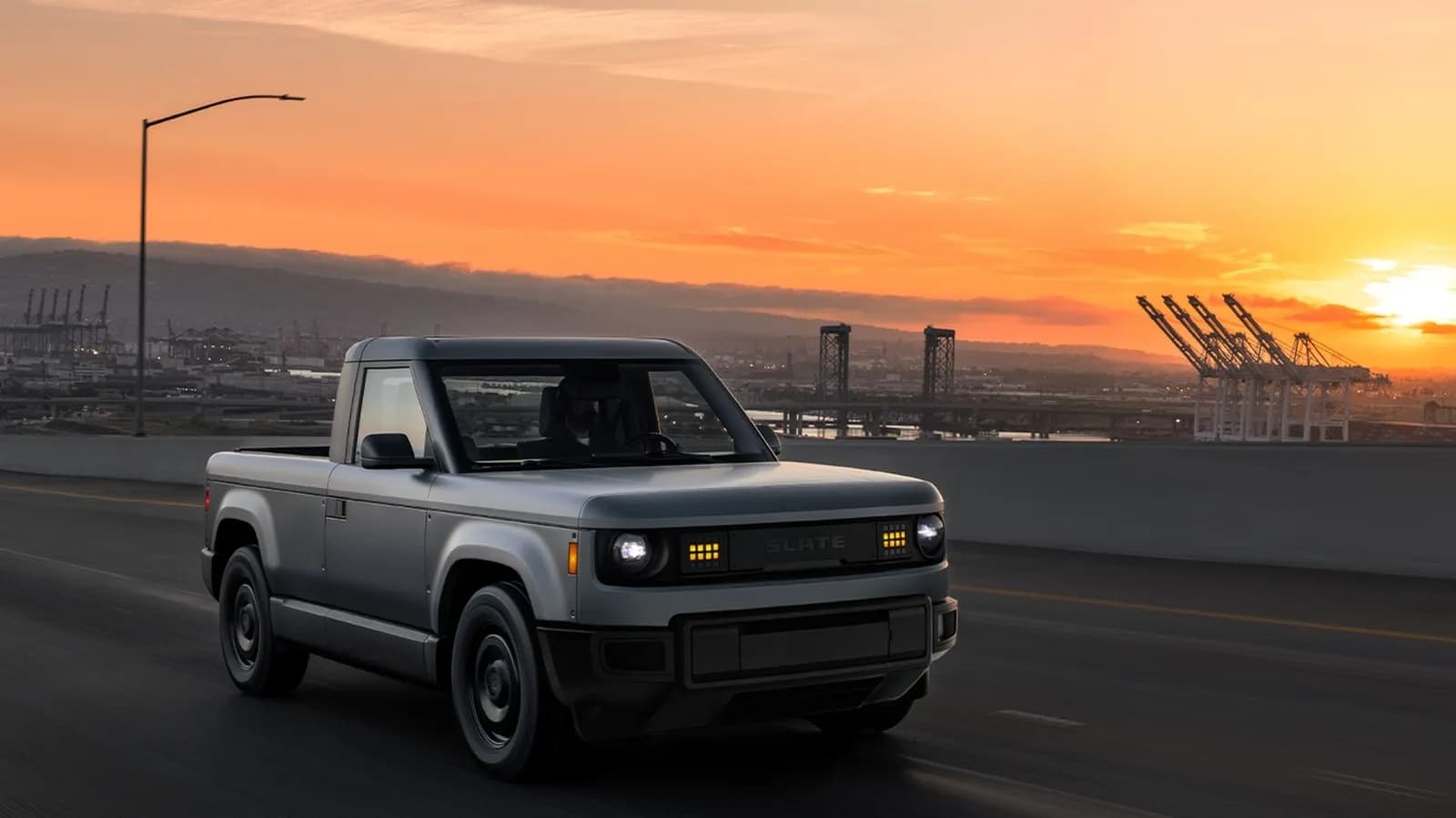
Enter the Slate electric truck, a vehicle designed from the ground up to challenge this prevailing industry orthodoxy. Rather than competing in the ultra-expensive luxury tier, Slate has positioned its vehicle squarely at the intersection of extreme affordability and everyday utility. However, engineering an EV for the budget-conscious consumer requires immense compromise. As early evaluations and industry analyses reveal, the most significant trade-off in Slate’s design philosophy lies right beneath the floorboards: its battery range simply cannot compete with the heavy-hitters currently dominating the automotive landscape.
The Engineering Philosophy Behind Slate's Efficiency
To understand why the Slate truck features a restricted battery range, one must examine its core design pillars. Modern EVs are frequently plagued by weight bloat. A traditional heavy-duty electric pickup often carries thousands of pounds of battery cells just to haul its own massive frame down the highway. This creates an inefficient cycle where more weight demands a larger battery, which in turn adds even more weight and drives the final retail price sky-high.
Slate has chosen to break this cycle by prioritizing minimalism and lightweight construction. By opting for a smaller battery footprint, the company manages to strip away thousands of dollars from the bill of materials while drastically reducing the vehicle's total curb weight. This leaner approach means the truck requires significantly less energy to move, translating to impressive efficiency metrics on paper. Yet, this efficiency gain is fundamentally tied to a smaller energy reserve, meaning that while the vehicle uses its available kilowatt-hours wisely, it simply carries fewer of them overall.
Decoding the Range Compromise
The primary consequence of Slate's design strategy is a driving range that falls noticeably short of standard consumer expectations. While buyers have been conditioned to view three hundred miles of range as an acceptable baseline for any modern EV, budget-oriented alternatives like the Slate truck often operate within a much narrower radius. For urban contractors, local delivery fleets, or daily commuters who rarely log long highway distances, this limitation is entirely manageable. However, for everyday drivers accustomed to spontaneous road trips, a restricted range introduces notable friction.
This range constraint forces drivers to think critically about charging infrastructure and daily route planning in a way that owners of high-capacity luxury EVs rarely have to. When a vehicle carries a compact battery pack, every detour, heavy payload, or steep incline has an outsized impact on the remaining state of charge. While the math works out brilliantly for targeted use cases, it represents a steep psychological hurdle for consumers transitioning away from traditional internal combustion engines, which can be refueled in minutes at virtually any corner.
Market Realities and Consumer Reception
The debut of the Slate truck brings a fascinating question to the forefront of the automotive sector: are consumers truly willing to trade driving range for a drastically lower purchase price? For years, market analysts have argued that the single biggest barrier to EV adoption is cost, not capability. If an electric truck can be offered at a fraction of the cost of its premium competitors, it could unlock entirely new segments of the market—ranging from municipal fleets to budget-minded suburban homeowners who need a truck bed occasionally rather than every single day.
At the same time, automotive history is littered with well-intentioned economical vehicles that struggled because buyers ultimately balked at compromises. Range anxiety remains a powerful deterrent, and marketing a low-cost alternative requires educating consumers on how to match their actual daily driving habits with the vehicle's technical capabilities. If buyers purchase the Slate truck expecting the cross-country touring capabilities of a luxury flagship, dissatisfaction is virtually guaranteed. Conversely, if marketed accurately as a specialized, ultra-affordable utility tool, it could find a fiercely loyal user base.
Developer and Industry Takeaways
For software engineers, product designers, and hardware developers across the broader tech landscape, the Slate truck serves as a compelling case study in product-market fit and resource constraints. The engineering tension between feature bloat and cost-efficiency is not unique to the automotive industry; it mirrors challenges faced in cloud computing, consumer electronics, and enterprise software. Building products that scale effectively often requires stripping away gold-plated features to focus strictly on essential utility.
Furthermore, Slate’s heavy reliance on software optimization to maximize the efficiency of a smaller battery highlights the growing importance of intelligent energy management systems. When hardware specifications are strictly bounded by budget constraints, software must work harder to optimize performance, monitor component health, and provide accurate predictive analytics to the end user. In many ways, the success of budget hardware hinges entirely on the sophistication of its software layer—a dynamic that developers in every hardware-adjacent vertical understand intimately.
Risks, Open Questions, and Future Outlook
Despite its promising price tag, the Slate truck faces considerable headwinds as it moves toward mainstream availability. Chief among these risks is the rapidly shifting landscape of battery technology and government incentives. As raw material costs fluctuate and new chemistry types—such as sodium-ion or advanced solid-state derivatives—gradually enter the production pipeline, the economic calculus of building affordable EVs could shift dramatically over the next few years.
Additional open questions remain regarding resale value, long-term battery degradation, and how the vehicle will handle adverse weather conditions. Extreme cold, for instance, notoriously diminishes EV driving range; for a vehicle that already starts with a modest energy reserve, winter temperatures could compress its daily operational window to concerning levels. Monitoring how Slate addresses these real-world environmental factors will provide crucial insights into whether stripped-down, affordable EVs can truly capture a lasting foothold in the global market.
Final Thoughts
The Slate electric truck represents a bold and necessary experiment in democratizing zero-emission transportation. By aggressively trimming cost and weight at the expense of maximum battery range, the company has charted a distinct path that diverges sharply from industry excess. While the resulting range limitations mean the vehicle will not suit every lifestyle or use case, its arrival sparks a vital conversation about practicality, pricing, and the true definition of progress in the electric vehicle era.
Source: engadget.com