
Turning Data Center Exhaust Into Drinking Water: The Atoco Tech Breakthrough

The Intersect of Compute Density and Climate Reality
Modern data centers are marvels of computational throughput, housing tens of thousands of specialized accelerators and servers crunching through heavy workloads. However, this immense processing capability comes with a staggering physical toll: heat. Cooling massive server farms requires continuous, energy-intensive climate control systems, often drawing heavily on local municipal water grids and power infrastructure. As compute demands continue to skyrocket, balancing the carbon and water footprint of digital infrastructure has transformed from an academic exercise into a critical survival metric for the tech industry.
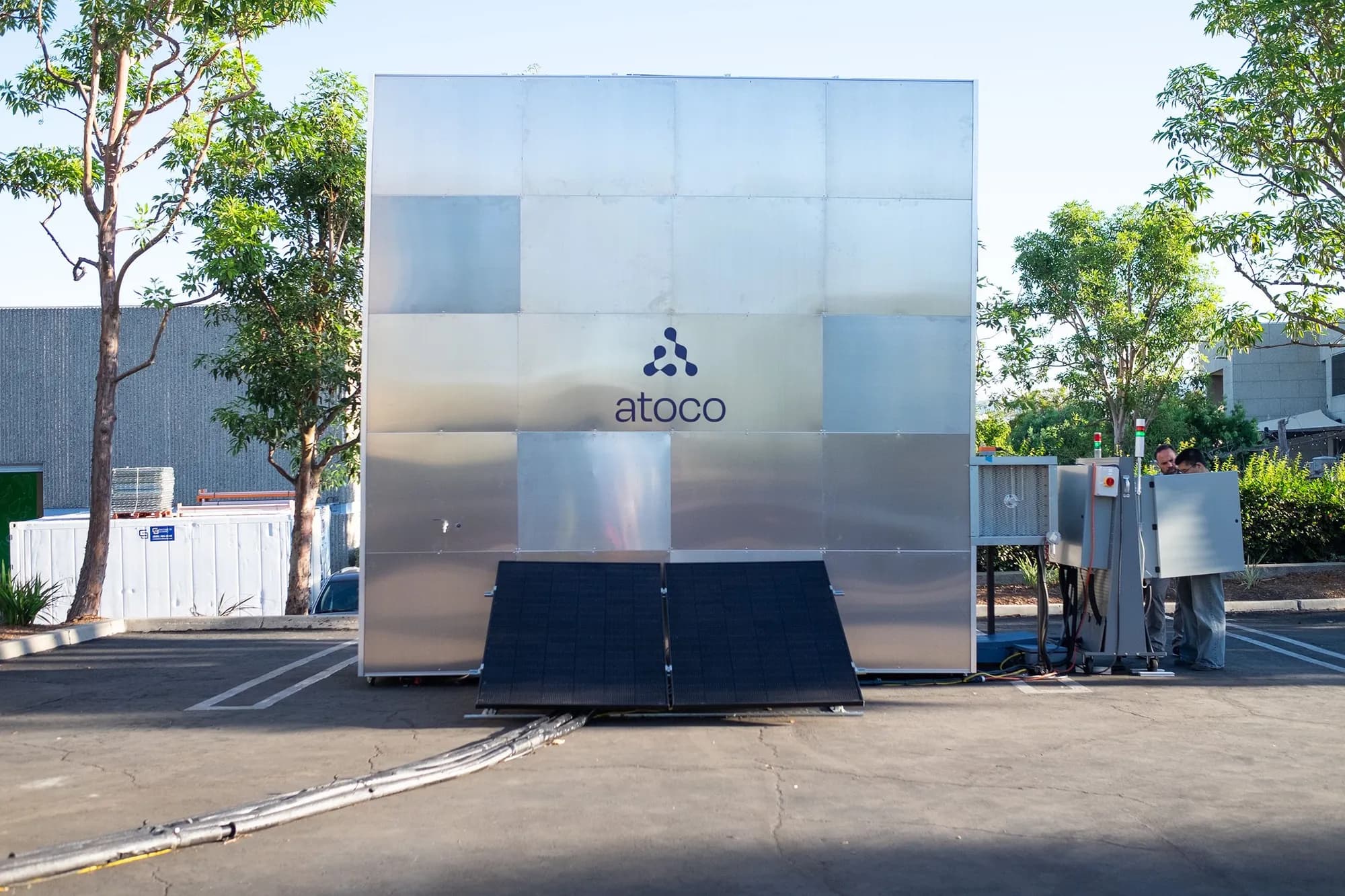
Against this backdrop, innovative engineering firms are looking for circular solutions that turn operational liabilities into valuable resources. Atoco, an ambitious startup operating at the edge of materials science and industrial engineering, has introduced a fascinating proposition. Instead of treating data center thermal exhaust as a waste product to be dissipated into the atmosphere through cooling towers, they are proposing a system that channels that exact waste heat to harvest clean water straight from dry air.
Inside the Physics of Atmospheric Water Capture
The core innovation behind Atoco’s approach relies on advanced porous materials designed to interact dynamically with ambient humidity. Traditional dehumidification or atmospheric water generation techniques typically demand substantial electrical inputs, relying on compressor-driven refrigeration cycles or high-energy thermal regeneration. These methods scale poorly and often require energy grids that are already operating near maximum capacity, particularly in arid regions where data centers are increasingly built for land and tax advantages.
Atoco’s specialized capture media circumvent these power limitations by operating on low-grade thermal energy. The material functions by absorbing moisture molecules from the atmosphere during cooler phases, even in extremely low-humidity environments. When subjected to the low-grade waste heat produced by server racks—temperatures that are normally squandered—the material releases the trapped moisture as vapor, which is then condensed into liquid water. By utilizing thermal energy that would otherwise require active cooling to eliminate, the system achieves a remarkable thermodynamic synergy.
Rethinking Data Center Infrastructure and Siting
For data center architects and site reliability engineers, water scarcity and thermal management are perennial bottlenecks. Traditional evaporative cooling towers consume millions of gallons of water annually, creating friction with local communities and regulatory bodies. If thermal-driven atmospheric extraction proves viable at scale, it could fundamentally alter how facilities are planned, constructed, and operated, particularly in desert environments where server farms often cluster.
Integrating these capture units directly into the exhaust loops of server rooms creates a closed-loop dynamic where the computational load actively generates the energy required to supply its own cooling water or surrounding municipal needs. While challenges remain regarding footprint, airflow dynamics, and scaling the specialized materials to industrial volumes, the architectural implications are profound. It shifts the narrative of infrastructure expansion from resource depletion toward closed-loop resource generation.
Broader Implications for Sustainability and ESG Metrics
Environmental, Social, and Governance (ESG) criteria have become central to corporate financial health, with technology giants facing intense scrutiny over their resource consumption. Major cloud providers have set aggressive targets to be water-positive or carbon-negative within the decade. Yet, meeting these targets gets progressively harder as artificial intelligence workloads demand denser clusters and higher power densities per rack.
Technologies that leverage waste streams directly address the core inefficiencies of modern computing. By transforming discarded thermal energy into potable or cooling water, facilities can drastically reduce their net draw on municipal reservoirs. This not only mitigates regulatory friction and lowers operational expenditure on water acquisition, but it also provides a tangible, verifiable mechanism for tech companies to prove their commitment to sustainable engineering principles.
Engineering Challenges and Real-World Deployment Hurdles
Moving advanced materials science from laboratory benches to hyper-scale industrial deployments is notoriously difficult. Atoco will need to prove that its capture media can withstand thousands of thermal cycles without degrading, maintaining efficiency over years of continuous operation in harsh industrial environments. Furthermore, integrating these systems into existing data center airflow architectures requires careful fluid dynamics engineering to avoid introducing backpressure that could compromise server cooling efficiency.
There are also economic considerations regarding capital expenditure versus long-term operational savings. While the promise of free water generated from waste heat is compelling, the initial deployment cost of retrofitting legacy facilities or designing new ones around these units must make financial sense for infrastructure operators. The coming phase of field testing and pilot programs will ultimately determine whether this material science breakthrough transitions into a standard industry blueprint.
What This Means for the Future of Tech Hardware
The convergence of material science, energy management, and computational infrastructure highlights a shifting mindset across the tech sector. Hardware design is no longer just about raw performance per watt; it encompasses the entire lifecycle footprint of the physical plant supporting the silicon. As accelerators grow more powerful and data centers push further into resource-constrained regions, innovations that blur the line between waste and utility will become increasingly vital.
Atoco’s approach points toward a future where computing infrastructure is intimately coupled with environmental remediation rather than environmental strain. If the industry successfully adopts these circular engineering paradigms, the massive energy footprints required to power the next generation of computing may simultaneously help solve some of our most pressing resource challenges.
Source: wired.com