
Unlocking Task Automation with Google Gemini and Autonomous AI Agents

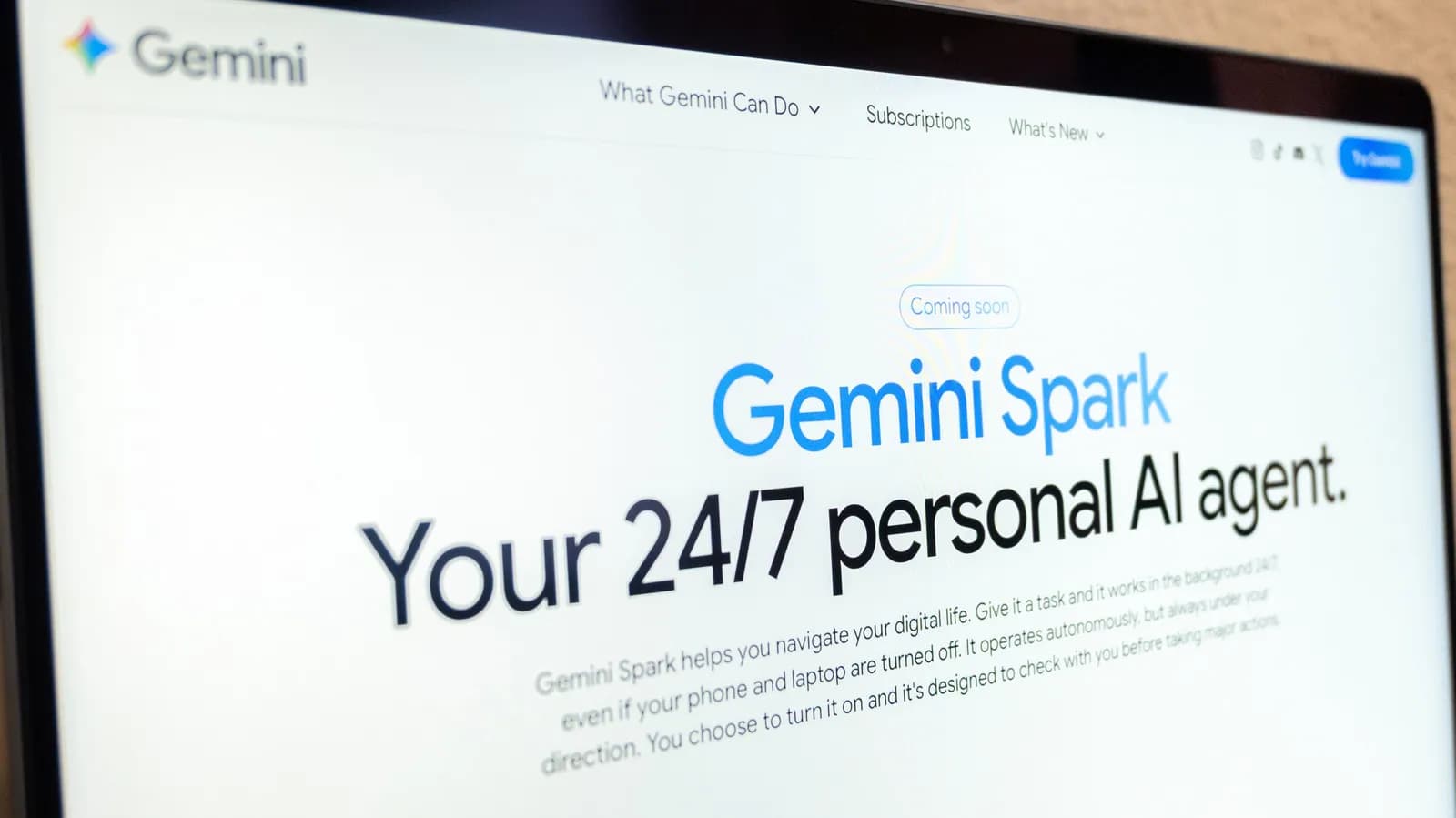
The trajectory of generative artificial intelligence is undergoing a profound paradigm shift. For the past two years, public interaction with large language models has centered primarily on passive conversational interfaces—chatboxes where users input prompts, request summaries, or generate boilerplate code, and the model responds with static text. However, the true frontier of enterprise utility lies in agency. Rather than simply advising or synthesizing information, modern models are being wired directly into operating environments to carry out multi-step digital actions autonomously. Google’s aggressive expansion of its Gemini ecosystem reflects this transition, positioning intelligent assistants not merely as reference libraries, but as dynamic operators capable of navigating digital ecosystems to accomplish tangible work on behalf of human users.
From Conversational Chatbots to Agentic Automation
To appreciate how modern task automation works within Google's ecosystem, it is helpful to look back at the initial evolution of digital assistants. Traditional tools such as Google Assistant, Siri, or legacy rule-based bots were fundamentally deterministic. They relied on brittle, pre-programmed intent-matching systems; if a spoken request matched an explicit trigger phrase linked to an API call, the action succeeded. Any deviation or ambiguity resulted in a dead end. When large language models like Google Gemini first emerged, they resolved the comprehension hurdle by offering remarkable natural language understanding, yet they remained walled off from external systems, operating strictly as text-in, text-out engines.
Agentic workflows dismantle this wall. By integrating Gemini's multi-modal comprehension with structured tool-calling capabilities, Google is pioneering an architecture where the model reasons through a high-level goal, breaks it into discrete subtasks, selects appropriate external interfaces, and evaluates whether each step succeeded. Whether orchestrating cross-application communications within Google Workspace or traversing web interfaces to gather disparate data points, the role of AI has expanded from answering questions to managing and executing digital chores.
Dissecting Autonomous Execution: How AI Takes Action
At the architectural level, delegating work to an AI agent requires several interconnected subsystems operating in real time. First is the planning layer, powered by the core Gemini model. When a user issues a high-level request—such as auditing an inbox for unfiled invoices, cross-referencing them against a spreadsheet, and preparing draft responses—the model must construct a dynamic execution graph. It interprets implicit constraints, deduces sequential dependencies, and identifies the software tools necessary to fulfill each stage of the objective.
The second pillar is structured tool execution, commonly implemented via function calling, native extensions, or headless browser automation. Rather than relying entirely on brittle API endpoints, modern agentic systems can interact with graphical user interfaces (GUIs) or invoke structured JSON schemas to communicate directly with web services. The model generates formatted commands, passes them to a client-side or cloud-based runtime environment, receives the output or error state, and iterates accordingly. This closed-loop feedback loop—often referred to as an observation-action-reflection cycle—allows the agent to self-correct when unexpected modal windows appear, network requests time out, or input fields alter their layout.
Key Workflows: Transforming Everyday and Developer Productivity
The real-world applications of Gemini-driven automation span everything from routine clerical duties to sophisticated technical workflows. For general knowledge workers, the integration of automation into platforms like Google Docs, Gmail, Drive, and Calendar eliminates the administrative overhead that consumes substantial portions of the working day. An agent can read through calendar conflicts, parse email threads for availability, and independently negotiate a meeting time while preparing briefing documents synthesized from cloud-hosted files.
For software engineers and technical teams, the implications are even more pronounced. Developers frequently spend hours juggling fragmented tasks: updating issue trackers, validating pull request documentation, extracting logs from monitoring dashboards, and scripting repetitive migrations. With agentic execution layers, engineers can delegate these orchestrations to Gemini via CLI tools or integrated development environments. A single command can trigger an automated agent to clone a repository, identify failing unit test traces, draft a targeted bug fix, and create an annotated review request, dramatically shortening the feedback cycle between issue discovery and remediation.
- Unified Research and Synthesis: Cross-referencing disparate internal documents, customer support tickets, and live web sources into a consolidated executive summary.
- Autonomous Data Entry: Ingesting unstructured receipts, contracts, or tabular reports and piping verified records directly into relational databases.
- Operational Troubleshooting: Continuously querying distributed infrastructure logs, categorizing error spikes, and proposing concrete configuration patches.
- Proactive Communication: Monitoring external channels and drafting context-aware email replies or status updates based on real-time task completion.
Architectural Challenges: Latency, State Management, and Reliability
Despite the immense promise of autonomous execution, building dependable agentic frameworks poses substantial engineering hurdles. One of the primary bottlenecks is compounding error rates. In a single-turn conversation, a model with a 95 percent accuracy rate performs admirably. However, when an agent must execute a ten-step sequence where each action relies on the verified output of the previous step, mathematical degradation takes over: the overall likelihood of completing the entire workflow without intervention drops significantly. Ensuring deterministic reliability in non-deterministic probabilistic models remains the foremost challenge for enterprise deployment.
State management and execution latency further complicate system design. Autonomous agents must continually serialize their working memory, tracking active environment variables and historical session logs while operating within defined token context windows. Furthermore, waiting for multiple large model inferences across sequential tool calls introduces noticeable latency. For developers architecting these systems, balancing the speed of smaller, specialized models against the deep reasoning capabilities of flagship foundation models is a delicate and continuous trade-off.
Security, Permissions, and the Agent Alignment Problem
Granting an artificial intelligence system the authority to act on a user's behalf introduces unprecedented security and authorization challenges. Unlike traditional software with explicit access control lists (ACLs), an AI agent possesses natural language agency, making it vulnerable to novel attack vectors such as indirect prompt injection. If an automated assistant inspects an untrusted webpage or reads a malicious email while processing a workflow, covert text embedded within that document could theoretically instruct the agent to exfiltrate private credentials or wipe data storage volumes.
To mitigate these severe risks, robust containment boundaries are essential. Enterprises and platform architects are turning to granular permission scoping and mandatory human-in-the-loop checkpoints for irreversible actions—such as sending monetary transactions, deleting production files, or publishing external communications. Modern agent frameworks must treat the model as an untrusted orchestration engine, rigorously validating every generated tool parameter through deterministic security layers before execution occurs.
The Developer Perspective: Transitioning from Coders to Architects
As task automation tools become ubiquitous, the day-to-day role of software engineers will evolve in tandem. Writing low-level glue code, fragile web scraping routines, and manual ETL pipelines will increasingly be superseded by high-level prompt orchestration, schema definition, and guardrail enforcement. Instead of writing custom logic to bridge two disjointed software platforms, engineers will define API interfaces and semantic constraints, allowing agentic frameworks to synthesize the integration dynamically on demand.
This evolution elevates the importance of software architecture, domain modeling, and observability. Developers will spend less time debugging syntactic edge cases and more time analyzing execution traces, refining model system prompts, optimizing token budgets, and implementing hardened sandbox environments. The ability to structure data cleanly and expose resilient, self-describing APIs will become the gold standard of software craftsmanship in an agent-first world.
Looking Ahead: The Next Phase of Ambient Computing
Google’s continued investment in agentic capabilities signals a broader shift toward ambient computing, where software does not simply wait for manual input, but proactively assists users throughout their digital lives. As foundation models like Gemini become faster, more reliable, and cheaper to operate at scale, the boundary between static application interfaces and autonomous intelligence will blur into nonexistence.
The journey from interactive chatbots to fully dependable autonomous agents will not happen overnight, nor will it be free of growing pains. Yet the direction of travel is unmistakable. Organizations and developers who master the art of orchestrating, securing, and supervising AI agents today will define the productivity benchmarks of tomorrow, transforming how software is used, maintained, and created.
Source: engadget.com