
When Connected Appliances Burn: What the 700-Store Supermarket Fridge Hack Teaches Us About IoT Architecture

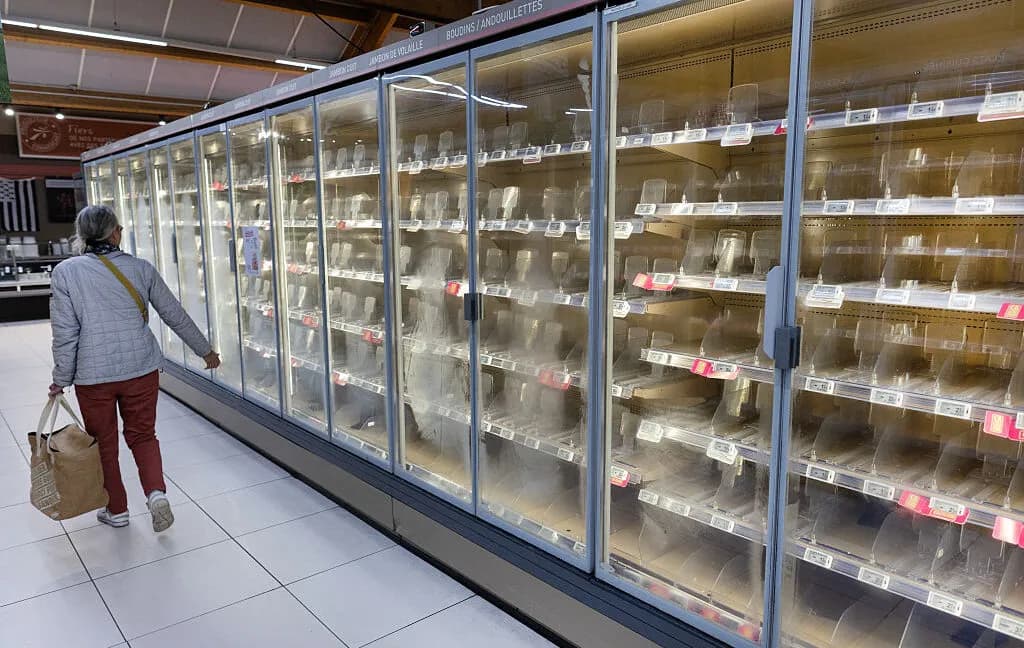
When software engineers and systems architects discuss cybersecurity threats, conversation typically revolves around data breaches, leaked credentials, stolen intellectual property, and ransomware encrypting databases. Yet the boundary separating digital logic from the physical world has been eroding rapidly. A devastating cyber incident affecting roughly 700 supermarkets has laid bare the extreme hazards of treating operational hardware as mere network peripherals. Attackers compromised network-connected commercial refrigeration units, causing catastrophic thermal runaway, spoiling millions of dollars in perishable inventory, and in multiple instances, igniting physical fires on retail sales floors.
This breach serves as a stark wake-up call for the technology industry. It illustrates what happens when low-cost embedded systems, legacy operational technology (OT), and public-facing connectivity collide without defense-in-depth principles. Rather than an elite zero-day weapon deployed by nation-state actors, early analyses suggest the catastrophe stemmed from fundamental architectural shortcomings: outmoded hardware, unpatched firmware, and administrative control panels directly exposed to the open internet.
The Incident: How Commercial Freezers Became Attack Vectors
Modern commercial grocery chains rely heavily on automated building management systems (BMS) and intelligent cooling controllers. These devices monitor temperature fluctuations, adjust compressor cycles, manage defrost heaters, and feed telemetry back into central logistics dashboards. When functioning properly, they optimize energy consumption and prevent food spoilage across massive distribution networks. However, to facilitate remote maintenance by third-party HVAC contractors and facility managers, hundreds of these systems were linked directly to external network interfaces.
Threat actors discovered that these controllers were reachable over public IPv4 space without requiring robust authentication barriers. By manipulating the set points, override modes, and cycle logic of the chilling units, the attackers did not simply turn the units off. Instead, they forced defrost heating elements to stay engaged while disabling thermal safety throttles and safety alarms, resulting in severe overheating. In standard operations, electrical defrost coils run intermittently to prevent ice buildup on evaporator coils. Trapped in continuous run states, these heating loops overwhelmed the cooling assemblies, melted structural insulation, ignited adjacent flammable materials, and triggered structural fires before facility managers understood what was occurring.
The financial fallout immediately compounded. Beyond the structural destruction caused by localized fires, entire inventories of frozen and refrigerated goods were ruined overnight across hundreds of retail branches. Compounding the physical losses was the downtime: replacing or re-flashing deeply embedded industrial controllers cannot be resolved with a simple remote cloud reboot.
The Reality of Internet-Exposed Operational Technology
For decades, operational technology lived in an air-gapped vacuum. Factory equipment, water treatment pumps, and commercial refrigeration machinery were designed with an implicit assumption of trust: anyone with physical access to the control panel was presumed authorized to manipulate it. As enterprises pursued digital transformation, legacy serial buses and localized programmable logic controllers (PLCs) were retrofitted with IP-enabled bridge modules, Ethernet cards, and cellular modems to broadcast telemetry to the cloud.
Unfortunately, while connectivity advanced at lightning speed, security practices lagged by decades. Search engines that scan the internet for connected devices regularly index hundreds of thousands of industrial control interfaces, many running stripped-down HTTP servers with no transport layer encryption, default administrative credentials, or vulnerable, deprecated operating kernels. In the case of the supermarket incident, attackers did not need to construct complex custom malware or bypass sophisticated endpoint detection and response (EDR) agents. They simply had to query publicly accessible IP ranges for known signatures of cooling controllers and exploit known administrative backdoors or unauthenticated API endpoints.
The reality is that many IoT and OT devices operating today were installed with five- to fifteen-year operational lifespans. Unlike smartphones or modern web applications, which receive frequent over-the-air patches, commercial hardware is often treated with an 'install and forget' mindset. Once an organization exposes these fragile legacy interfaces to the internet to save a few hours of technician travel time, the entire physical enterprise becomes vulnerable to remote tampering.
Why Software Safety Bounds Must Reside in Hardware
From an engineering perspective, this incident illuminates a disastrous flaw in safety architecture: software-defined commands were allowed to override absolute physical limits. In safety-critical systems, logic executed by remote command should never be capable of generating a state that leads to combustion or physical failure.
In robust embedded design, safety is enforced through hardware interlocks, bimetallic thermal fuses, and isolated watchdogs that operate completely independent of the main controller microprocessor. If an electric heating element approaches a temperature capable of igniting surrounding insulation, a physical thermal cutoff should mechanically break the circuit, severing power regardless of whether an upstream microcontroller or external network command instructs it to stay active. Relying exclusively on firmware logic to safeguard against thermal runaway creates a single point of failure.
When developers build microcode for smart controllers, they must adopt an antagonistic design philosophy. Firmware should continuously validate input parameters against plausible physical sanity boundaries. Rate-limiting commands, rejecting contradictory instructions (such as activating high-output heating simultaneously with disabled alarm interrupts), and enforcing fail-safe fallback modes are essential engineering requirements, not optional feature enhancements.
The Perils of Contractor Access and Decentralized Fleet Management
Another systemic issue exposed by the supermarket attack is the sprawling ecosystem of third-party vendors and facility management providers. Retail enterprises rarely develop their own cooling management software in-house. Instead, they purchase turn-key installations from specialized refrigeration vendors who manage monitoring via centralized third-party portals or remote access tunnels.
This arrangement creates a fragmented security perimeter. While an enterprise’s primary IT infrastructure may be fortified behind zero-trust network access, multi-factor authentication, and continuous monitoring, secondary systems like HVAC, lighting, and refrigeration often route through third-party management networks with far less rigorous governance. When a vendor relies on shared credentials across multiple client sites, a single compromised technician account or an exposed diagnostic port can grant an attacker broad access to thousands of physical appliances simultaneously.
Developers and infrastructure architects must champion the strict segmentation of OT networks from both corporate enterprise networks and the public internet. Building management systems belong in tightly quarantined virtual local area networks (VLANs), inaccessible from outside without stepping through jump hosts guarded by multi-factor authentication, cryptographic verification, and stringent intrusion detection systems.
Developer and Engineering Takeaways for the IoT Era
For software developers, embedded systems designers, and DevOps engineers, the supermarket refrigeration hack provides several vital technical lessons that must be integrated into future product roadmaps:
- Eliminate Direct Public Ingress: No embedded device, sensor hub, or equipment controller should ever listen directly on a public IP address. Devices should establish outbound-only, TLS-encrypted tunnels to secure MQTT, WebSocket, or gRPC brokers protected by mutual TLS (mTLS).
- Mandate Hardware Safety Interlocks: Never allow software, remote firmware updates, or API calls to bypass physical limit switches or thermal fuses designed to prevent fire, rupture, or catastrophic mechanical failure.
- Automate Firmware Lifecycle Management: IoT hardware deployments must incorporate cryptographic code-signing and reliable, fault-tolerant over-the-air (OTA) update pipelines. If a device cannot be securely patched after deployment, it represents an unacceptable risk to enterprise operations.
- Implement Rigid Network Segmentation: Facility networks must be strictly isolated. IoT telemetry should travel over micro-segmented networks that prevent lateral movement to core data repositories or corporate workstations.
- Enforce Least-Privilege Diagnostic Tools: Field service interfaces and diagnostic consoles should require temporary, cryptographically verifiable tokens rather than static global master passwords embedded in device EEPROM.
Rethinking Liability and the Cost of Insecurity
Historically, the financial calculus surrounding IoT security has been heavily skewed against safety. Manufacturers frequently minimize hardware costs by stripping out cryptographic coprocessors, while purchasers prioritize initial capital expense over long-term software maintainability. Breaches were tolerated because their repercussions were confined to isolated disruptions or modest administrative fines.
However, when a cyber incident leads to scorched brick-and-mortar storefronts, compromised building structural integrity, and millions of dollars in destroyed inventory, the economic equation permanently shifts. Insurance underwriters are already scrutinizing operational technology environments with unprecedented intensity. Enterprises that fail to demonstrate strict network segmentation, active inventory patching, and independent hardware safety cutoffs may soon find themselves facing denied claims or exorbitant premiums.
The regulatory landscape is likewise pivoting toward accountability. Emerging standards across international markets are establishing baseline security mandates for connected devices, effectively barring products with unalterable default passwords or unpatched vulnerabilities from commercial markets. For vendors that produce commercial hardware, building resilient security architecture is rapidly transforming from a high-end marketing differentiator into a non-negotiable legal requirement.
Final Thoughts
The supermarket refrigeration catastrophe stands as a cautionary milestone in the evolution of the internet of things. It demonstrates with terrifying clarity that bits and bytes can ignite real-world blazes when insecure code is granted dominion over physical power. As connectivity continues to weave itself into power grids, transit networks, and commercial appliances, the technology industry must abandon the illusion that convenience can take precedence over security fundamentals. True resilience requires proactive defense-in-depth, hardware-level safeguards, and an unwavering commitment to isolating physical machinery from the turbulent currents of the public internet.
Source: arstechnica.com