
When Geopolitics Meets Silicon: How Infrastructure Attacks Are Changing AI Training

The Collision of Physical Conflict and Digital Infrastructure
For decades, the software engineering community has treated infrastructure as something largely abstract. We configure our clusters in AWS, Google Cloud, or Azure, and we think of our hardware as floating safely somewhere in the cloud—or at least safely tucked away inside heavily guarded, nondescript concrete data centers. However, recent developments serve as a stark reminder that software relies entirely on physical substrates. When geopolitical conflicts spill over into the technological domain, the tangible reality of data centers, power grids, and specialized hardware suddenly takes center stage.
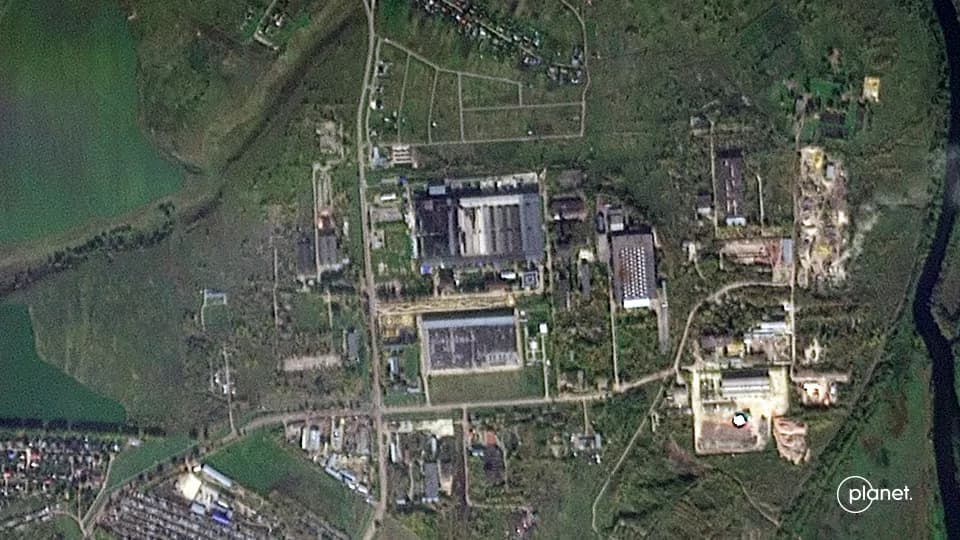
This dynamic was recently underscored when targeted drone strikes impacted a major data facility in Russia, specifically one housing the high-performance computing clusters used by Yandex—often colloquially referred to as "Russia's Google." While the digital world often fixates on algorithm breakthroughs, parameter scaling laws, and software supply chains, this event highlights an entirely different set of vulnerabilities. As artificial intelligence models become deeply strategic national assets, the physical facilities that train them are increasingly exposed to the friction of physical warfare.
Inside the Hardware That Powers Modern AI
To understand the significance of targeting a facility like the one utilized by Yandex, one must look closely at what it takes to train modern foundational models. Training large-scale machine learning systems is not like running standard web servers or microservices. It requires massive parallel processing power, utilizing dense arrays of GPUs or specialized tensor processing units, high-speed interconnects like InfiniBand, and immense amounts of continuous electrical power and liquid cooling.
These specialized computing clusters are notoriously difficult to procure, configure, and maintain under the best of circumstances, let alone in an environment constrained by international sanctions and supply chain bottlenecks. When a facility housing these high-end supercomputers suffers physical damage, the loss extends far beyond simple real estate. It represents a severe disruption to scarce computational capital. Replacing damaged silicon, rebuilding water-cooling loops, and restoring delicate low-latency networking fabrics is a monumental engineering challenge even without external disruptions.
The Strategic Pivot Toward Sovereign AI Infrastructure
In recent years, the concept of "sovereign AI" has dominated boardroom discussions across the globe. Governments and major regional technology champions alike have realized that relying on foreign cloud providers or imported hardware creates unacceptable strategic dependencies. Consequently, nations have poured immense resources into building domestic data centers, designing local silicon, and securing independent pathways for machine learning advancement.
However, this push toward centralization and self-reliance introduces its own architectural paradox. By concentrating massive amounts of computational power into large, centralized facilities to achieve economies of scale for training massive models, organizations inadvertently create high-value, highly visible targets. While distributed edge computing architectures are resilient precisely because they lack a single point of failure, modern generative AI demands the exact opposite: hyper-concentrated clusters tightly coupled via ultra-low-latency networks.
Supply Chain Vulnerabilities and the Cost of Downtime
For developers and infrastructure engineers, the implications of these physical threats ripple outward into broader considerations of resilience and disaster recovery. Traditionally, disaster recovery plans in enterprise software account for fiber cuts, power outages, software bugs, and even targeted cyberattacks like sophisticated DDoS campaigns or ransomware. System architects design active-active multi-region failovers to handle these software-defined or network-level disruptions seamlessly.
Yet, traditional high-availability models struggle when foundational compute nodes are physically destroyed or rendered inaccessible due to kinetic action. Unlike standard virtual machines that can be spun up in another availability zone within minutes, rebuilding a multi-megawatt training cluster requires physical hardware that may take months to source, ship, and commission. This introduces a chilling new variable into risk management frameworks for organizations operating in or near volatile regions.
The Broader Lessons for Global Tech Ecosystems
As artificial intelligence cements its status as critical infrastructure—comparable to telecommunications grids, financial systems, and energy pipelines—the rules governing its security must evolve. Tech companies and platform operators are forced to reckon with physical security threats that previously fell exclusively within the domain of military strategists or critical infrastructure protection agencies. This intersection of code and conflict raises difficult questions about the future of globalized technology development.
Furthermore, these events may accelerate shifts in how models are trained and distributed. If centralized supercomputing hubs face escalating physical risks, the industry might see an even greater push toward decentralized training methods, federated learning, or more efficient architectures that reduce the absolute hardware footprint required to reach state-of-the-art performance. When hardware becomes a literal battleground, optimization ceases to be just an engineering preference and becomes a survival strategy.
Closing Thoughts
The incident involving the Yandex data center marks a sobering milestone in the evolution of modern technology. It forcefully closes the gap between the virtual worlds we build and the physical reality that sustains them. As developers and architects look to the future, acknowledging the physical fragility of our digital foundations will be just as crucial as writing resilient code or scaling neural networks.
Source: arstechnica.com