
Why Handing System Privileges to AI Chatbots Can Brick Your Smart TV

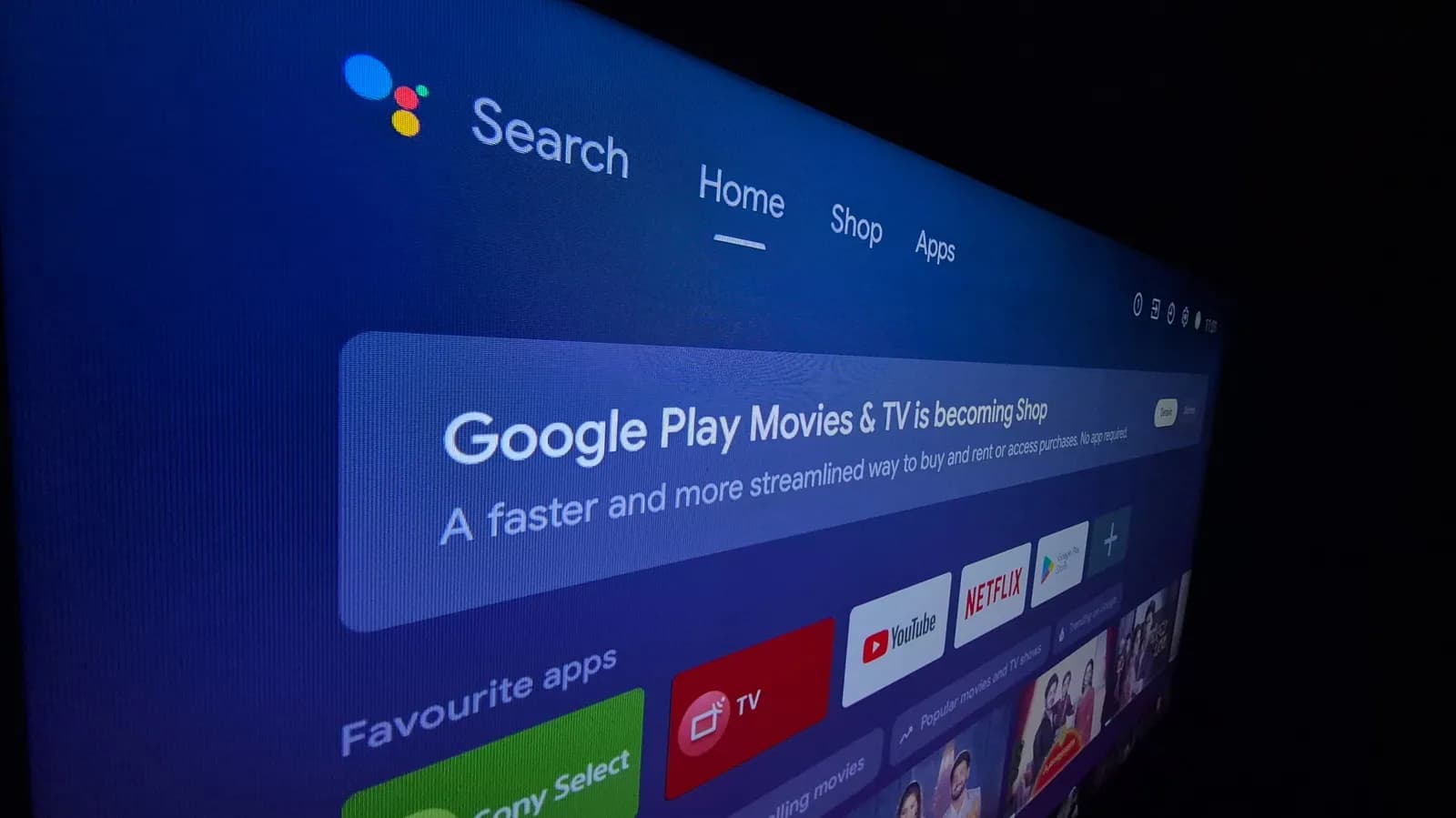
Modern consumer electronics often ship as vehicles for persistent advertising, bundled applications, and telemetry trackers. From living room televisions to low-cost streaming dongles, smart display platforms are notoriously laden with bloatware that degrades performance and clutters user interfaces. For tech-savvy users, stripping away these unwanted system packages via command-line utilities like the Android Debug Bridge (ADB) has long been a rite of passage. However, as general-purpose generative artificial intelligence models become increasingly capable of generating scripts and walking users through technical procedures, a concerning trend has emerged: relying on chatbots like Anthropic's Claude or OpenAI's ChatGPT to identify and excise unwanted software from embedded hardware.
While delegating tedious system administration tasks to an intelligent conversational agent feels like the natural evolution of personal computing, doing so on consumer appliances introduces severe operational hazards. Large language models (LLMs) operate on probabilistic pattern matching rather than deterministic understanding of a specific device's dependency graph. When an end user blindly executes shell commands recommended by an AI assistant on a television operating system, the margin between a snappier interface and an unbootable, permanently soft-bricked appliance becomes dangerously thin.
The Ubiquity of Bloatware on Connected Screens
Over the past decade, television hardware margins have compressed dramatically. Manufacturers have largely compensated for lower retail prices by transforming smart TVs into continuous monetization engines, packing operating systems like Android TV, Google TV, webOS, and Tizen with sponsored content, non-removable streaming apps, background analytics collectors, and intrusive overlay banners. Because these appliances are often powered by constrained system-on-chip (SoC) architectures and modest memory footprints, the cumulative weight of pre-installed vendor software noticeably hampers everyday responsiveness.
For developers and system administrators, dealing with bloatware on consumer devices is standard procedure. On Android-based smart TVs, advanced users frequently enable developer mode, activate network debugging, and issue package manager commands from a local terminal to disable or uninstall components that cannot be removed through the standard graphical settings. It is a powerful capability, but one that traditionally required manual research through community forums, device-specific wiki pages, and curated package lists to determine which APKs are safe to deactivate without destabilizing the core operating system.
The Temptation of Delegating System Tweaks to AI
The rise of frontier AI models has dramatically lowered the barrier to entry for performing command-line device management. Users can now dump a full list of installed system packages into a prompt window, ask Claude to identify extraneous bloat, and request a generated shell script or batch of ADB commands to remove everything unnecessary. Claude's sophisticated natural language comprehension and coding acumen make it appear perfectly suited for this chore, offering plausible explanations for what each obscurely named package does.
This workflow appeals directly to users who possess just enough technical confidence to open a command prompt but lack the deep platform-specific knowledge required to evaluate whether a specific system daemon is critical. Instead of spending hours cross-referencing package manifests against developer threads, the user receives an instantaneous, neatly formatted list of commands tailored to their specific device dump. The apparent authority and polished tone of modern AI outputs create a false sense of security, encouraging users to paste shell invocations directly into their terminal without verifying the underlying dependencies.
How Debloating Can Go Catastrophically Wrong
Embedded platforms and smart TVs are notoriously brittle when critical system packages are disrupted. Unlike desktop operating systems that gracefully handle missing peripheral services or fall back to recovery modes, smart television firmware builds frequently interlink vendor-specific user interface shells, input handling daemons, authentication frameworks, and audio/video pipelines into monolithic dependencies. Disabling what appears to be an innocuous telemetry package can easily cause the primary system launcher to enter a recurring crash loop, rendering the display unresponsive to physical remote controls or CEC inputs.
Worse still, recovery options on smart televisions are drastically more limited than on traditional personal computers or flagship smartphones. Many television models do not expose physical hardware buttons for entering fastboot or recovery menus, relying instead on software-driven reboot commands or specialized vendor service remotes. If network debugging is disabled during a boot crash cycle or if the system cannot reach an interactive shell state, recovering the device may require opening the chassis to connect directly to UART serial headers or flashing the onboard eMMC memory manually—skills and equipment far beyond the reach of standard consumers.
The Core Problem: Hallucinations Meet Root Privileges
The fundamental conflict in using LLMs for system administration lies in the contrast between probabilistic synthesis and deterministic execution. LLMs are trained to generate coherent, statistically probable sequences of text. They do not maintain an active runtime model of the user's specific firmware revision, nor do they possess ground-truth telemetry regarding how a proprietary vendor fork behaves in the field. When confronted with an ambiguous package name like com.vendor.tv.service, a model may infer that it represents a harmless telemetry service based on similar naming conventions in standard Android releases, unaware that the vendor embedded the TV's HDMI source switching logic or power state management within that exact binary.
When an LLM hallucinates an answer in creative writing or general knowledge retrieval, the consequence is misinformation that can be scrutinized and corrected. But when an LLM hallucinates safety parameters while generating destructive system-level commands—such as pm uninstall -k --user 0—the result is immediate and potentially irreversible structural damage to the operating environment. The model cannot inspect the runtime state, verify cryptographic signatures, or monitor hardware crash logs after the command executes; it fires blindly into an ecosystem it only conceptually understands.
Broader Implications for Agentic Automation
This dilemma serves as a microcosm for the broader architectural challenges confronting autonomous AI agents in software engineering and IT operations. As developers race to deploy agentic workflows capable of modifying local environments, executing arbitrary terminal commands, and managing infrastructure, the safety mechanisms governing execution boundaries remain immature. The assumption that a model can safely perform system maintenance simply because it accurately defines common terminal syntax is fundamentally flawed.
In enterprise DevOps pipelines, safety is achieved through deterministic guardrails: staging environments, automated integration tests, sandbox isolation, and instantaneous rollback mechanisms. Smart appliances offer none of these protections. Applying raw agentic guidance to embedded edge devices exposes the vulnerability of relying on cognitive models for low-level operational control without the benefit of a safety harness. If an AI assistant cannot be trusted to safely curate an Android TV package list without risking an unrecoverable system crash, developers must carefully evaluate the risk models governing autonomous agents interacting with production cloud infrastructure, firmware deployment, and automated configuration management.
Safer Alternatives for Cleaning Smart Devices
For users determined to improve their smart TV performance and reduce surveillance, reliable, battle-tested methodologies exist that do not require rolling the dice on generative models:
- Hardware decoupling: The cleanest and most robust solution is to disconnect the smart television entirely from the local network and rely exclusively on dedicated, well-supported streaming hardware or dedicated media PCs where system bloat is minimal or easily managed.
- Curated community repositories: Rather than querying an LLM, users should rely on established open-source projects and human-verified community debloating lists that have been tested across identical firmware build numbers.
- Non-destructive network filtering: Deploying DNS-level sinkholes or local network ad-blocking appliances like Pi-hole can neutralize telemetry and intrusive advertisements without touching a single package on the device itself.
- Staged manual deactivation: When executing ADB commands manually, users should favor temporarily disabling packages (
pm disable-user) over outright uninstallation, rebooting between each change to confirm system stability before proceeding.
Final Takeaway
Generative AI assistants are extraordinarily capable productivity accelerators, but they remain fundamentally ill-suited for unsupervised system modification on fragile embedded platforms. Treating conversational chatbots as authoritative system engineers on low-margin hardware invites needless failure. Until autonomous AI systems can incorporate verified dependency trees, state validation, and localized testing into their reasoning loops, critical administrative operations belong strictly in the hands of informed human operators guided by rigorously vetted community documentation.
Source: engadget.com