
Why New York City's 'Ban the Scan' Push Matters for Software Engineers and Privacy

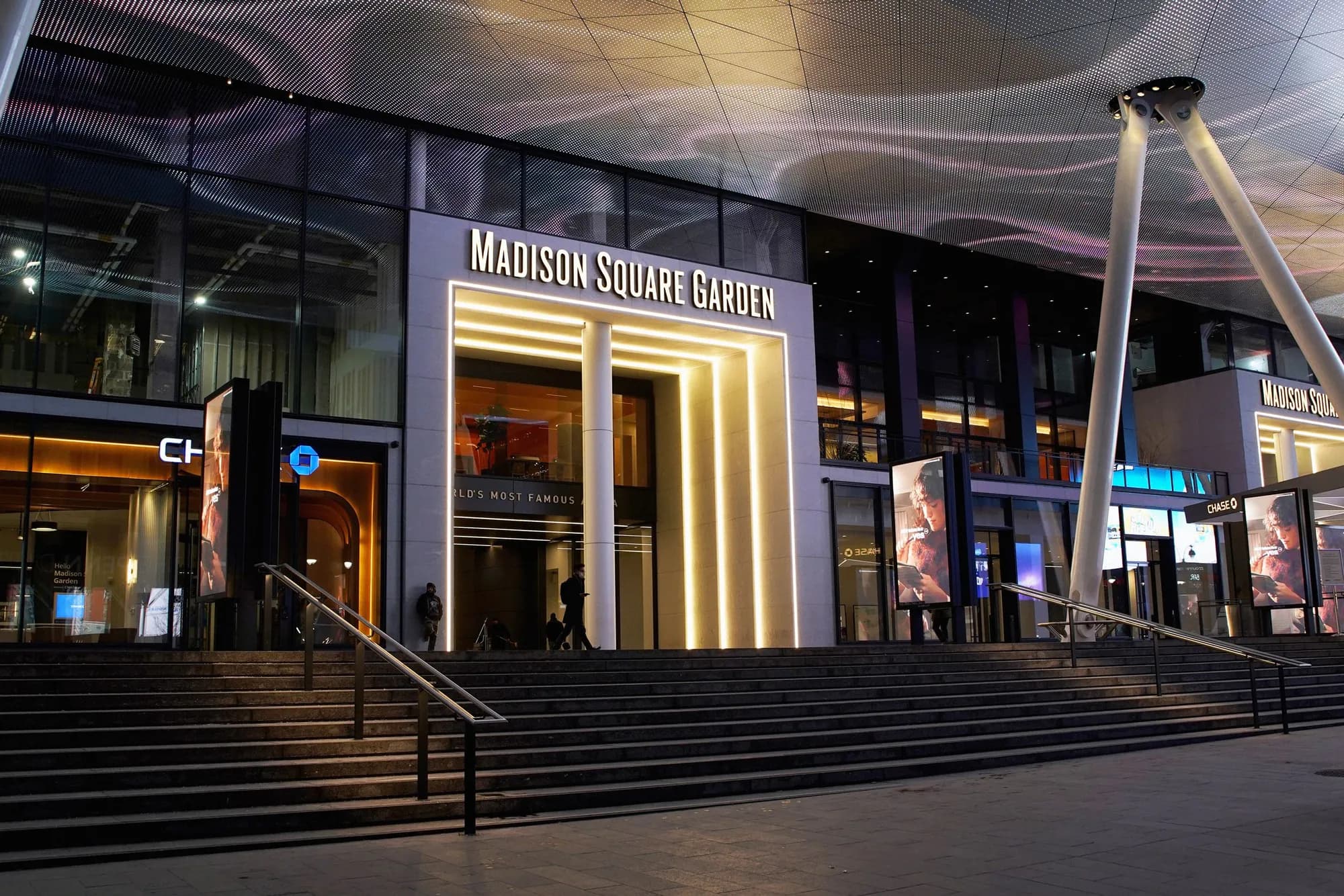
The Gathering Storm Outside Madison Square Garden
A coalition of local lawmakers, touring musicians, and civil liberties advocates recently gathered on the pavement outside Madison Square Garden to demand an end to a controversial practice: the deployment of automated facial recognition technology to screen attendees. Armed with banners and passionate testimonies, the group highlighted how prominent entertainment conglomerates quietly harness biometric identification to vet crowds before they even reach their seats. This high-profile demonstration brought a simmering technological debate out of the server room and onto the public street, casting a spotlight on the friction between corporate security measures and fundamental civil liberties.
The push is centered around legislative proposals colloquially dubbed 'Ban the Scan,' designed to plug regulatory gaps that allow private venues to capture, process, and store the facial geometry of everyday patrons. While airports and transit hubs face growing scrutiny over similar deployments, entertainment complexes represent a unique battleground. Unlike mandatory transit spaces, attending a concert or sporting event is ostensibly voluntary, yet venues increasingly argue that private property rights grant them broad latitude to determine who crosses their thresholds. As legislators attempt to draw a hard line, the confrontation underscores a broader societal reckoning over how far pervasive surveillance can creep into our daily leisure.
Understanding the Biometric Surveillance Ecosystem
To grasp the gravity of the legislative push in New York, it is essential to understand the mechanics underpinning modern facial recognition systems. At their core, these tools rely on advanced deep learning algorithms trained to extract facial landmarks from live video feeds, converting biological traits into mathematical vectors known as faceprints. These vectors are then instantly compared against proprietary databases of flagged individuals—ranging from banned patrons to security threats. While security teams market these implementations as frictionless safety nets designed to intercept bad actors before incidents occur, privacy researchers emphasize that the underlying infrastructure routinely relies on continuous, mass data collection of innocent bystanders.
The deployment of these systems in commercial entertainment spaces represents a significant pivot from traditional security protocols. Historically, venues relied on human vigilance, bag checks, and ticketing gates. Today, passive optical sensors embedded in entryways digitize thousands of faces per hour without explicit, informed consent. For software engineers building these pipelines, the challenge has traditionally centered on optimization, accuracy, and latency reduction under varying lighting conditions. However, the rapid commercialization of these tools has outpaced both public awareness and regulatory frameworks, leaving a vast grey area where private entities can harvest sensitive biometric data under the banner of premise security.
The Developer's Dilemma: Ethics, Code, and Accountability
For the software engineering community, the legislative momentum behind 'Ban the Scan' forces a long-overdue reckoning with professional ethics and the downstream impacts of machine learning models. Developers who design, train, and deploy computer vision algorithms often operate downstream from executive decisions, focusing strictly on technical KPIs such as false-positive rates, throughput, and tensor optimization. Yet, as regulations tighten and public backlash intensifies, engineers can no longer remain neutral cogs in the surveillance machinery. The code we write to map facial geometry or optimize tracking matrices carries inherent societal weight, making ethical data governance and impact assessments critical components of the modern software development lifecycle.
Furthermore, the pushback against commercial biometrics introduces complex compliance challenges for enterprise software vendors. If cities like New York successfully enact sweeping bans on biometric screening at public-facing venues, enterprise clients will rapidly shift their purchasing criteria, demanding software architectures that prioritize privacy-preserving design. Developers may find themselves tasked with pivoting from centralized facial recognition pipelines to decentralized, anonymized verification methods that do not permanently store or process identifiable biometric markers. This shift not only aligns with emerging regulatory compliance mandates but also fosters a culture of technical accountability where engineers actively anticipate and mitigate the societal harms of their systems.
Balancing Venue Safety With Civil Liberties
At the heart of the ongoing policy debate is a fundamental tension between modern threat mitigation and the preservation of anonymity in public spaces. Venue operators and security consultants frequently defend the use of automated surveillance by pointing to escalating security concerns, arguing that rapid identification tools are necessary to deter violence, manage crowd control, and enforce civil restraining orders or corporate bans. From this perspective, real-time computer vision is framed as an indispensable evolution of physical security, analogous to the widespread adoption of closed-circuit television decades ago.
Conversely, civil rights advocates and privacy experts argue that drawing a parallel between traditional cameras and biometric surveillance fundamentally misunderstands the technology. Unlike static video feeds, facial recognition automates tracking at scale, creating searchable digital trails of individual movements that can easily be weaponized, subpoenaed, or leaked. Moreover, numerous independent audits have highlighted persistent demographic biases in facial recognition algorithms, which historically exhibit higher error rates when analyzing women and people of color. Allowing entertainment complexes to operate these biased, invasive systems unchecked creates a chilling effect on public assembly, disproportionately impacting marginalized communities who already bear the brunt of over-policing.
Broader Regulatory Implications and the Ripple Effect
While the immediate battleground is localized to New York City and iconic entertainment landmarks, the legislative trajectory of 'Ban the Scan' carries profound national implications. Municipalities across the country are closely monitoring how New York lawmakers navigate the legal pushback from corporate venue owners, anticipating similar battles in their own backyards. As local governments step into the regulatory vacuum left by federal inaction on biometric privacy, we are witnessing the emergence of a fragmented patchwork of municipal laws that tech companies and venue operators must painstakingly navigate.
This regulatory fragmentation forces a strategic pivot across multiple industries. Entertainment conglomerates, retail chains, and hospitality giants that rely on automated analytics are beginning to reevaluate their long-term infrastructure investments. If key urban markets outlaw biometric screening, vendors offering these solutions will face contracting addressable markets, prompting a rapid evolution toward alternative engagement and security technologies. For lawmakers, the challenge lies in crafting legislation that is both technologically literate and resilient against corporate loopholes, ensuring that rapid advancements in computer vision do not permanently erode the right to anonymous public participation.
What Lies Ahead for Biometric Regulation
As the legislative debate in New York presses forward, the outcome will likely serve as a watershed moment for the broader conversation surrounding artificial intelligence and public space. The momentum behind 'Ban the Scan' demonstrates that public mobilization combined with targeted policymaking can successfully challenge entrenched corporate surveillance practices. However, the road ahead remains fraught with legal challenges, as venue operators are expected to contest any sweeping restrictions on private property rights through prolonged litigation.
Ultimately, the confrontation outside Madison Square Garden signals that the era of unregulated, frictionless commercial surveillance is drawing to a close. Whether through municipal bans, strict opt-in mandates, or mandated privacy-by-design frameworks, the pressure on organizations to justify their data collection practices will only intensify. For technologists, legal experts, and citizens alike, this evolving landscape demands heightened vigilance, proving that the architecture of our future public spaces will be defined just as much by our legislative boundaries as by our technical capabilities.
Source: wired.com