Why OpenAI is Steering Clear of the Public Markets Any Time Soon

The Public Market Paradox for Frontier AI
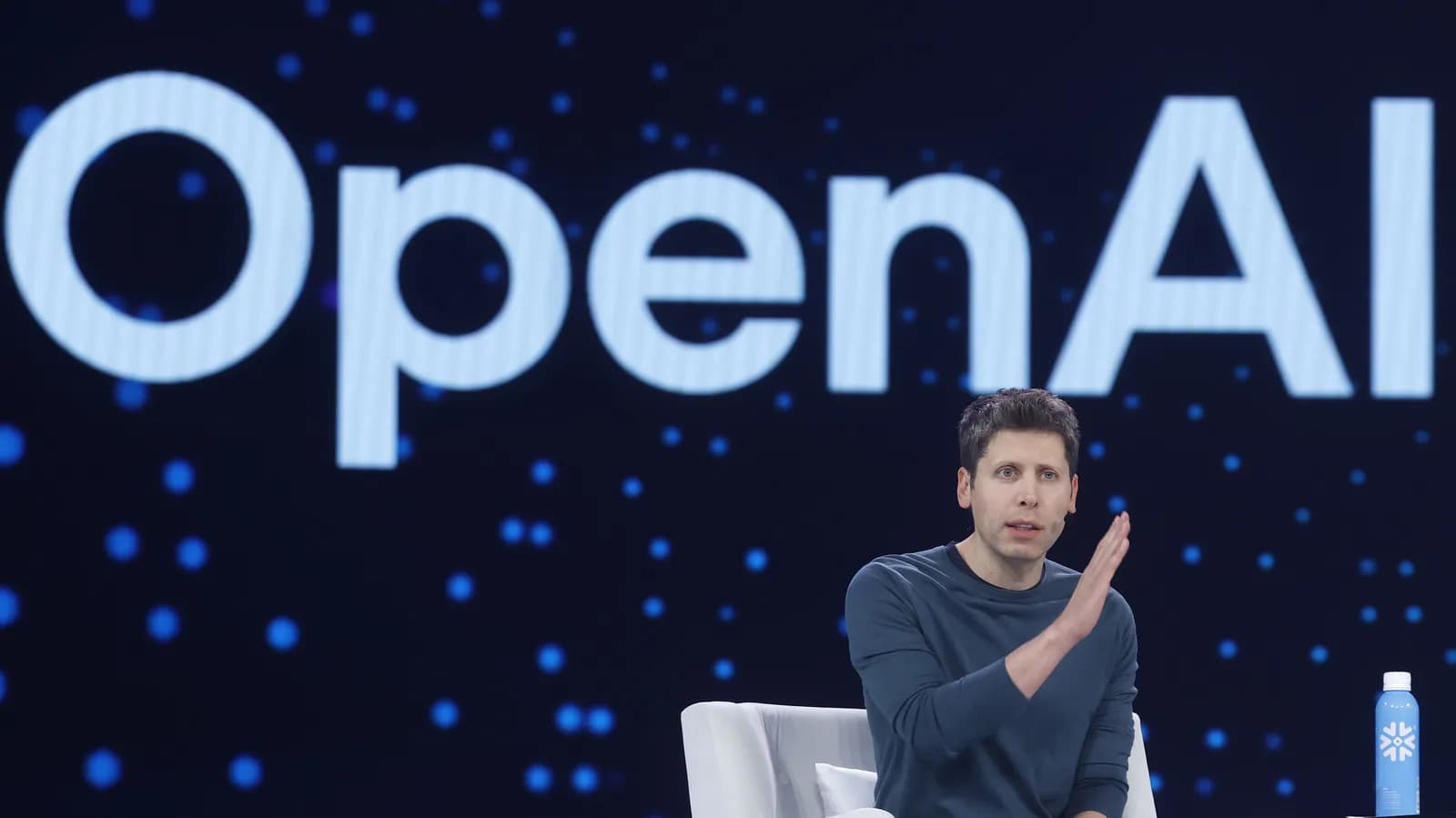
The speculative machinery of Silicon Valley and Wall Street perpetually hums with anticipation regarding the next trillion-dollar market debut. Yet, for OpenAI, the architect behind the generative AI wave, the public markets remain an intentional detour rather than a destination. In recent commentary, company leadership has clarified that transitioning into a publicly traded entity is off the table for the immediate future. This reluctance highlights a profound mismatch between the traditional quarterly cadence of Wall Street and the long-horizon, high-stakes trajectory of artificial intelligence research.
As valuations for foundational model developers soar into astronomical territory, observers naturally look toward an initial public offering as the ultimate liquidity event. However, OpenAI's corporate structure is uniquely Byzantine, blending a nonprofit board mandate with a capped-profit commercial arm. Untangling this governance hybrid to satisfy public shareholders would require a fundamental transformation of the organization's foundational ethos—a compromise that current executives appear entirely unwilling to make right now.
Navigating the Hybrid Governance Maze
To understand why an initial public offering is a non-starter for OpenAI, one must examine its distinctive institutional architecture. Born as an open-source research laboratory committed to safe, beneficial artificial general intelligence, the organization eventually spawned a commercial wing to fund the staggering computational expenses required to train frontier models. This dual-identity framework prioritizes safety research and humanity-first outcomes over pure profit maximization, at least in theory.
Introducing public shareholders into this equation creates an inherent legal and fiduciary contradiction. Public companies are bound by stringent obligations to maximize shareholder value above almost everything else. If OpenAI were to answer to millions of retail and institutional investors, its leadership might face intense pressure to monetize prematurely, cut corners on safety evaluations, or commercialize unstable technologies before they are thoroughly vetted. Maintaining private status acts as a strategic shield, allowing the firm to prioritize research milestones over short-term financial performance.
The Staggering Burn Rate and Capital Demands
Ironically, while OpenAI is avoiding the public markets, its capital requirements mirror those of the world's largest conglomerates. Training state-of-the-art neural networks demands billions of dollars in specialized hardware, massive data center infrastructure, and immense electrical power supplies. Traditionally, companies tap public equity markets precisely when they need this scale of liquidity to fund expansion.
Instead of an IPO, OpenAI has opted for alternative financing pathways, relying on private rounds, massive strategic partnerships with cloud giants, and complex debt or equity hybrids. By partnering with deeply capitalized technology incumbents, the organization secures the necessary computing muscle without subjecting its operational roadmap to the daily volatility and activist shareholder pressures of the stock exchange. This private funding model grants leadership the runway required to sustain multi-year research cycles without having to justify every pivot to short-sighted market analysts.
Regulatory Scrutiny and Antitrust Pressures
Going public is not merely a financial transaction; it is a profound regulatory gauntlet. An initial public offering requires unprecedented transparency regarding corporate financials, intellectual property vulnerabilities, supplier dependencies, and competitive risks. For an entity operating at the bleeding edge of a geopolitically sensitive industry, filing public registration documents would lay bare proprietary secrets to domestic and international rivals alike.
Furthermore, OpenAI is already the subject of intense scrutiny from antitrust regulators, policy makers, and privacy advocates worldwide. Transitioning into a public corporation would likely multiply this regulatory overhead, inviting even deeper investigations into its partnerships, market dominance, and data collection practices. By remaining private, the firm retains a degree of operational opacity that helps it navigate an increasingly hostile and unpredictable global regulatory landscape.
Ultimately, the decision to sidestep the public markets underscores the unprecedented nature of the generative AI boom. Unlike dot-com startups of yesteryear or modern SaaS providers, foundational AI labs hold keys to technology that could reshape global economics and national security. The traditional mechanisms of corporate capitalism may simply be too rigid to accommodate an entity whose primary product is the potential invention of artificial general intelligence.
Implications for the Broader Tech Ecosystem
For developers, enterprise customers, and startup founders operating within the broader AI ecosystem, OpenAI's stance on public markets carries significant signals. It suggests that the heavyweights of artificial intelligence will continue to operate under private equity rules, insulating themselves from the immediate whims of public sentiment. This dynamic preserves a high-risk, high-reward research culture that can absorb massive losses today in exchange for paradigm-shifting breakthroughs tomorrow.
At the same time, it concentrates immense power and decision-making authority within a tight circle of private stakeholders, executives, and corporate partners. Without the democratic access provided by public stock ownership, everyday retail investors are locked out of sharing in the direct financial upside of the most disruptive technology shift of our generation. As the industry matures, this tension between private control and public impact will only intensify, forcing regulators and society to rethink how revolutionary technological advancements should be governed.
Looking Ahead
While leadership has definitively slammed the door on a near-term public debut, the long-term future of OpenAI's corporate structure remains an open question. As the costs of building next-generation systems continue to escalate, private markets may eventually reach their saturation point regarding how much capital they can absorb. Whether the organization eventually evolves into a fully public entity or pioneers an entirely new corporate paradigm will depend heavily on the commercial viability of its upcoming models and the shifting tides of global regulation.
Source: engadget.com