
Analogue Brings Modern Engineering to Retro Cartridges With Revised FPGA Consoles

Introduction to Hardware-Level Retro Preservation
For decades, software emulation has been the default method for experiencing retro video games on modern hardware. While emulators have grown increasingly sophisticated, offering high-resolution scaling, shaders, and various quality-of-life modifications, they inherently rely on software approximations of physical computer architectures. This approach frequently introduces input latency, timing inconsistencies, and behavioral bugs that never existed on the original silicon.
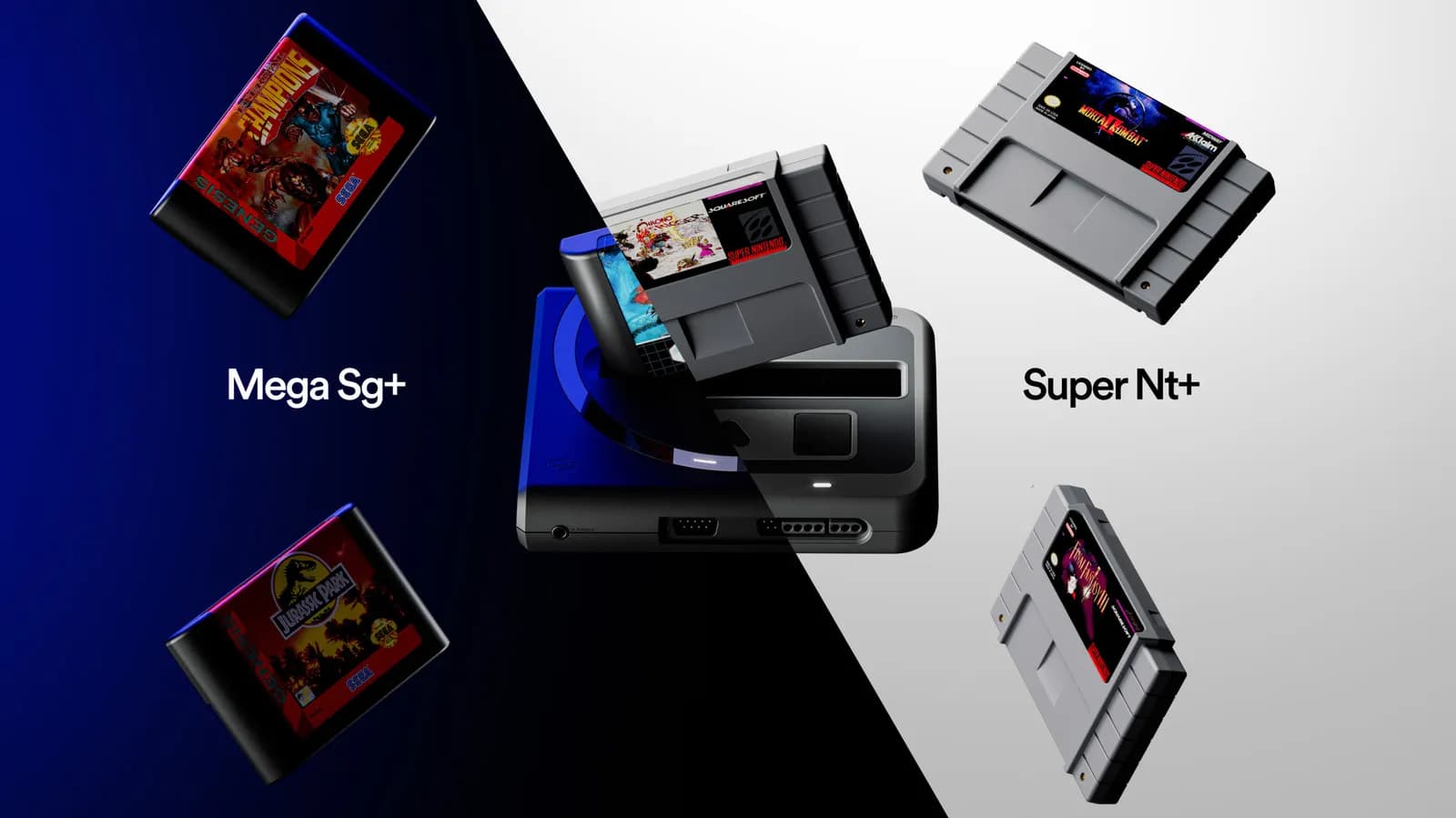
Enter Analogue, a company that has carved out a unique niche by eschewing software emulation entirely in favor of Field Programmable Gate Arrays (FPGAs). By physically configuring silicon chips to mimic the exact circuitry of legendary 16-bit consoles, Analogue delivers cycle-accurate hardware recreation without the performance overhead or emulation lag of conventional systems. The announcement of the Mega Sg+ and Super Nt+ represents the next evolution of this philosophy, bridging the gap between archaic cartridge media and contemporary displays.
The Technical Superiority of FPGA Emulation
To understand why hardware enthusiasts and retro developers hold FPGA-based systems in such high regard, one must examine the fundamental limitations of software emulators. Writing code to mimic a custom processor like the Motorola 68000 or the Ricoh 5A22 is notoriously difficult, as programmers must constantly guess or reverse-engineer timing quirks. A single cycle discrepancy can break subtle raster effects, audio synchronization, or hardware tricks that developers relied upon during the 16-bit golden age.
FPGAs bypass this problem by existing as blank slates of programmable logic gates. Engineers write hardware description languages (HDLs) that map out the logical pathways of the original chips onto the physical silicon of the FPGA. The resulting hardware does not "run" a game; it physically executes the instructions in the exact same manner as the original console motherboard. This makes devices like the Mega Sg+ and Super Nt+ exceptionally attractive to purists, speedrunners, and developers who want to test legacy code under authentic conditions.
Bridging the Gap Between 1990s Media and Modern Displays
One of the greatest challenges of maintaining classic hardware is video output compatibility. 16-bit consoles were designed for cathode-ray tube (CRT) televisions, outputting analog signals like composite, S-Video, or RGB SCART. Connecting these legacy outputs to modern 4K flat-panel televisions requires expensive upscalers and often introduces intolerable input lag. Furthermore, aging capacitors and deteriorating solder joints mean original consoles demand constant maintenance to remain functional.
Analogue’s revised hardware solves these integration hurdles by packing high-definition digital output directly onto the motherboard. By handling video scaling at the hardware level, these consoles deliver crisp, pixel-accurate imagery to modern monitors and televisions via HDMI without the need for external adapters. Developers and players get the pristine visual fidelity of pure digital transmission combined with the zero-lag responsiveness of native hardware, ensuring that twitch-reaction platformers and complex strategy games play exactly as intended.
The Developer Perspective: Testing on Real Silicon
While retro consoles are primarily marketed toward consumers and collectors, FPGA hardware plays an increasingly vital role in modern homebrew development. As communities continue to write new games for the Sega Genesis and Super Nintendo, ensuring code compatibility across varying hardware revisions has become critical. Emulators can be forgiving, hiding bugs caused by uninitialized memory registers or improper bus contention that would instantly crash a real console.
Using a cycle-accurate FPGA console like the Mega Sg+ or Super Nt+ provides developers with a reliable test bed for physical cartridges. Because these systems accept original media and replicate hardware behavior down to the clock cycle, homebrew creators can verify that their software will run flawlessly on actual vintage hardware. This level of reliability is indispensable for indie studios and hobbyists who manufacture physical cartridges for modern collectors.
Addressing the Challenges of Niche Hardware Manufacturing
Building specialized hardware around FPGA chips is an inherently complex and expensive endeavor. Unlike mass-produced consumer electronics that rely on commodity system-on-chips, FPGA development requires specialized engineering talent, careful component sourcing, and small-batch production runs. Global supply chain fluctuations and the rising costs of advanced silicon have historically made it difficult for boutique manufacturers to keep retro hardware consistently in stock.
Despite these manufacturing hurdles, the enduring demand for premium retro hardware proves that a dedicated market exists for high-end preservation. Enthusiasts are willing to invest in robustly engineered devices that respect physical game media rather than relying on digital storefronts prone to licensing revocation or platform obsolescence. The continued iteration on these designs demonstrates that hardware-level preservation is a viable, sustainable path for keeping computing history alive.
The Broader Impact on Digital Preservation
In an era where digital distribution dominates the software landscape, physical media preservation faces unprecedented threats. Online stores close, servers shut down, and digital libraries vanish overnight, leaving users at the mercy of corporate infrastructure. Cartridge-based systems represent a tangible form of computing history where the software and the execution environment remain entirely within the user's physical possession.
By championing hardware-level recreation, companies like Analogue contribute to a larger conversation about digital archaeology and long-term software preservation. When source code is lost and original hardware degrades, cycle-accurate FPGAs offer a permanent blueprint for running legacy code into the future. They ensure that the programming techniques, design paradigms, and creative milestones of early console architecture can be studied and experienced authentically by future generations of engineers and gamers.
Conclusion
The introduction of the Mega Sg+ and Super Nt+ underscores a maturing market for high-end retro technology. By marrying the precision of hardware-level FPGA emulation with the convenience of modern display standards, these consoles solve the logistical nightmares of playing vintage cartridge media today. For developers, collectors, and enthusiasts alike, they represent the gold standard of hardware preservation—a bridge connecting the foundational era of digital design with the demands of modern engineering.
Source: engadget.com