Massive Tor Exit Node Hijacking Exposes Vulnerability of Plaintext Traffic
Over three hundred malicious Tor exit nodes were deployed in a coordinated attack to intercept SSH connections and harvest plaintext credentials and emails.


Over three hundred malicious Tor exit nodes were deployed in a coordinated attack to intercept SSH connections and harvest plaintext credentials and emails.

1Password is adapting its credential management paradigm to accommodate autonomous AI agents, signaling a major shift in how digital security handles automated tasks.

In a major industry development, OpenAI's newest family of AI models is heading to Google Cloud and emerging platforms, marking a pivotal shift toward multi-cloud artificial intelligence deployments.

Tesla aims to begin selling its purpose-built Cybercab autonomous vehicles to external transport companies before the conclusion of the year, signaling a major strategic pivot.

Meta halts its AI chat sharing feature following security findings that revealed how simple it was for outside actors to access confidential user conversations.

As cybercriminals aggressively adopt agentic AI for automated attacks, security researchers reveal how modern guardrails are being bypassed to turn helpful assistants into accomplices.

OpenAI has rolled out a PIN-lock feature for sensitive chats, adding a crucial layer of client-side privacy for developers and everyday users alike.

As anticipation builds around Apple's latest hardware lineup—ranging from touchscreen Mac whispers to next-generation silicon—we break down the architectural, interface, and performance implications for developers.

The accidental exposure of internal system prompts on WhatsApp support pages highlights the fragile nature of prompt engineering and the urgent need for robust security guardrails in conversational AI.

An in-depth technical look at the architectural differences between fiber-optic and cable internet connections, exploring throughput, latency, reliability, and what they mean for heavy data users and developers.

A deep dive into Apple's Image Playground app, exploring its feature set, architectural approach to on-device generative AI, and what it means for developers.

An in-depth look at Starlink's distinct $55 pricing tiers, analyzing how trade-offs between throughput and data limits impact remote connectivity.

Legislative pushes across democracies and authoritarian regimes alike are systematically eroding the foundations of digital privacy through backdoors and surveillance mandates.

OpenAI's foray into humanoid robotics highlights a shifting paradigm where physical hardware takes a backseat to the much harder problem of advanced machine intelligence.

Microsoft's ambitious Surface Laptop Ultra aims to be the definitive all-in-one workstation for software engineers, local AI experimentation, and high-end gaming.

Analogue has announced upgraded versions of its FPGA-based retro consoles, the Mega Sg+ and Super Nt+, giving classic 16-bit hardware a modern lease on life.

Exploring how multi-purpose peripherals like the Razer Barracuda V2 Pro are bridging the gap between high-performance gaming gear and professional developer workstations.

Google is rolling out an advanced live AI search feature for Gmail, aiming to replace traditional keyword matching with contextual understanding for its AI plan subscribers.

As advanced artificial intelligence models introduce novel security vulnerabilities and operational disruptions, victims are increasingly pressured to buy the very same technology to defend themselves.

As KDE marks three decades of continuous open-source innovation, the project has rolled out Plasma 6.8, introduced smoother remote upgrade capabilities, and officially closed the chapter on the legacy X11 display server.

Withings' decision to lock Apple Health integration behind a subscription paywall for new users highlights a growing tension around data portability and developer ecosystems in health tech.

The Federal Trade Commission has escalated its scrutiny of generative artificial intelligence by issuing subpoenas to OpenAI and Anthropic to investigate potential consumer harms and safety governance.

Following its acquisition by Amazon, AI hardware brand Bee has launched two budget-friendly note-taking gadgets, the Eclipse and Frontier, though they heavily gate their core intelligence behind a subscription model.

Exploring how NVIDIA's RTX Spark initiative, while tailored for machine learning enthusiasts, could fundamentally improve performance and capability across the entire Windows ecosystem.

WhatsApp is lowering barriers to entry by introducing guest calling capabilities without requiring a registered account, alongside upcoming calendar integrations.

Recent security research demonstrates how readily foundational AI models can be manipulated to produce dangerous instructions, highlighting the fragility of modern alignment techniques.

An in-depth look at how newer lightweight computing paradigms like 'Googlebooks' stack up against traditional Chromebooks, and what it means for developers and everyday users.

An in-depth look at how developers can audit and tighten privacy settings in Google Chrome to minimize telemetry and data collection.

Meta is introducing new ways for users to influence their Facebook and Instagram feeds, signaling a potential shift in how algorithmic curation handles personal preferences.

An in-depth look at how Apple is refining its living room ecosystem by fusing advanced audio hardware updates with on-device Siri intelligence.

An in-depth look at NVIDIA Deep Learning Super Sampling, exploring how AI-driven frame generation and spatial upscaling are transforming modern graphics pipelines.

In a surprising parliamentary session, major AI leadership urged British lawmakers to implement stricter oversight, highlighting the tension between rapid innovation and catastrophic risk.

Meta has introduced a massive new flagship AI model engineered to rival top-tier competitors, emphasizing advanced guardrails that prevent autonomous agents from running off course.

An in-depth look at the Rivian R2, exploring how its mid-sized form factor, lower price point, and advanced E/E architecture aim to capture the mainstream EV market.

USB flash drives are convenient for local file transport, but their underlying NAND flash architecture makes them fundamentally unreliable for long-term data archiving. Here is why developers and tech professionals need to audit and migrate their legacy storage media.

As generative AI providers balance massive inference costs against user acquisition, Grok's tiered access highlights the growing divide between casual experimentation and production-grade capabilities.

As OpenAI and Meta roll out their latest autonomous AI agents—provisionally dubbed Dot and Muse—the tech industry enters a critical new phase focused on intelligent workflows, pricing models, and ecosystem accessibility.

Apple's introduction of AI-powered security camera summaries ties advanced features directly to premium iCloud+ subscriptions, raising questions about cloud pricing models for smart home developers and users.

Anbernic's upcoming RG DDS handheld features a thoughtful dual-screen design with 5:3 and 4:3 aspect ratios, tailor-made for authentic Nintendo 3DS emulation.

An in-depth look at using Google's experimental AI tools to build video games, highlighting the current capabilities, absurd outputs, and practical implications for generative software development.

Modern MacBooks employ intelligent power negotiation and battery management software, dispelling long-held myths about the dangers of using your laptop while charging.

Security researchers and organizations are deploying sophisticated AI conversational agents to waste scammers' time, disrupt their operations, and study their tactics by posing as vulnerable targets.

Recent findings reveal that generative AI coding tools dramatically increase raw code output, but human code review bottlenecks absorb these efficiency gains.

An in-depth guide on how Apple's Mac desktop lineup—Mac Mini, Mac Studio, and iMac—positions itself for developers and power users tackling agentic AI and local machine learning tasks.

Anthropic introduces a new automated vulnerability-finding service aimed at helping open-source maintainers secure their codebases using advanced AI capabilities.

Apple is preparing to overhaul its smart home strategy with dedicated displays and new ecosystem accessories, opening fresh avenues for developers.

Child safety advocates have raised alarms regarding generative AI products aimed at teens, arguing that current guardrails are insufficient to protect young users from severe psychological and behavioral risks.

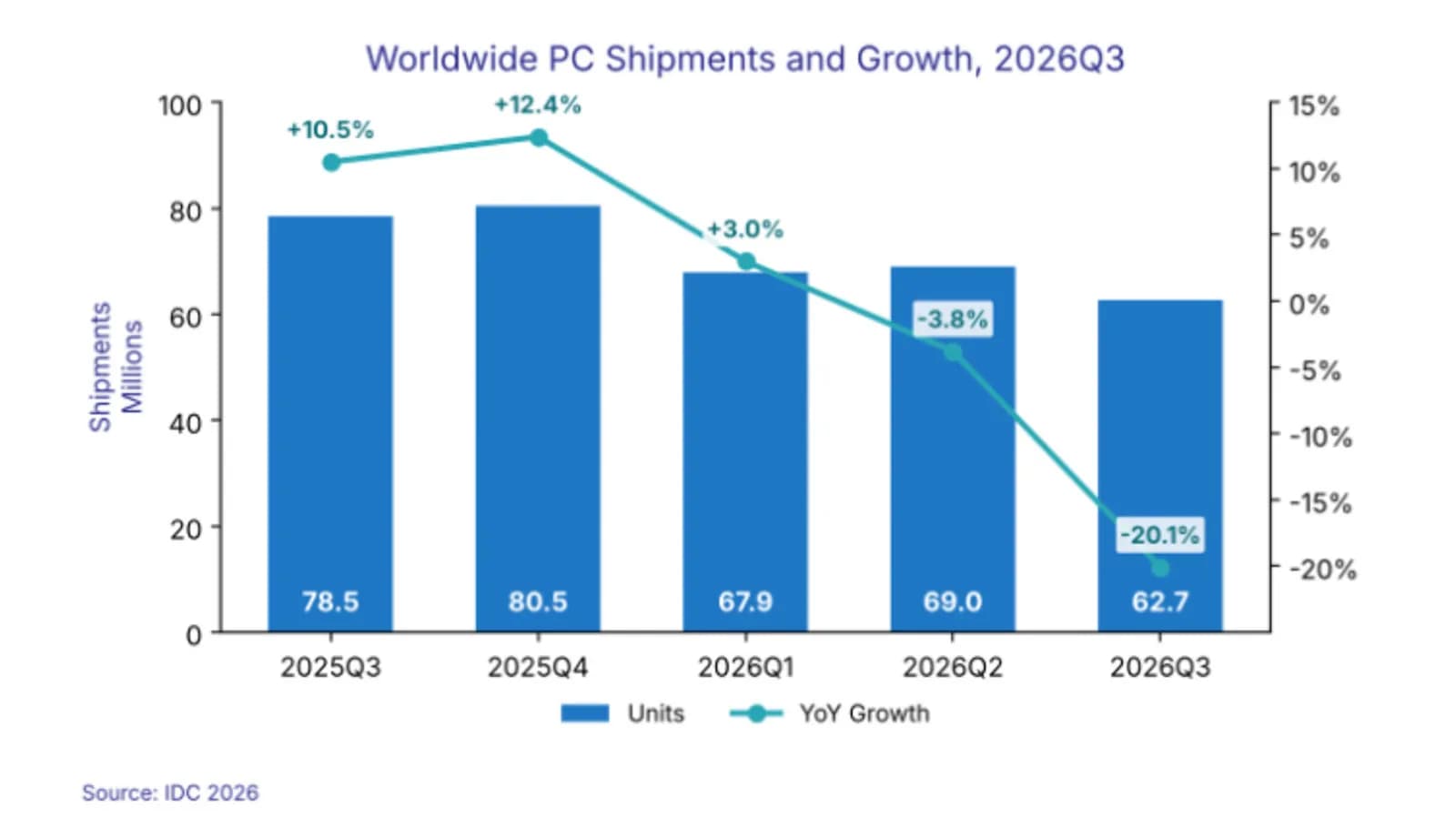
Recent data from IDC highlights a steep double-digit year-over-year decline in global PC shipments, signaling a profound shift in hardware demand that impacts local development environments and tech infrastructure.