
Anbernic's Dual-Screen Handheld Sets a New Standard for Retro Emulation

The Evolution of Retro Handheld Form Factors
The retro handheld gaming market has experienced a phenomenal boom over the last few years, driven by rapid advancements in mobile chipset efficiency and open-source software maturity. Manufacturers like Anbernic have continuously iterated on traditional single-screen designs, moving from Game Boy-inspired verticals to horizontal layouts capable of emulating everything from 8-bit classics up to sixth-generation home consoles. However, emulating systems that feature dual screens—most notably Nintendo's wildly successful DS and 3DS families—has historically posed a persistent ergonomic and visual challenge for hardware designers.
Historically, enthusiasts looking to play dual-screen titles on emulation handhelds have had to rely on awkward software scaling, side-by-side screen arrangements, or toggling between displays via hotkeys. These workarounds inevitably compromise the original design intent of games built around simultaneous top-and-bottom viewing. Recognizing this persistent niche in the retro community, hardware makers are now experimenting with native dual-screen form factors. Anbernic's latest announcement signals a mature pivot toward purpose-built devices designed to tackle specific emulation targets rather than relying on generalized multi-emulator compromises.
Dissecting the Hardware: Aspect Ratios and Display Synergy
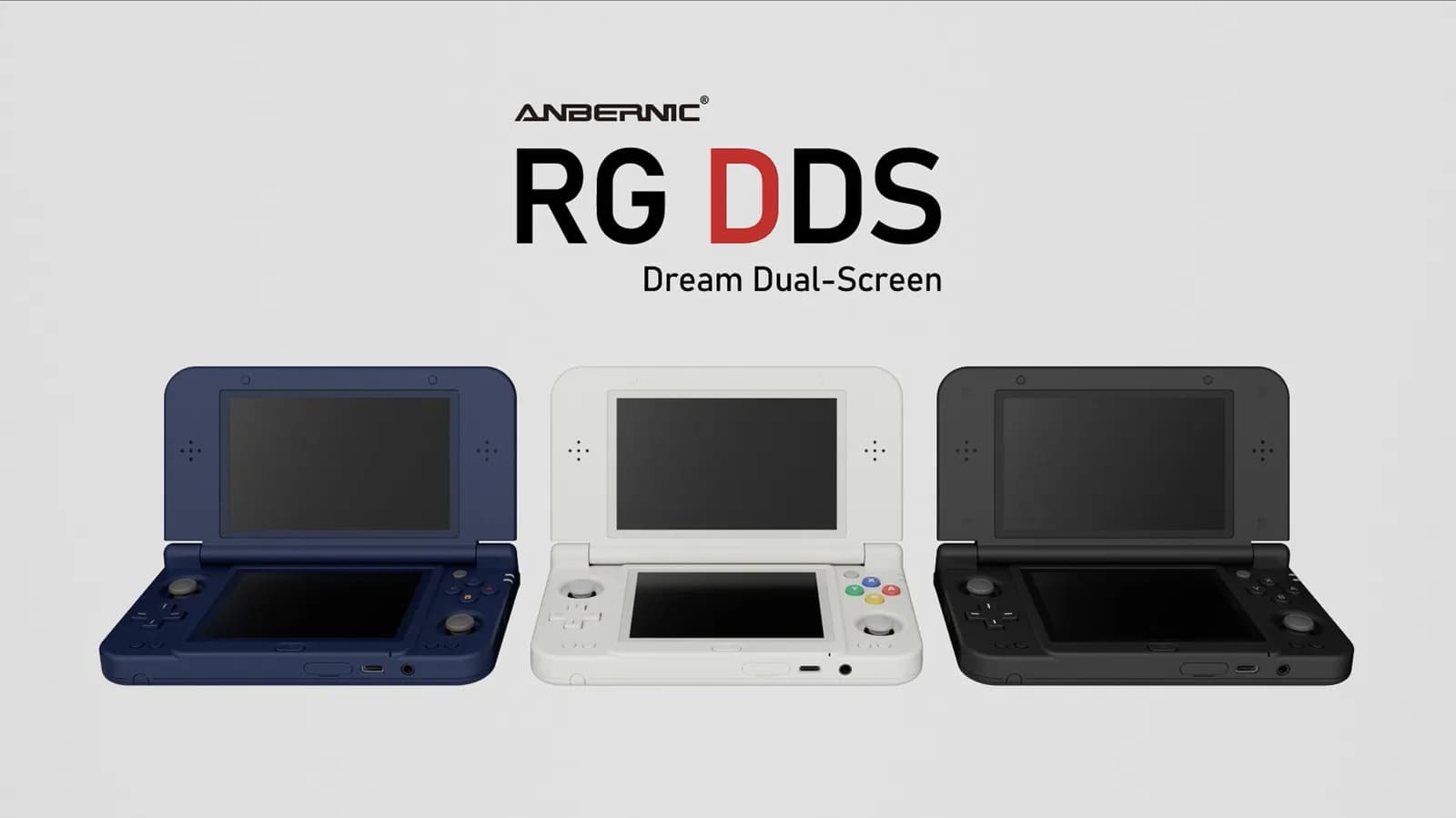
The standout feature of Anbernic's newly teased RG DDS handheld lies in its deliberate display configuration. Instead of opting for generic, off-the-shelf panels, the device pairs a primary top display boasting a 5:3 aspect ratio with a secondary bottom screen utilizing a traditional 4:3 layout. This architectural choice is not accidental; it is meticulously calculated to accommodate the native resolutions and screen proportions of targeted legacy handhelds without introducing severe letterboxing, pixel distortion, or awkward scaling artifacts.
For developers and enthusiasts who understand the complexities of graphics pipelines, rendering two distinct panels simultaneously while maintaining a stable frame rate is no small feat. The 5:3 top display provides a comfortable, wide viewing real estate that accommodates widescreen interfaces and HUD elements, while the bottom 4:3 panel handles touch inputs and secondary inventories seamlessly. By matching the hardware geometry directly to historical specifications, Anbernic bridges the physical gap between vintage dual-screen hardware and modern Android- or Linux-based emulation stacks.
The Technical Challenges of Dual-Screen Emulation
Bringing dual-screen handhelds to market involves navigating significant engineering hurdles, particularly regarding thermal management, battery life, and software optimization. Powering two distinct panels simultaneously places a heavier drain on the battery, requiring careful component selection to ensure respectable play sessions on the go. Furthermore, form factor constraints mean that engineers must pack complex hinge mechanisms, ribbon cables, and cooling solutions into a shell that remains comfortable for extended gaming sessions.
On the software side, emulation packages like Citra and its spiritual successors must be heavily optimized to leverage dual screens natively. Operating systems running on these handhelds need robust window-manager support to handle touch input redirection, custom screen layouts, and seamless audio routing between tasks. Developers working within the custom firmware community will undoubtedly play a crucial role in tailoring user interfaces to exploit this new hardware layout to its fullest potential.
Why This Matters for the Retro Gaming Community
For dedicated retro gaming fans, the introduction of a native dual-screen device represents the holy grail of portable emulation. The Nintendo 3DS library contains hundreds of masterpieces that have largely remained trapped on original hardware due to the severe limitations of single-screen emulation layouts on smartphones or standard handhelds. Experiencing these titles with correct physical proportions and tactile controls transforms the user experience from a technical compromise into an authentic recreation of the original play style.
Beyond just playing games, this hardware milestone speaks volumes about the maturity and responsiveness of the niche hardware market. Manufacturers are no longer just cloning historical form factors; they are actively listening to community feedback and engineering bespoke solutions for specific software libraries. This shift expands the boundaries of what open-source portable devices can achieve, validating the demand for specialized, non-generic consumer electronics.
Ecosystem Impact and Developer Implications
The arrival of dedicated dual-screen emulation hardware creates exciting new avenues for software developers and homebrew creators. When a piece of hardware introduces a unique physical constraint or layout, it often sparks a wave of creative software development. Programmers working on emulator frontends, custom kernels, and standalone applications will need to update their codebases to support dual-display setups out of the box, improving the overall software ecosystem for future devices.
Moreover, indie game developers who design modern titles with retro aesthetics might find inspiration in these dual-screen form factors. Crafting games that intentionally utilize two displays can lead to innovative puzzle mechanics, inventory management systems, and user interfaces that simply cannot be replicated on standard single-screen smartphones or traditional handheld consoles. As hardware diversity increases, software design naturally evolves to match it.
Looking Ahead: The Future of Specialized Emulation Devices
As Anbernic prepares to bring the RG DDS to market, the broader industry will be watching closely to see how consumers and reviewers respond to its ergonomics, build quality, and software integration. If this device proves successful, it could pave the way for an entire sub-category of multi-screen retro handhelds, opening the door for more ambitious emulation projects and refined hardware designs.
Ultimately, this release highlights the relentless ingenuity of the retro hardware scene. By refusing to settle for one-size-fits-all solutions, manufacturers are proving that there is a thriving, passionate market for devices built specifically to honor gaming history with technical precision. For developers, engineers, and players alike, the future of portable emulation has never looked more adaptable or inventive.
Source: engadget.com