
Navigating Grok's Access Tiers: The Realities and Trade-Offs of Free AI Compute

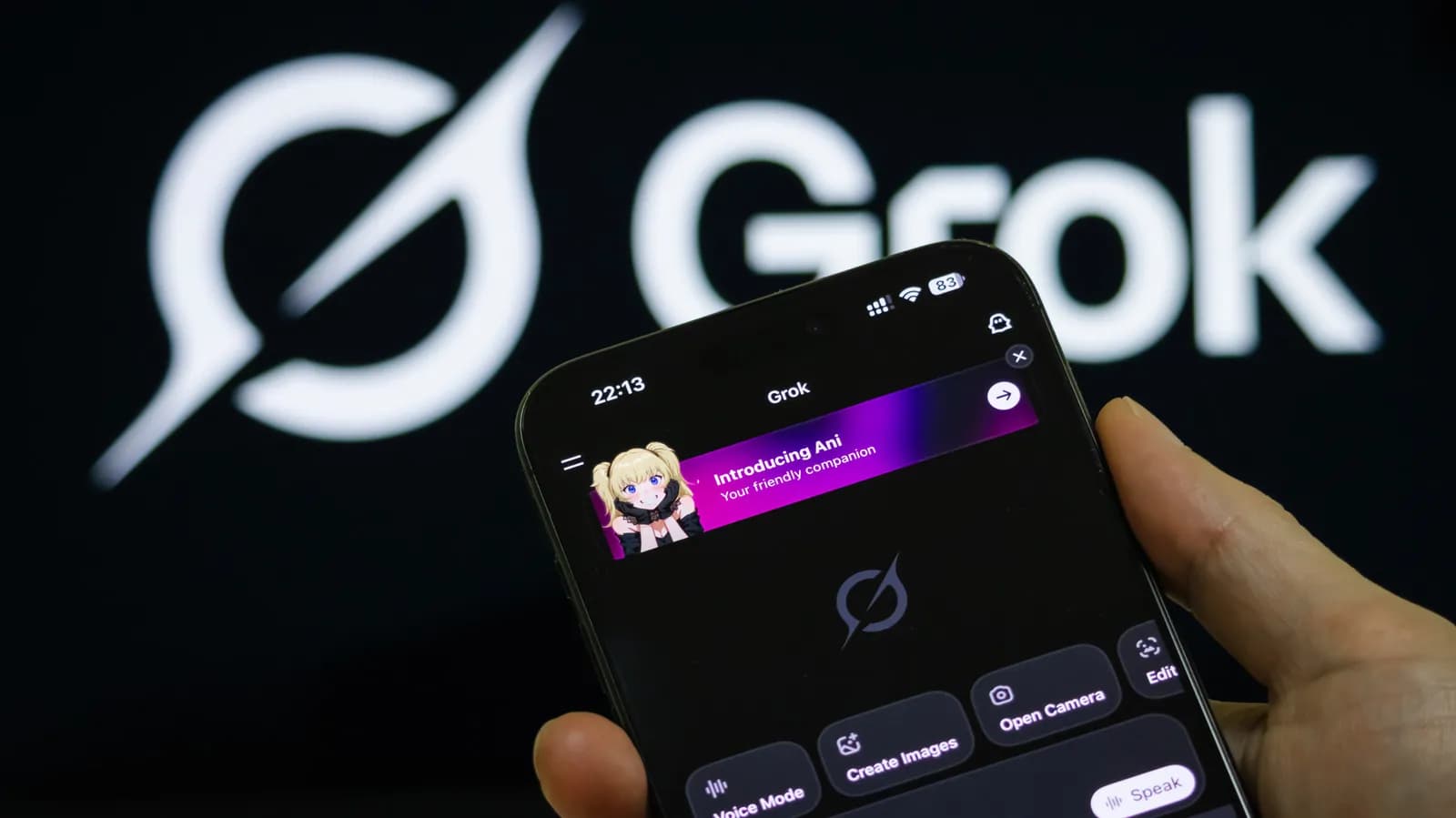
In the fiercely competitive ecosystem of generative artificial intelligence, pricing strategies have become just as pivotal as model architectures. From the early days of completely open access experiments to today's highly structured freemium products, artificial intelligence companies face an unrelenting tension: offering enough free utility to capture everyday mindshare while managing astronomical server bills. Elon Musk's xAI and its flagship conversational assistant, Grok, exemplify this delicate balancing act. While initial rollouts kept the model behind strict subscription paywalls, the introduction and refinement of a complimentary access layer has brought new dynamics to light, revealing sharp contrasts between what users can try for free and what remains gated behind premium tiers.
The Evolution of Grok's Distribution Model
When xAI first unveiled Grok, the assistant was positioned not as a universally accessible public utility, but as an exclusive value-add for premium subscribers within Musk's broader software ecosystem. This distribution decision mirrored the company's early priorities. At that stage, compute resources were heavily constrained, training clusters were expanding at breakneck speed, and the primary objective was to reward early adopters while battle-testing the model on real-world inputs without crashing infrastructure under unmetered demand.
However, an AI model that remains strictly paywalled risks isolation in an industry defined by network effects and virality. Competitors like OpenAI, Anthropic, and Google spent years establishing immense consumer footprints precisely because millions of users could explore their base models without opening their wallets. To prevent Grok from being overshadowed by easily accessible alternatives, xAI steadily broadened access. Yet, as with nearly all modern frontier models, the resulting free tier arrived with substantial functional guardrails designed to keep infrastructure sustainable.
Dissecting the Free Tier: What Users Can Actually Touch
Examining the free experience reveals a deliberately calibrated feature set. Unpaid users typically gain access to lightweight iterations or constrained quotas of the core conversational engine. While this enables standard text generation, basic queries, and surface-level brainstorming, several advanced modalities and compute-intensive workflows remain firmly restricted. Complex multi-step reasoning, real-time deep research integrations, and heavy media analysis often require substantial inference budgets that free tiers simply cannot support on an ongoing basis.
Rate limiting serves as the primary barrier. Free users routinely encounter strict token caps and prompt quotas that reset across multi-hour intervals. Once a user triggers these thresholds, the system either throttles response latency, downgrades the active session to a smaller and less capable fallback model, or halts interactions altogether until the cooldown window expires. For casual curiosities, these boundaries are manageable; for anyone attempting continuous research, code generation, or iterative problem solving, the ceilings quickly become apparent.
The Underlying Infrastructure Costs of Modern Inference
To understand why these limitations exist, one must examine the brutal unit economics of modern deep learning. Unlike traditional web applications where serving a database request incurs fractions of a cent across millions of visits, running autoregressive transformer models demands continuous, dedicated GPU compute. Every single token produced requires matrix multiplications across billions of parameters. When millions of users simultaneously prompt an assistant, the cumulative electricity, hardware depreciation, and networking overhead reach staggering figures.
Frontier AI labs have discovered that offering unrestrained inference is financially unsustainable without a clear conversion pipeline. Free tiers essentially function as customer acquisition vehicles rather than charitable services. Every prompt served to a non-paying user represents an operational expenditure subsidized by investors or enterprise revenue. Consequently, providers like xAI must fine-tune their throttle points so that users experience enough capability to recognize the model's value, but encounter friction precisely at the moment they attempt to rely on it for critical productivity workflows.
Developer and API Implications
For software engineers and system architects, the consumer-facing free tier offers an interesting preview, but it is rarely the environment where production decisions are made. Developers evaluating Grok for real-world integration must look directly at API access, token pricing, context window benchmarks, and rate allocations. While web-interface free tiers provide a rapid playground for evaluating tone, reasoning style, and prompt adherence, they offer zero reliability for automated pipelines, external agents, or backend services.
Moreover, the divergence between consumer subscription tiers and developer programmatic endpoints creates two distinct user journeys. Developers require deterministic outputs, low latency, high concurrency limits, and strict service-level agreements. Even if an AI provider grants nominal free trial credits to test an API, developers must architect their software around predictable per-token billing models. Grok's evolving presence in the developer sphere relies on how competitive its raw token pricing and throughput metrics are against prevailing industry workhorses like Claude 3.5 Sonnet or GPT-4o mini.
Market Competition and the Search for Market Share
The restrictions observed in Grok's free tier do not exist in a vacuum; they reflect broader industry trends where every major player is recalibrating consumer access. OpenAI has shifted users between varying generations of GPT models depending on aggregate server traffic, while Google utilizes its Gemini family to cross-promote cloud storage and productivity suites. Anthropic maintains narrow message limits on its free web interface to protect server capacity for enterprise clients.
Within this crowded arena, Grok's primary differentiation stems from its cultural personality, direct integration into social data streams, and its positioning as an unfiltered, highly agile conversational engine. However, if casual users feel that free quotas are too punitive or that performance degrades too sharply after only a handful of interactions, the friction may drive them back to competing interfaces that offer more generous daily allowances. The stakes are immense: retaining active daily users is critical for collecting alignment feedback, benchmarking usage patterns, and maintaining cultural relevance.
The Long-Term Outlook for Freemium AI
Looking ahead, the tension between free functionality and premium monetization is likely to intensify before it stabilizes. As models become more agentic—autonomously browsing documentation, writing tests, executing code in sandboxes, and orchestrating multi-agent discussions—the average computational cost per prompt will climb significantly. Simple question-and-answer interactions may become virtually free to deliver thanks to smaller, distilled edge models, but complex reasoning traces will demand premium infrastructure.
For xAI and its ecosystem, maintaining an attractive free tier while continuing to scale massive data centers will require constant algorithmic optimization. Advancements in speculative decoding, quantization, and specialized inference silicon will determine whether future iterations of Grok can afford to be more generous with non-paying users. Until those architectural breakthroughs fully materialize, users must navigate the platform with realistic expectations: the free tier provides an intriguing window into the model's capabilities, but serious computational horsepower remains an unapologetically premium commodity.
Key Takeaway
Grok's structured free tier is a clear manifestation of modern AI economics. While casual users can explore foundational features and sample the model's distinctive voice without cost, strict prompt quotas and gated reasoning features underscore that scalable intelligence is far from free to run. For developers and professionals, these constraints reinforce the necessity of looking beyond consumer interfaces and grounding technical strategies in dedicated API ecosystems.
Source: engadget.com