
The Agentic Era: Dissecting the Battle Between OpenAI Dot and Meta Muse

Introduction to the Autonomous Agent Frontier
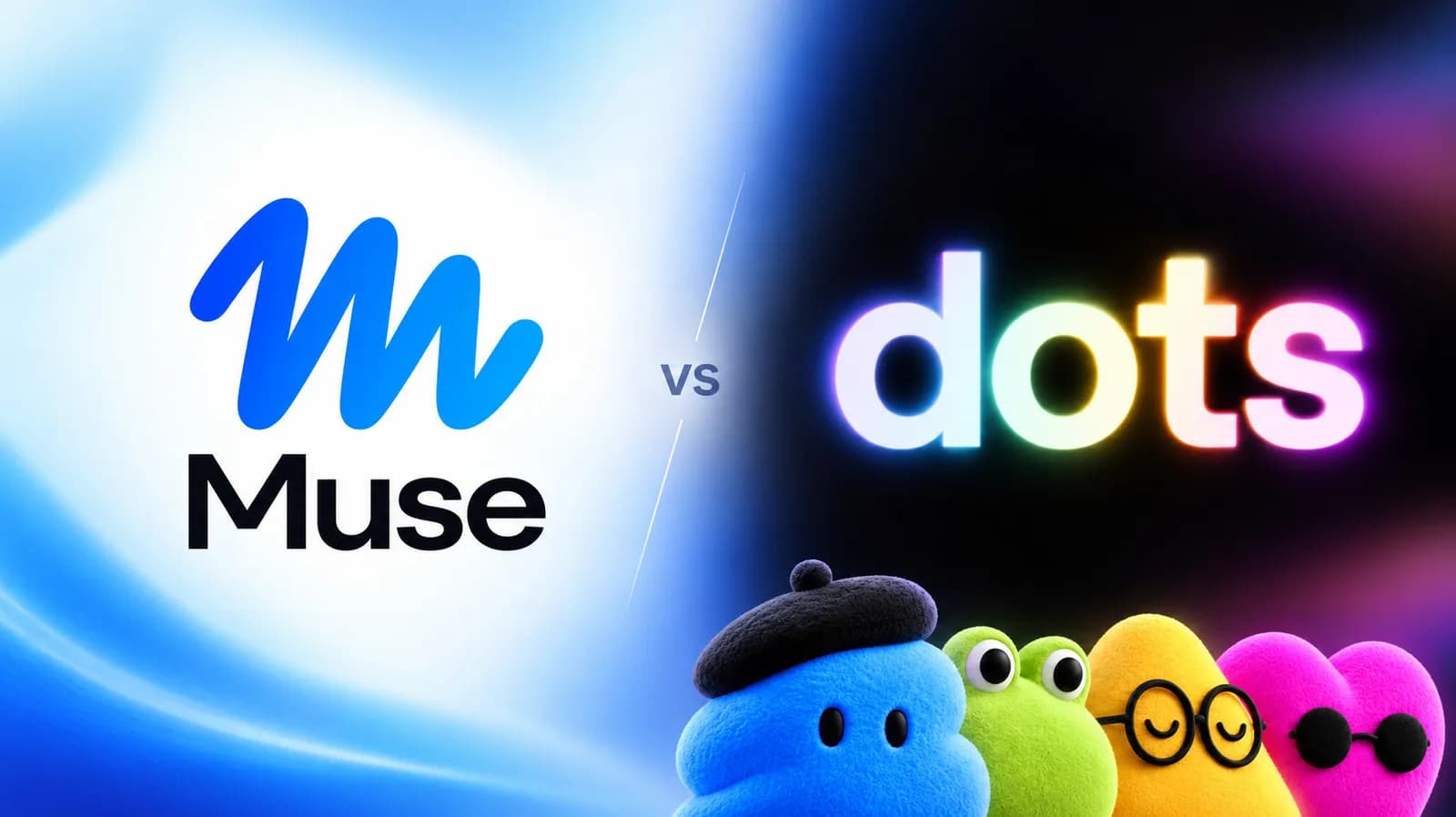
The artificial intelligence landscape is shifting rapidly from conversational chat interfaces to autonomous agents capable of performing complex, multi-step workflows. As industry heavyweights race to capture the next wave of productivity, two notable contenders have emerged at the forefront: OpenAI's Dot and Meta's Muse. These systems represent distinct approaches to agentic AI, balancing reasoning capabilities against integration, cost, and developer accessibility.
While traditional large language models focused primarily on generating text or writing snippets of code upon direct request, agentic architectures aim higher. They operate with a degree of autonomy, planning tasks, invoking external tools, and executing complex directives with minimal human hand-holding. The showdown between OpenAI and Meta in this arena is more than a marketing battle; it signals a fundamental restructuring of how software and services will interact with end-users and developers alike.
Architectural Philosophies and Capabilities
Under the hood, OpenAI Dot and Meta Muse embody divergent design philosophies. OpenAI leans heavily into advanced generalized reasoning, leveraging reinforcement learning techniques to ensure that its agent can handle highly abstract problem-solving, deep data analysis, and code generation across diverse environments. Dot is engineered to act as a versatile digital assistant capable of bridging disparate enterprise tools and unstructured datasets.
Conversely, Meta Muse often emphasizes multimodal synthesis and deep integration with social graphs, media generation, and consumer-facing ecosystems. Muse's architecture is tailored for fluid interactions involving rich media, real-time collaboration, and localized execution paradigms. While both agents share the fundamental goal of reducing human friction in daily workflows, their underlying strengths dictate where each will excel—OpenAI leaning toward technical and analytical rigor, and Meta focusing on immersive, connected experiences.
Pricing Strategies and Monetization Models
Economics will ultimately dictate widespread adoption, and OpenAI and Meta have adopted notably different pricing frameworks for their agent ecosystems. OpenAI typically employs a tiered subscription model coupled with consumption-based API billing for developers who wish to embed Dot into custom software architectures. This model aligns costs directly with token usage and computational complexity, favoring enterprise clients who can justify high ROI on automation.
Meta, on the other hand, frequently adopts a more open or subsidized approach, leveraging its massive advertising infrastructure and hardware footprint to offset the costs of running advanced models like Muse. By lowering the barrier to entry for consumers and developers, Meta aims to capture critical market share rapidly, establishing Muse as an omnipresent utility rather than an exclusive luxury good. This divergence in monetization could create distinct economic pressures for independent developers building on top of these respective platforms.
Accessibility, Openness, and Ecosystem Integration
Developer adoption relies heavily on ease of integration and the openness of the surrounding ecosystem. OpenAI provides robust developer tooling, comprehensive API documentation, and sandboxed environments for testing Dot's autonomous behaviors. However, critics often point to a relatively closed garden when it comes to modifying core model weights or hosting instances on proprietary on-premise infrastructure.
Meta has historically championed open-science initiatives, and while commercial flagship agents like Muse involve proprietary layers, the company's broader ethos often influences developer-friendly tooling and interoperability. Access models vary widely, ranging from closed beta rollouts for enterprise partners to public testing phases for everyday consumers. For developers, evaluating these platforms means weighing OpenAI's polished, reliable developer experience against Meta's potential for wide reach and flexible integration pathways.
Security, Privacy, and Trust Challenges
Deploying autonomous agents introduces severe security and privacy hurdles that both OpenAI and Meta must navigate carefully. Because agents like Dot and Muse have the capability to invoke external APIs, read sensitive files, and execute code on behalf of users, the attack surface expands exponentially. Prompt injection vulnerabilities, unintended data exfiltration, and unauthorized actions pose significant risks to both enterprise deployments and consumer trust.
Both companies are investing heavily in guardrails, permissioning systems, and alignment research to prevent agents from going rogue or mishandling confidential information. Yet, striking the right balance between autonomy and safety remains an elusive target. Developers building applications powered by these agents must implement rigorous oversight layers, as relying entirely on the agent's internal safety checks can leave systems dangerously exposed to malicious manipulation.
The Developer Perspective: Choosing Your Stack
For software engineers and product architects, the emergence of Dot and Muse presents both an opportunity and a strategic dilemma. Integrating these agents can supercharge software with advanced automation, natural language interfaces, and self-healing workflows. However, tying a product too closely to a single vendor's proprietary agent architecture risks vendor lock-in and vulnerability to sudden price adjustments or policy shifts.
Developers must carefully assess whether OpenAI's analytical precision or Meta's multimodal versatility better suits their specific domain requirements. Building modular systems that can swap out underlying agent backends is becoming an increasingly popular architectural pattern, allowing teams to leverage the strengths of multiple providers while insulating their applications from rapid industry volatility.
Conclusion: The Road Ahead for Autonomous AI
The rivalry between OpenAI Dot and Meta Muse marks a defining chapter in the evolution of artificial intelligence. As these agents mature from experimental novelties into robust production tools, they will redefine the boundaries of human-computer interaction and software engineering. While questions surrounding cost, privacy, and architectural openness remain unresolved, the relentless pace of innovation ensures that autonomous agents will soon become a ubiquitous layer of the modern digital stack.
Source: engadget.com