
Navigating the Post-Boom Hardware Slump: What the Latest PC Shipment Data Means for Developers

The Anatomy of a Historic Hardware Correction
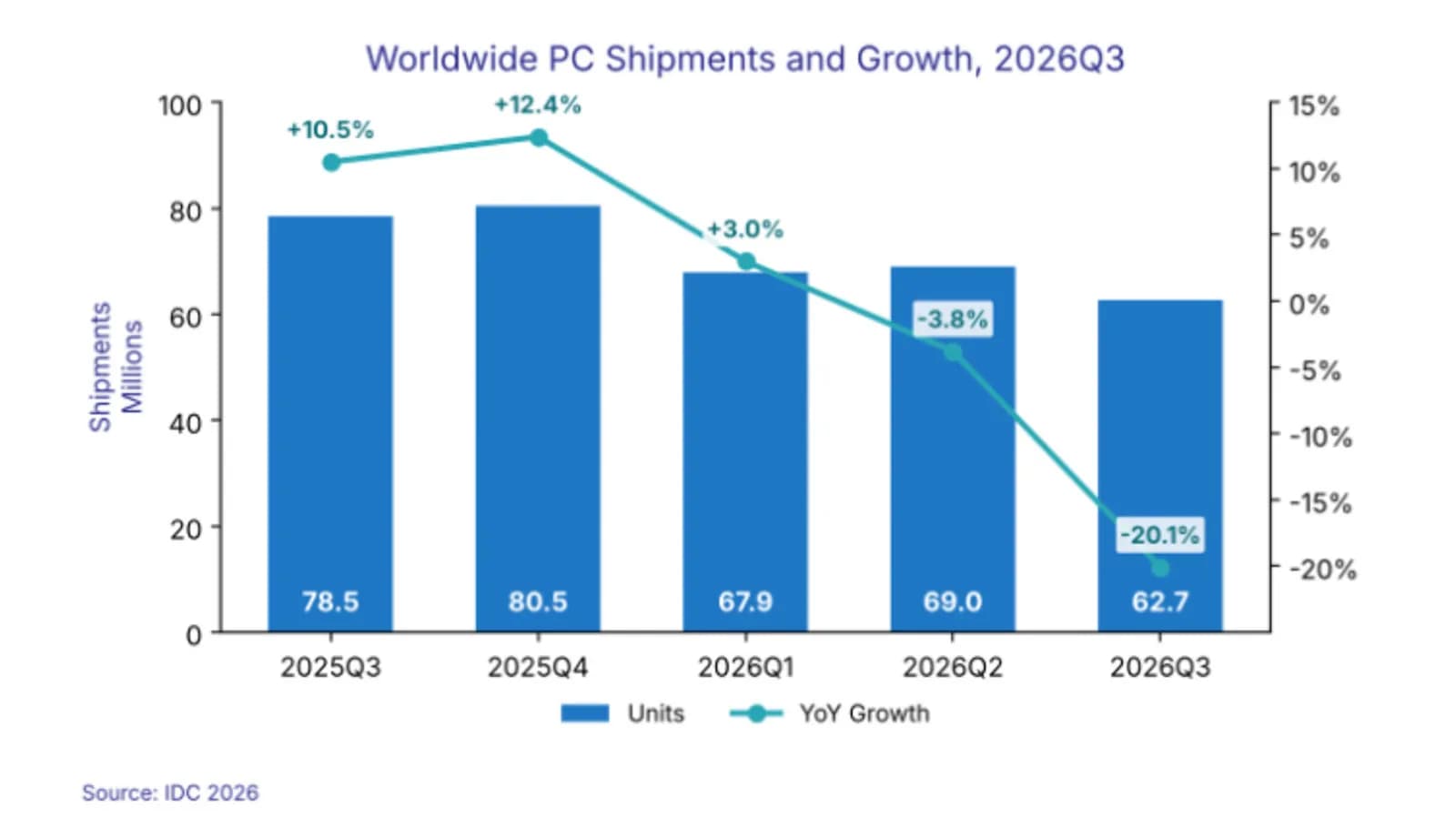
The global personal computer market is undergoing a drastic rebalancing phase after years of unprecedented pandemic-driven expansion. According to recent market analysis data from the International Data Corporation (IDC), worldwide PC shipments experienced a staggering year-over-year contraction of twenty percent during the third quarter. This dramatic drop is not merely a seasonal blip; it represents a sharp cooling off for an industry that enjoyed relentless hardware demand while remote work and learning became the global standard.
As macroeconomic pressures mount, supply chain bottlenecks have largely transitioned into inventory gluts. Manufacturers and retailers are suddenly holding massive surpluses of consumer and enterprise machines, forcing them to slash prices, delay future production lines, and rethink their distribution strategies. For the broader technology ecosystem, this contraction marks a definitive end to the pandemic boom era, pushing both hardware vendors and consumers into a period of prolonged economic caution.
Macroeconomic Headwinds and Enterprise Caution
The root causes of this sharp decline extend far beyond simple consumer fatigue. Widespread inflation, soaring energy costs, and fluctuating currency valuations have squeezed both household budgets and corporate IT spending. Businesses that aggressively upgraded their fleets to support hybrid workforces in previous years are now extending the replacement lifecycle of their existing hardware. Rather than investing in new physical infrastructure, organizations are opting to optimize their current assets.
Furthermore, enterprise technology budgets are increasingly shifting away from traditional client hardware toward cloud services, cybersecurity resilience, and specialized artificial intelligence workloads. When CFOs look for line items to trim in an uncertain fiscal climate, workstation and laptop upgrades are often among the first to be postponed. This conservative approach by enterprise procurement departments has created a significant shockwave across the hardware supply chain, dampening expectations for a rapid market recovery in the near term.
Implications for Local Development Workflows
While a twenty percent drop in shipments might initially sound like a consumer hardware story, it carries notable implications for software engineers and development teams. As hardware refresh cycles stall, developers must write and maintain code that runs efficiently on aging local machines. The luxury of assuming every developer has access to the absolute latest multi-core processor and vast amounts of local RAM is beginning to fade, placing a renewed emphasis on performance profiling, resource optimization, and lightweight tooling.
At the same time, the hardware slump accelerates the industry-wide migration toward cloud-based development environments. When provisioning new physical workstations becomes difficult or cost-prohibitive, engineering organizations increasingly turn to remote development servers, virtualized containers, and cloud IDEs. This shift democratizes access to compute resources, allowing teams to run heavy compilation tasks and complex test suites in the cloud rather than relying on high-end local rigs.
The Silicon Ripple Effect: From Client PCs to Server Infrastructure
The downturn in PC shipments inevitably alters the semiconductor manufacturing landscape, with cascading effects for the entire tech sector. Major chipmakers who rely heavily on consumer PC sales are seeing their revenues contract, forcing them to reallocate fabrication plant capacity toward more resilient sectors, such as automotive chips, data center accelerators, and specialized AI hardware. This strategic pivot by silicon foundries can shift the pace of innovation for next-generation processors.
For developers, the health of the semiconductor industry dictates the future of compute performance. If chip manufacturers slow down their consumer desktop roadmaps, the arrival of new instruction sets, advanced vector extensions, and architectural leaps could be delayed. Conversely, the intense focus on data center and high-performance computing silicon ensures that cloud-based developer infrastructure will continue to receive cutting-edge hardware upgrades, even if the local laptop market remains stagnant.
Navigating Market Volatility and Open Questions
As the industry navigates this uncharted territory, several open questions remain regarding the long-term trajectory of personal computing. Will the emergence of localized artificial intelligence capabilities—such as dedicated neural processing units built into modern client silicon—be enough to spark a new wave of hardware upgrades? Or will developers and consumers continue to stretch their existing devices, prioritizing software efficiency over hardware replacement?
Moreover, the shifting balance between client-side processing and cloud offloading will continue to challenge software architects. Designing applications that can dynamically scale their resource footprints based on the fluctuating capabilities of aging hardware is becoming a crucial engineering skill. As macroeconomic conditions continue to evolve, the ability to build resilient, efficient software that performs well across diverse hardware generations will remain a core competency for modern development teams.
Final Thoughts on the Hardware Downturn
The steep decline in global PC shipments serves as a stark reminder of the cyclical nature of the technology industry. While the headline numbers point to a challenging period for hardware vendors, they also catalyze important adaptations in software engineering and IT strategy. By forcing a renewed focus on resource efficiency, accelerating the adoption of cloud development environments, and encouraging smarter hardware lifecycle management, this market correction ultimately pushes the developer ecosystem toward greater maturity and resilience.
Source: engadget.com