
Rewriting the Algorithm: Meta's Bid to Hand Feed Control Back to Users

The Algorithmic Black Box Dilemma
For over a decade, social media platforms have relied heavily on black-box recommendation engines designed to maximize engagement, watch time, and ad impressions. While these complex machine learning models excel at keeping users glued to their screens, they frequently disconnect from what individuals actually want to consume. Users are often served an endless stream of sensationalized content, viral videos from strangers, and algorithmic tangents that leave them feeling drained rather than connected. The constant friction between what maximizes platform metrics and what provides genuine human value has become a defining pain point of modern digital life.
The underlying architecture of these feeds has traditionally been guarded like a proprietary secret. Engineers trained models on vast datasets of user interactions—likes, shares, watch duration, and dwell time—to predict the next piece of content that would capture attention. However, this hyper-focused optimization rarely accounted for nuance, context, or shifting personal moods. If a user paused briefly on a controversial post out of sheer shock, the system frequently interpreted that micro-interaction as an endorsement, flooding their timeline with similar material. This fundamental flaw in feedback loops created an urgent need for more transparent, user-guided calibration tools.
What Meta Is Changing in the Feed Architecture
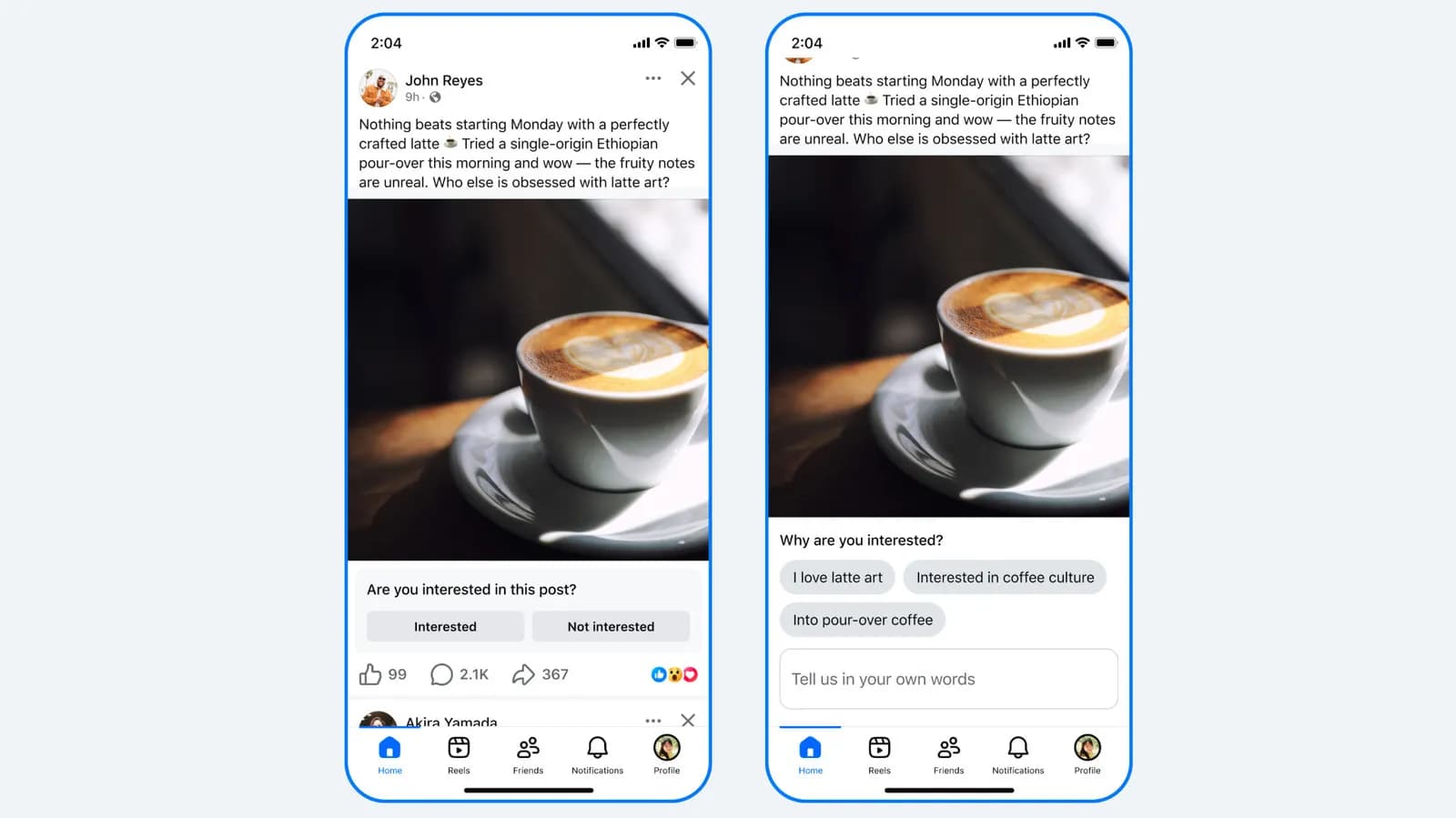
In response to mounting user fatigue and regulatory scrutiny regarding content curation, Meta has begun rolling out features that allow individuals to exert more direct control over their Facebook and Instagram feeds. Rather than leaving the entire burden of curation to invisible neural networks, these updates introduce explicit configuration mechanisms. Users can now more easily signal their preferences, flag content types they wish to see less often, and explicitly tune the algorithmic parameters that govern their digital spaces. It represents a notable departure from pure bottom-line optimization toward a hybrid model of machine learning and manual user governance.
These adjustments are designed to operate within sensible boundaries, ensuring that safety policies, content moderation guidelines, and legal compliance remain intact while still giving individuals a louder voice in the process. By blending explicit user feedback with implicit behavioral data, the system attempts to build a more accurate profile of personal interest. It is a technical balancing act: engineering teams must update inference pipelines to ingest these direct user signals without destabilizing the broader recommendation infrastructure that keeps the platform running at scale.
The Engineering Challenge of Explicit User Feedback
Implementing user-driven adjustments into a massive recommendation system is no trivial engineering feat. Traditional machine learning pipelines are optimized for fast inference over petabytes of data, relying primarily on automated feature stores and real-time streaming updates. When you introduce explicit user controls—such as toggles to suppress specific topics or prioritize friends over creators—you add a layer of hard constraints that the model must respect in real time. This requires updating the scoring functions and ranking algorithms to heavily weight these explicit inputs over automated predictions.
Furthermore, developers must contend with the paradox of user input: what people say they want often diverges sharply from what they actually click on. Designing a system that respects explicit preferences while managing the inevitable edge cases—such as users inadvertently blinding themselves to important updates or trapping themselves in extreme echo chambers—requires sophisticated UX design coupled with robust backend guardrails. Engineers have to build fallback mechanisms that prevent these customization layers from breaking the discovery features that help healthy communities thrive.
Why This Matters for the Future of Social Platforms
This shift by Meta reflects a broader industry-wide reckoning regarding algorithmic transparency and platform governance. As lawmakers worldwide push for greater user autonomy and digital rights, tech giants can no longer afford to treat recommendation systems as completely opaque monopolies of attention. Giving users tangible tools to shape their digital environments is fast becoming a baseline expectation rather than a luxury feature. It marks a philosophical pivot away from paternalistic algorithmic design toward a collaborative model where platforms and users share the steering wheel.
For the developer and product communities, this trend underscores a vital lesson: building sustainable software requires designing for human agency. Systems that completely bypass user intent in pursuit of narrow optimization metrics inevitably breed resentment and churn. By opening up APIs and backend controls for personalization, tech companies are acknowledging that long-term retention relies on trust and satisfaction, not just psychological capture. This could pave the way for a new standard in software architecture where user-facing preference sliders become as ubiquitous as dark mode toggles.
Navigating the Guardrails and Limitations
While handing over feed control sounds liberating, it comes with inherent boundaries. Meta’s initiative operates strictly within reason, meaning that foundational content moderation rules, safety filters, and commercial obligations remain untouched. Users cannot use these preference tools to bypass safety protocols or dismantle the underlying ad-supported business model that funds the infrastructure. These guardrails are essential to prevent bad actors from gaming the system, but they also mean that absolute freedom of curation remains out of reach.
Another open question is how effectively these controls will be integrated into the daily user experience. If the preference settings are buried three menus deep, the vast majority of users will never touch them, rendering the engineering effort largely symbolic. To make a genuine impact, the feedback loops must be frictionless—allowing users to course-correct their feeds with a single tap directly from the timeline interface. Overcoming this friction is the ultimate hurdle for product teams working on recommendation system UX.
Looking Ahead: The Next Evolution of Curation
As these feed-tuning features mature, they could lay the groundwork for more advanced, agentic approaches to content discovery. Imagine a future where users deploy customized client-side filters or AI agents that negotiate directly with platform algorithms on their behalf, filtering out noise according to hyper-specific, locally stored preferences. While Meta’s current updates are a step toward this vision, they represent just the beginning of a long-term transformation in how we interact with centralized digital feeds.
Ultimately, the success of Meta's latest adjustments will be measured by whether they genuinely improve the daily digital experience or simply serve as a surface-level compliance feature. For developers and tech observers alike, watching how these recommendation models adapt to direct user interference will provide a fascinating case study in balancing automation with human autonomy. The era of the unquestioned algorithmic feed is drawing to a close, replaced by a more negotiable, participatory digital landscape.
Source: engadget.com