
WhatsApp Shakes Up Communication with Frictionless Guest Calling and Calendar Sync

Introduction to the Frictionless Shift in Messaging
In the fiercely competitive ecosystem of global communication platforms, user acquisition and onboarding friction have always been primary metrics for product growth. Historically, robust end-to-end encrypted messaging services like WhatsApp demanded a strict prerequisite: to interact on the platform in any capacity, participants had to register a phone number, download the native mobile application, and provision a full user profile. This architectural design, deeply rooted in secure mobile identity verification, inherently limited the platform's utility for spontaneous, cross-platform, or temporary interactions. However, shifting industry paradigms and changing user expectations around ad-hoc collaboration are prompting a major strategic rethink.
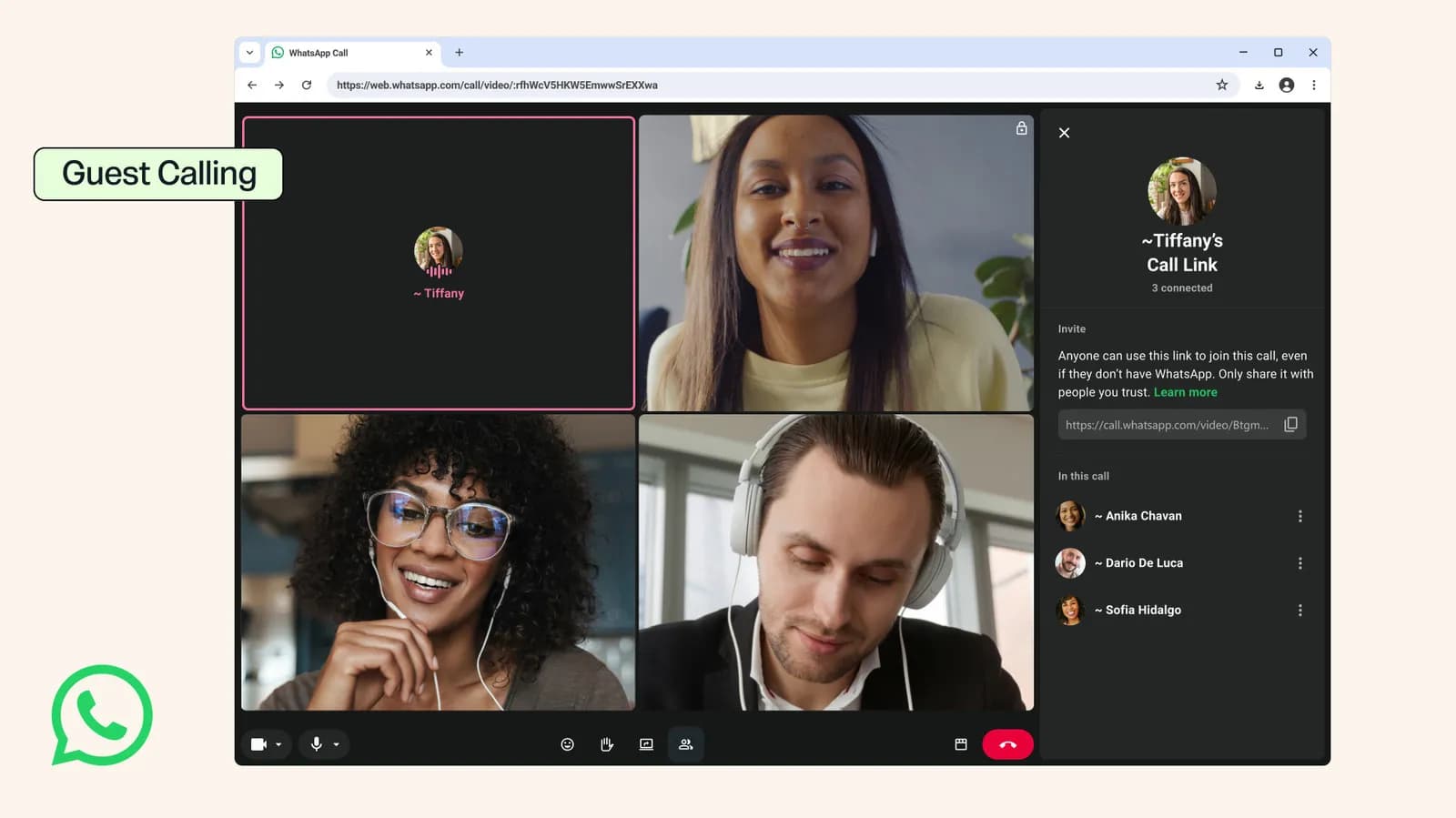
By introducing a guest calling option that permits individuals to join calls without maintaining a traditional account, WhatsApp is effectively bridging the gap between walled-garden messaging apps and open web-conferencing tools like Zoom or Microsoft Teams. Coupled with imminent calendar synchronization features slated for rollout later in the year, this update signals an evolutionary step for the Meta-owned platform. For developers, product architects, and enterprise observers, this shift offers a fascinating look at how consumer-grade encryption apps are adapting to handle more flexible, productivity-oriented use cases.
The Architecture of Anonymous or Guest Access
Designing guest access for a platform built fundamentally on persistent cryptographic identities is no small engineering feat. In a standard WhatsApp session, end-to-end encryption relies on Signal Protocol sessions established between distinct, registered phone numbers that act as public-key identifiers. When introducing a guest who lacks a registered account, the system must negotiate a secure communication channel without permanently onboarding that participant into the core directory database. This likely involves the generation of ephemeral session tokens and temporary cryptographic keys that dissolve once the call terminates, preventing unauthorized access while maintaining the strict privacy guarantees users expect.
From a user experience standpoint, the friction reduction is immense. Instead of forcing a prospective client, casual acquaintance, or family member through an app-store download and registration loop just to participate in a voice or video discussion, a simple web link or direct invite can orchestrate the handshake. This design pattern mirrors modern web-based conferencing systems, but executed within the performance constraints and security parameters of a massive mobile-first infrastructure. It reflects a growing developer consensus that the best communication tools are those that require the absolute minimum setup time from the end user.
Bridging Messaging and Productivity with Calendar Integrations
Beyond ad-hoc calling, the announcement of upcoming calendar integrations points to a broader ambition: transforming WhatsApp from an asynchronous chat application into a centralized hub for scheduling and synchronous communication. Modern remote and hybrid work environments have accustomed knowledge workers to seamless calendar-to-call workflows, where clicking an event immediately launches a virtual room. By weaving calendar capabilities directly into its ecosystem, WhatsApp is stepping further onto turf traditionally occupied by dedicated enterprise productivity suites.
This integration presents intriguing technical and UX challenges. WhatsApp must interact smoothly with various calendar providers—such as Google Calendar, Apple Calendar, and Microsoft Outlook—without compromising its decentralized, privacy-focused ethos. Managing time zones, recurring schedules, and push notifications reliably across billions of devices running diverse operating systems requires robust backend synchronization services. For developers building workflows that intersect with customer communications, these native hooks could unlock powerful automation opportunities, allowing CRM systems or scheduling tools to trigger secure WhatsApp sessions automatically.
Why This Matters for the Competitive Landscape
The messaging market is mature, and organic growth increasingly relies on capturing adjacent use cases rather than simply adding baseline users. While competitors like Zoom, Microsoft Teams, and Google Meet have long dominated scheduled virtual meetings, they often lack the ubiquity and mobile penetration of WhatsApp, particularly in regions outside North America. Conversely, WhatsApp has dominated casual mobile chat and informal voice notes, but struggled to capture formal, scheduled business meetings or multi-party professional gatherings.
By simultaneously introducing frictionless guest calling and calendar tools, WhatsApp is deliberately blurring the line between casual social chatting and professional productivity. This convergence puts pressure on dedicated video conferencing tools to offer better messaging features, while challenging other messaging apps to streamline their event-planning workflows. For businesses and independent developers who rely on client communication, this evolution means fewer disparate apps are needed to manage customer touchpoints, potentially centralizing more client interactions within the WhatsApp ecosystem.
Security, Privacy, and Trust Considerations
Introducing guest access into a platform renowned for its rigorous privacy guarantees inevitably raises questions regarding security and abuse vectors. When users can join calls anonymously or via temporary links, bad actors might attempt to exploit these pathways for harassment, spam, or unauthorized eavesdropping. WhatsApp's engineering teams must implement robust rate-limiting, secure link-generation protocols, and moderation hooks to ensure that guest features do not compromise the safety of registered participants.
Maintaining end-to-end encryption across mixed sessions—where some participants are fully verified account holders and others are ephemeral guests—requires careful protocol design. The system must ensure that metadata leakage is minimized and that temporary session identifiers cannot be hijacked or reverse-engineered to track non-registered users outside the active call window. Balancing absolute privacy with user safety and abuse prevention remains one of the most difficult engineering tightropes in modern software development, making the rollout of these features a critical test for Meta's security infrastructure.
Developer and Ecosystem Implications
For the broader developer community, these updates hint at a maturing ecosystem where communication primitives are increasingly open and interoperable. While WhatsApp has historically maintained a tightly controlled API surface primarily aimed at enterprise customer service (via the WhatsApp Business API), moves toward frictionless web participation and calendar hooks suggest a more modular approach to user engagement. Developers looking to embed communication workflows into third-party applications will watch closely to see if these guest-calling capabilities eventually expose programmatic interfaces.
Furthermore, as consumer apps adopt features once exclusive to enterprise software, developers are challenged to build cleaner, more adaptable integrations. The expectation that any communication tool should sync with local calendars and permit instant web-based guest entry is becoming a universal design standard. Software engineers building client-facing applications must account for this shift, ensuring their own platforms can interoperate smoothly with evolving messaging giants.
Conclusion
WhatsApp's introduction of guest calling and calendar integrations represents a calculated evolution from a closed messaging utility into an open, productivity-ready communication platform. By lowering the barrier to entry for video and voice calls, the service is expanding its footprint into domains previously dominated by traditional web-conferencing software. While engineering teams must carefully navigate the complex intersections of end-to-end encryption, metadata protection, and abuse prevention, the payoff is clear: a more versatile, frictionless experience for billions of users worldwide.
Source: engadget.com