Anthropic Expands Claude's Capabilities with Editable Documents and Cowork Features

Introduction to Claude's Document Generation Evolution
The landscape of artificial intelligence assistants is undergoing a profound transformation. Moving beyond simple text-based conversational interfaces, major platforms are steadily evolving into comprehensive productivity suites. Anthropic has taken a significant leap forward in this direction by introducing native capabilities for Claude to generate editable documents, presentations, and collaborative workspaces directly within the chat environment. This release signals a shift in how knowledge workers and developers interact with large language models, bridging the gap between passive ideation and active artifact creation.
As AI assistants become more deeply integrated into daily workflows, the friction of copying and pasting generated text into separate document editors has long been a minor yet persistent bottleneck. By streamlining this process, Anthropic is positioning Claude not merely as a chatbot, but as an active collaborator capable of producing finished, malleable work products. Initially rolling out to high-tier subscribers, this capability sets the stage for a new paradigm in human-AI interaction where content generation and document structuring happen simultaneously.
The Core Feature Set: Documents, Slides, and Cowork
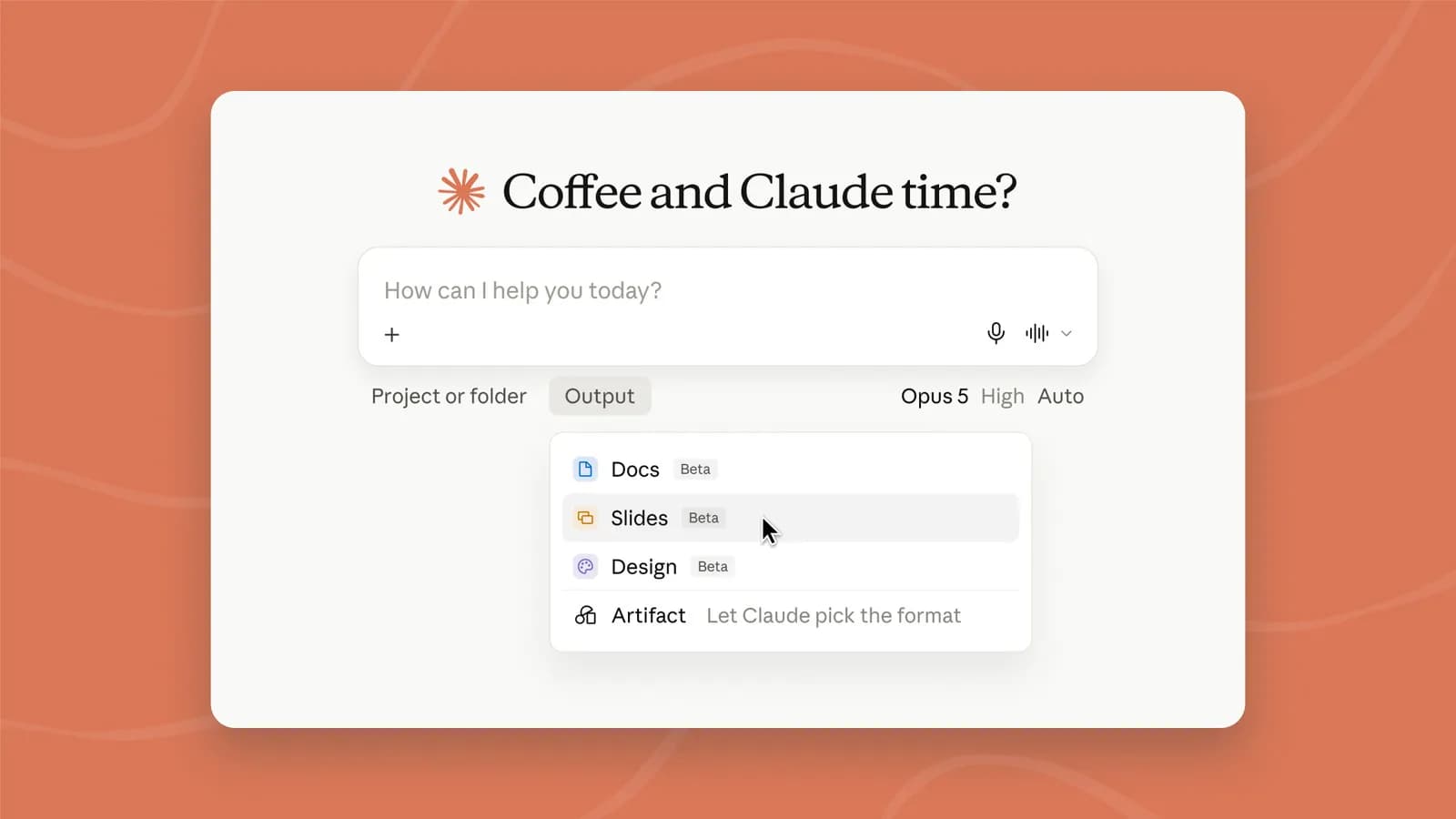
At the heart of this update is Claude's newfound ability to formulate structured documents and slideshows natively. Rather than outputting plain markdown text that requires manual formatting, the system can now organize thoughts into professional layouts that users can immediately edit, refine, and adapt. This capability moves beyond static code blocks or text snippets, offering a dynamic workspace where structure and content evolve in real-time alongside the user's instructions.
Alongside document and slide creation, the integration of Cowork capabilities points toward a more immersive, multi-faceted assistant experience. While traditional chat interfaces treat each prompt in isolation or within a linear history, collaborative work environments demand shared context, iterative editing, and persistent artifact management. By blending these elements into the chat flow, Anthropic is minimizing context switching, allowing creators, strategists, and developers to stay focused on their core tasks without constantly jumping between different software applications.
Context and Background: The Push Toward Native Productivity
The race to dominate the AI productivity space has accelerated dramatically over the past year. Competitors across the industry have raced to introduce canvas-like interfaces, collaborative features, and deep integrations with office suites. Anthropic’s latest move is a strategic response to this growing demand for friction-free productivity tools. Users no longer just want answers; they want deliverables that are ready for distribution, presentation, or further technical refinement.
Historically, AI models excelled at synthesis and brainstorming, but execution often required external toolchains. Developers had to take code out of chat windows to compile it, while writers had to move prose into word processors to format it. By embedding editable documents directly into the platform, Anthropic is addressing this architectural limitation. This evolution reflects a broader industry trend where the chat interface acts as the universal command center for a wide array of specialized digital tasks.
Why It Matters for Knowledge Workers and Teams
For everyday professionals, the introduction of editable documents and collaborative features reduces the cognitive load associated with formatting and structuring information. When an AI can autonomously assemble a cohesive slide deck or draft a polished brief that can be edited on the fly, the time spent on administrative and layout tasks drops significantly. This shifts the human role further toward editorial oversight, strategic direction, and creative curation.
Furthermore, team environments stand to benefit immensely from workflows that minimize the distance between ideation and documentation. When technical specifications, product roadmaps, or business proposals can be generated and tweaked interactively in a unified space, alignment happens much faster. It eliminates version control headaches during the initial drafting phase, allowing teams to iterate on AI-generated foundations collectively rather than in silos.
Developer and Industry Impact
From an engineering perspective, this feature rollout underscores the increasing complexity and capability of modern inference architectures. Delivering responsive, editable documents within a chat interface requires sophisticated frontend state management alongside robust backend generation pipelines. Developers building on top of AI APIs will likely look closely at how Anthropic handles UI state synchronization, document serialization, and real-time user edits.
Across the broader tech sector, this development intensifies the competition among foundational model providers. It proves that raw intelligence benchmarks are no longer the only battlefield; user experience, workflow integration, and artifact persistence are now critical differentiators. As AI platforms increasingly encroach upon traditional software territory—such as word processors and presentation tools—the boundaries between operating systems, productivity suites, and AI chats continue to blur.
Risks, Limitations, and Open Questions
Despite the promise of these new features, several challenges and open questions remain. Whenever AI systems generate structured outputs like slides and documents, the risk of stylistic homogenization—where every presentation or brief looks and feels identical—becomes a real concern. Maintaining brand voice, unique design aesthetics, and strict layout control will require careful customization options that go beyond basic default templates.
Additionally, as assistants take on more autonomous execution tasks, issues surrounding version control, data privacy, and accidental overwrites will inevitably surface. Users will need granular control over how edits are applied, ensuring that automated changes do not inadvertently corrupt critical project files. Ensuring robust safeguards while maintaining a seamless user experience will be a delicate balancing act for product teams moving forward.
What Lies Ahead for AI-Driven Workflows
The rollout of editable documents and Cowork features to Pro and Max subscribers marks an important milestone, but it is certainly just the beginning. As these capabilities mature and eventually trickle down to wider user bases, the way we conceptualize software interfaces will continue to transform. We are moving toward a future where applications are dynamically generated and adapted on demand through natural language dialogue.
Ultimately, Anthropic's latest update reinforces the idea that the chat box is evolving into an operating system of its own. By empowering users to build, edit, and collaborate directly within the conversational flow, the barrier between thought and execution lowers once more. For developers, creators, and enterprise teams alike, mastering these fluid, AI-native workflows will soon become an essential skill in the modern digital economy.
Source: engadget.com