
Challenging the Creative Monolith: How Open-Source AI Clones Are Stalking Adobe's Empire

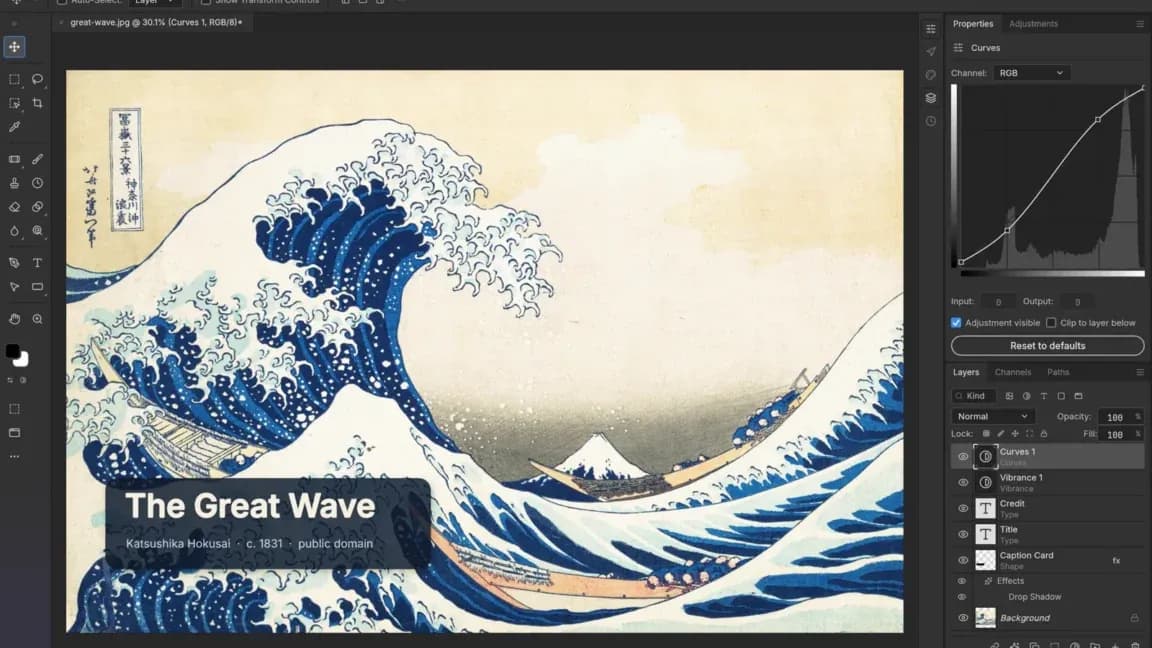
The Paradigm Shift in Creative Tooling
For decades, professional digital artists, video editors, and web designers have operated within a walled garden. Adobe’s Creative Cloud has reigned supreme as the inescapable industry standard, demanding hefty subscription fees in exchange for unmatched power across Photoshop, Premiere, Illustrator, and more. But as artificial intelligence accelerates at a breakneck pace, the foundational mechanics of software are undergoing a radical reassessment. A new wave of developers is beginning to challenge the notion that complex graphical suites require millions of lines of proprietary code to function.
By blending modern machine learning architectures with open-source development principles, innovators are setting their sights on building free, community-driven alternatives to these monolithic corporate giants. The sentiment driving this movement can be summarized by a provocative phrase gaining traction in tech circles: "software is over." This doesn't literally mean applications will vanish, but rather that the traditional model of manually clicking tools, adjusting pixel densities, and writing explicit logic paths is giving way to natural language prompting and intent-driven generation.
Reimagining the Creative Suite Through Open Source
The core philosophy of this new generation of tools rests on accessibility and transparency. Traditional software development requires massive engineering teams to build, test, and maintain feature sets over many years. In contrast, modern AI-driven frameworks can leverage existing foundation models, wrapping them in intuitive interfaces that mimic the core utility of professional software without the proprietary bloat.
These open-source projects aim to dismantle the steep financial barriers that lock students, hobbyists, and independent creators out of professional workflows. By making the code accessible to everyone, these repositories encourage global collaboration, allowing developers and designers alike to contribute features, fix bugs, and train specialized models tailored to niche artistic needs. Instead of waiting for a corporate roadmap to deliver a requested feature, the community can fork a repository and implement it themselves.
The Current Reality: Ambition Meets Technical Hurdles
Despite the revolutionary enthusiasm, it is crucial to temper expectations regarding the immediate usability of these open-source Adobe alternatives. Replicating the depth, performance stability, and hardware optimization of applications that have been refined over thirty years is an astronomical challenge. While current iterations can produce impressive results for specific tasks, they are often plagued by inconsistency, performance bottlenecks, and incomplete feature sets.
Developers working on these tools face significant hurdles, ranging from managing heavy computational loads locally to ensuring cross-platform compatibility. Where Adobe offers seamless integration across devices and cloud services, open-source projects frequently require powerful local hardware—particularly high-end GPUs—and a degree of technical literacy to set up and configure properly. They are bleeding-edge experiments rather than polished, plug-and-play commercial products.
Why This Matters for the Software Industry
The emergence of AI-powered open-source clones serves as a warning shot to incumbent tech monopolies. For years, dominant software vendors have faced minimal threat to their subscription models because the barrier to entry for building a rival suite was insurmountably high. You could not simply spin up a competitor to Photoshop in your garage; the engineering effort alone would take decades.
However, foundational AI models have compressed that timeline dramatically. By abstracting complexity through natural language processing and computer vision models, small teams or even solo developers can now prototype applications that achieve a fraction of what legacy suites do, but at zero cost and with infinite flexibility. This forces legacy companies to innovate faster, reconsider pricing strategies, and justify their subscription models in a world where "good enough" and free alternatives are rapidly improving.
Implications for Developers and Engineers
For software engineers and developers, this trend signals a major shift in how applications are conceptualized and built. We are moving away from imperative programming—where every single behavior and tool must be explicitly coded—toward declarative and generative paradigms where the software acts as an orchestrator of intelligent models.
This changes the required skill set for building developer tools. Understanding how to fine-chain prompts, manage context windows, and integrate open-source weights is becoming just as valuable as mastering traditional UI frameworks. Furthermore, contributing to these open-source disruption projects offers engineers a front-row seat to the transformation of human-computer interaction, letting them help shape the tools of the next generation.
Open Questions and Future Roadblocks
As this movement gains momentum, several critical questions remain unanswered. Intellectual property and copyright concerns loom large over the training data used by generative models, creating a legal gray area that open-source projects may navigate differently—and perhaps more dangerously—than heavily capitalized corporations.
Additionally, monetization remains a persistent challenge for open-source maintainers. While users love free software, sustaining long-term development, server infrastructure, and continuous model training without corporate backing is notoriously difficult. Will these projects secure sustainable funding models, or will they burn out after the initial wave of hype subsides?
The Road Ahead for Creative Tech
The push to clone massive proprietary creative suites using open-source AI is more than just a passing tech trend; it is an ideological challenge to the status quo of software licensing. While these tools are far from replacing industry standards today, the velocity of AI development suggests that the gap will narrow much faster than legacy companies anticipate.
Ultimately, this competition is a massive win for end-users and creators. Whether these open-source projects achieve total dominance or simply force incumbent giants to lower prices and accelerate innovation, the democratization of creative technology is an unstoppable force. The future of software won't be defined by who controls the most patents, but by who empowers the community to build without limits.
Source: arstechnica.com