
Cutting the Cord on Graphics: How Wi-Fi External GPUs Are Redefining Remote Computing

The Quest for Untethered Graphics Performance
For decades, the pursuit of high-end graphical computing has been bound to physical proximity and heavy hardware constraints. Whether rendering complex 3D scenes, training machine learning models locally, or diving into immersive gaming experiences, developers and enthusiasts have relied on bulky graphics cards physically slotted into PCIe lanes or tethered via high-bandwidth cables like Thunderbolt. The concept of an external GPU (eGPU) emerged to bridge the gap between portable laptops and desktop-class performance, yet these solutions have always struggled with the limitations of physical tethers. They require specialized ports, proprietary cables, and keep users physically close to their hardware enclosures.
Now, hardware engineering is taking a radically different approach by attempting to untether the GPU entirely. By shifting data transmission away from physical copper or fiber lines and onto modern wireless protocols, visionary product designers are asking a provocative question: what if your graphics processing unit could live anywhere in the room, streaming its immense power invisibly to whatever screen you happen to be using? This paradigm shift moves away from traditional hardware configurations toward a more fluid, ambient computing model where heavy workloads are processed remotely and streamed instantaneously to lightweight client devices.
Under the Hood of Wireless Graphics Streaming
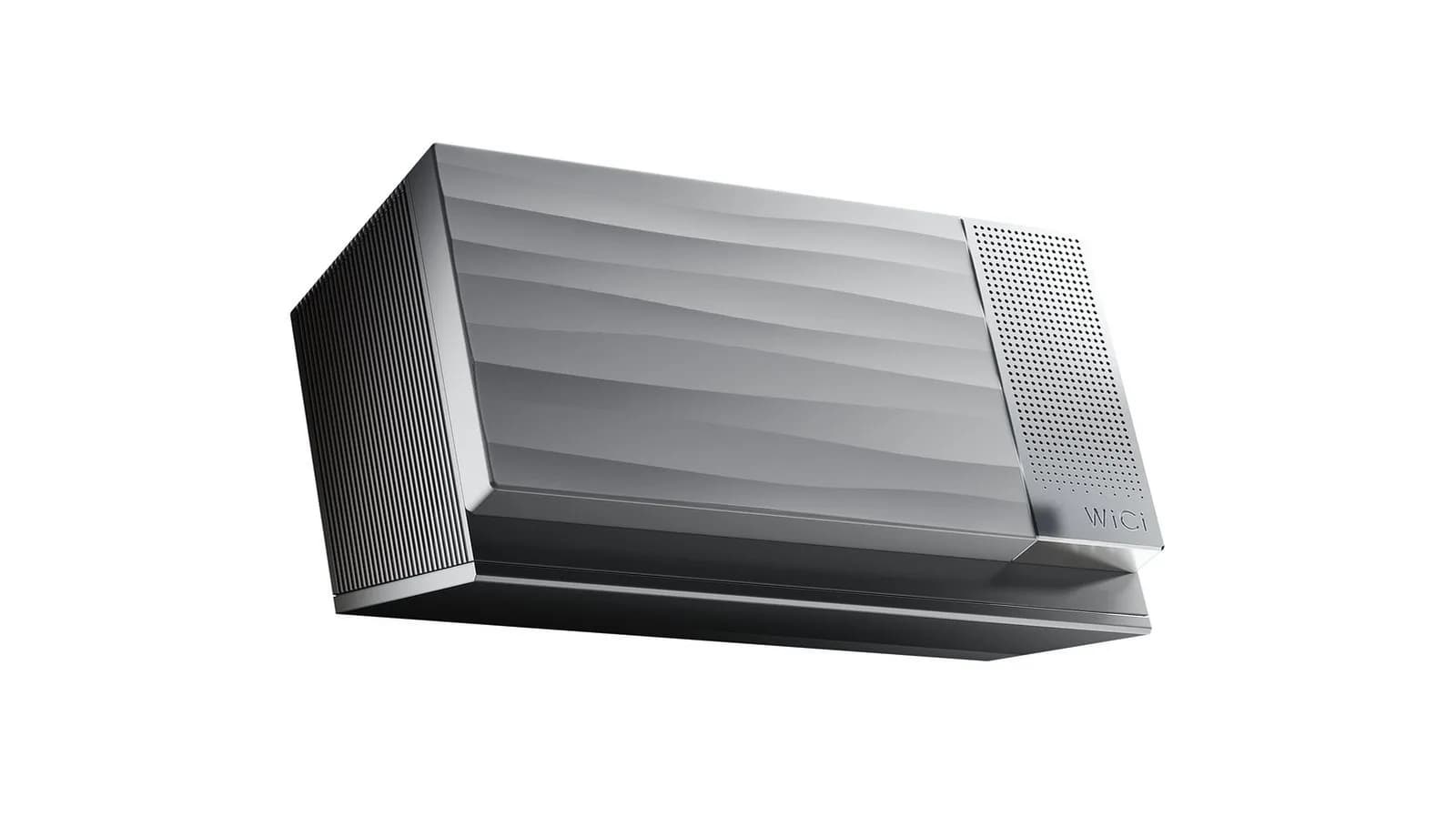
At the center of this technological leap is the WiCi One, an unconventional external GPU setup that relies on high-speed Wi-Fi networking to deliver graphics acceleration to any compatible device. While traditional eGPUs depend on the massive throughput of Thunderbolt or USB4 interfaces to handle the continuous stream of geometry, textures, and frame data between the host CPU and the discrete GPU, wireless alternatives must contend with the inherently variable latency and bandwidth constraints of radio frequencies. Achieving a seamless experience requires ingenious optimizations in data compression, transmission protocols, and packet prioritization to prevent input lag and visual stuttering.
Implementing wireless graphics requires a deep synchronization between the host operating system and the remote hardware enclosure. The system must capture framebuffers, compress them with ultra-low latency codecs, transmit them over robust wireless bands, and decode them instantly on the receiving client machine. Meanwhile, input commands from the keyboard, mouse, or controllers must travel in reverse with zero perceptible delay. While remote desktop solutions and cloud gaming services have experimented with similar concepts over wide-area networks, encapsulating this pipeline into a dedicated local hardware unit opens up entirely new deployment topologies for local edge computing.
Why Latency and Bandwidth Remain the Ultimate Hurdles
Any software engineer or hardware architect will immediately spot the elephant in the room: latency. Wireless spectrums are notoriously susceptible to interference, packet loss, and physical barriers like walls and furniture. While modern Wi-Fi standards offer impressive theoretical throughput numbers, maintaining consistent, microsecond-level response times under real-world conditions is a formidable engineering challenge. A graphical pipeline demands absolute consistency; even a momentary drop in wireless stability can cause frame drops, stuttering, or input lag that completely ruins an interactive experience, whether that experience is playing a fast-paced game or scrubbing through a high-resolution video timeline.
This fundamental physics problem explains why previous attempts at wireless peripheral streaming have often remained niche or experimental. Overcoming these barriers requires sophisticated error-correction algorithms and intelligent traffic management to ensure that graphical data packets take absolute priority over background network noise. Furthermore, because wireless channels are shared resources, heavy local network traffic from other devices in the home or office can inadvertently degrade the performance of the wireless eGPU. Developers and users alike must carefully weigh the convenience of a cable-free workspace against the uncompromising reliability of a direct, wired physical connection.
Redefining Workspaces and Device Capabilities
Despite the technical headwinds, the emergence of wireless external graphics units highlights a broader, exciting trend toward device agnosticism. Imagine a workflow where a featherlight ultraportable laptop, an aging tablet, or a minimalist all-in-one desktop can instantly transform into a heavy-duty workstation simply by communicating with a powerful graphics node sitting quietly in the corner of the room. This decoupling of computing power from the physical client device has massive implications for hardware longevity, allowing users to upgrade their processing power independently of their primary display and input interfaces.
For software developers, engineers, and digital creators, this architecture hints at a future where powerful local compute clusters can be shared dynamically across a team or an entire household. Instead of outfitting every single desk with an expensive, power-hungry tower, organizations could theoretically deploy centralized or shared accelerator nodes that pipe performance wherever it is needed via localized wireless mesh networks. While high-end pricing tiers currently place these innovations firmly in the realm of early adopters and enthusiasts, the underlying concepts frequently trickle down to influence mainstream hardware design and remote development workflows.
Looking toward the horizon, the intersection of wireless networking and accelerated computing will only deepen as communication protocols evolve. With the continued rollout of ultra-wideband technologies, advanced Wi-Fi iterations, and increasingly intelligent edge-compression algorithms, the bottleneck between wireless clients and remote GPUs will steadily shrink. Whether Wi-Fi-enabled eGPUs become a permanent fixture of modern setups or merely serve as a fascinating stepping stone toward true cloud-local hybrid computing, they challenge our traditional assumptions about where hardware boundaries should lie.
The Road Ahead for Unbound Computing
As the tech industry continues to experiment with unorthodox form factors and novel connection mediums, products like the WiCi One serve as a fascinating stress test for consumer readiness and engineering feasibility. They force us to re-examine the trade-offs between absolute performance and spatial freedom. While wired connections will likely remain the gold standard for competitive gaming and mission-critical enterprise rendering for the foreseeable future, the mere existence of a viable wireless alternative points to a more flexible, cable-free computing landscape.
Ultimately, the success of wireless graphics hardware will depend on continuous refinement in software codecs, network stability, and price-to-performance scaling. As developers optimize applications for distributed rendering pipelines and hardware manufacturers push the limits of wireless throughput, the lines between local and remote computing will continue to blur. For now, the prospect of dropping the cables and driving a high-performance rig through the airwaves is a compelling glimpse into the next evolution of personal technology.
Source: engadget.com